Anatolian Sheep
Ovis gmelini
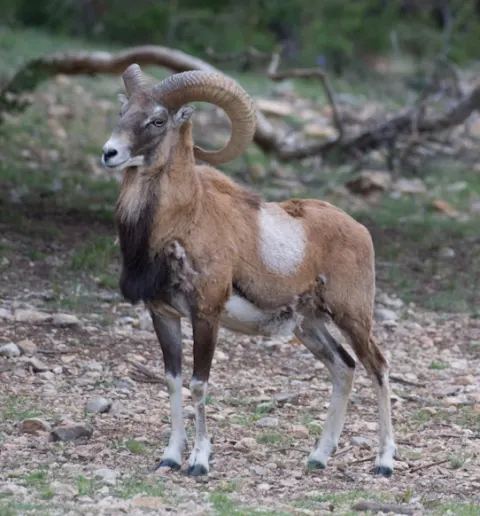
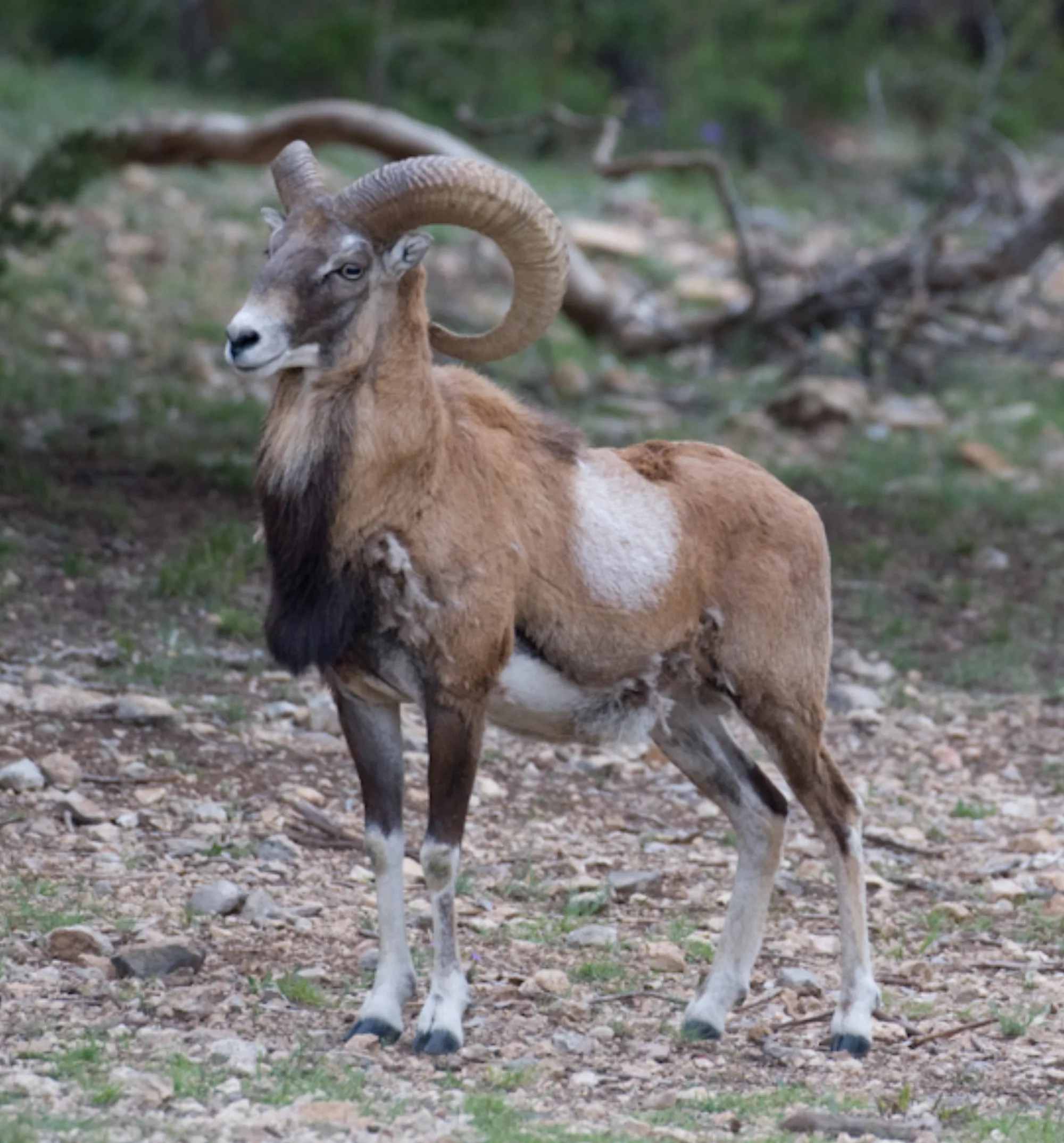
In the rolling hills around Konya, the Anatolian Sheep belongs to a wild sheep species known as the mouflon. Its short coat ranges from reddish to dark brown, with a dark stripe along the back, a black underside and a pale saddle patch. Rams carry horns that can curve through almost a full turn and reach 85 cm. Females may have horns too, although some have none. Mouflon stand around 0.9 m at the shoulder, with males weighing about 50 kg and females about 35 kg.
The core Anatolian population lives in the Konya region of Turkey. The sheep has also been reintroduced within its former range, including around Ankara, Eskişehir and Karaman. Typical mouflon habitat is gently rolling country where steppe meets forest. Rams establish a strict order of dominance, fighting one another for access to females before the breeding season. The rut runs from late autumn into early winter. Females also develop a social hierarchy, but can breed even when their status is low. Mouflon reach breeding age at two to four years, though young rams need more time to establish dominance. After a pregnancy of five months, a female produces one or two young.
The Anatolian population once came close to disappearing and is now slowly returning, with a total of about 800 animals. Hunting is permitted in Turkey only with a special licence. Across the wider range, mouflon are also native to Cyprus, Armenia, Azerbaijan, Georgia and Iran.
Written from the English Wikipedia article Mouflon (CC BY-SA 4.0).
- Records
- 2,366
- Countries
- 5
No atlas park has a record of the Anatolian Sheep in or around it yet.
These are open occurrence records, so they show where people looked for and recorded the Anatolian Sheep as much as where it lives. Cells are up to 25 km across, and every location is generalised to its cell.
Generalised encounter areas, not exact locations. Each shape is a grid cell coloured by how likely the species is there.
- Very likelyFrance25 km zone · high confidence · 2343 records · updated 80 days ago
- PossibleCyprus25 km zone · medium confidence · 20 records · updated 80 days ago
- UncommonSpain25 km zone · medium confidence · 3 records · updated 80 days ago
- RareAustria25 km zone · low confidence · 0 records · updated 80 days ago
- RareIran25 km zone · low confidence · 0 records · updated 80 days ago
Conservation status not assessed here yet, so every location is generalised to its grid cell.