Bighorn Sheep
Ovis canadensis
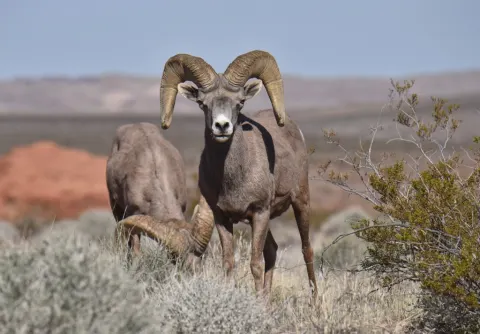
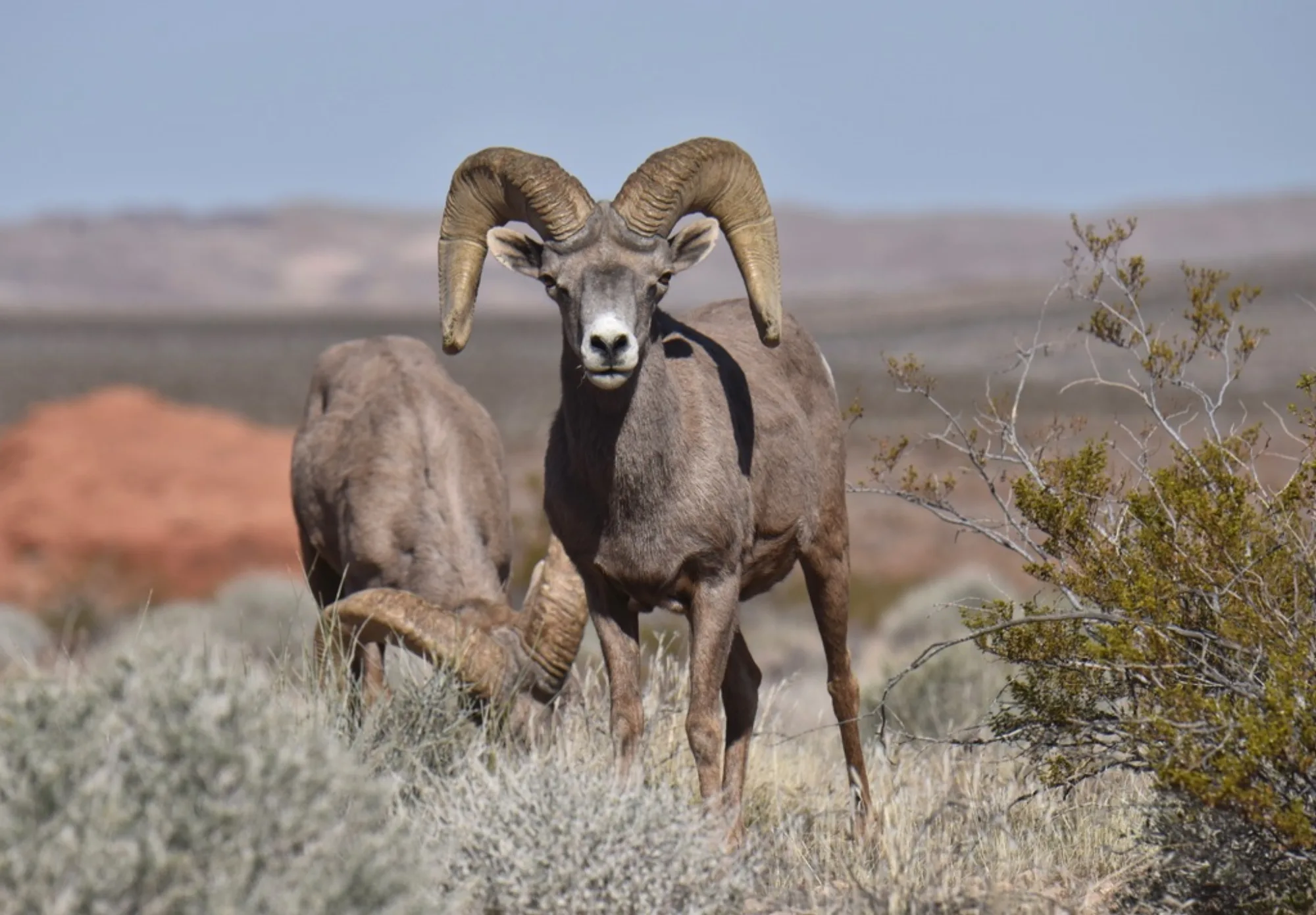
Look for the Bighorn Sheep on rocky slopes across western North America, from southwestern Canada to Mexico. This wild sheep takes its name from the large, curved horns of the rams; females have shorter, straighter horns. Its coat may be light brown, greyish or a deep chocolate shade, with white on the rump and the backs of the legs. A ram's horns alone can weigh up to 14 kg. Bighorns live in cool mountain regions as well as the hot deserts of the southwestern United States and Mexico. They use alpine meadows, grassy slopes and foothills close to rugged cliffs, favouring dry slopes where snow is not too deep. In winter, they usually move to lower elevations than those they occupy in summer.
Bighorn Sheep live in large herds without usually following a single lead ram. They graze on grasses, browse shrubs, especially in autumn and winter, and visit natural salt licks for minerals. Before the breeding season, rams establish their standing among other males, often clashing horns. In temperate climates, breeding peaks in November and most ewes give birth to one lamb in May, although twins are possible. Newborn lambs can walk within hours and are weaned at four to six months. Steep ground offers cover from predators, though lambs are vulnerable to hunters such as coyotes and golden eagles, while mountain lions threaten sheep of all ages. Disease carried by domestic sheep can cause pneumonia outbreaks and severe losses. Past declines were also driven by unregulated hunting, habitat destruction and overgrazing.
Written from the English Wikipedia article Bighorn sheep (CC BY-SA 4.0).
- Records
- 1,517
- Countries
- 3
- Atlas places
- 14
- Banff National Park· Canada
- Jasper National Park· Canada
- Yellowstone National Park· United States
- Kootenay National Park· Canada
- Badlands National Park· United States
- Joshua Tree National Park· United States
- Zion National Park· United States
- Glacier National Park· United States
- Grand Canyon National Park· United States
- Rocky Mountain National Park· United States
- Waterton Lakes National Park· Canada
- Yoho National Park· Canada
- Grand Teton National Park· United States
- Yosemite National Park· United States
These are open occurrence records, so they show where people looked for and recorded the Bighorn Sheep as much as where it lives. Cells are up to 25 km across, and every location is generalised to its cell.
Generalised encounter areas, not exact locations. Each shape is a grid cell coloured by how likely the species is there.
- Very likelyUnited States25 km zone · medium confidence · 1045 records · updated 81 days ago
- Very likelyCanada25 km zone · medium confidence · 432 records · updated 81 days ago
- Very likelyMexico25 km zone · medium confidence · 40 records · updated 81 days ago
Conservation status not assessed here yet, so every location is generalised to its grid cell.