Duck-billed Platypus
Ornithorhynchus anatinus
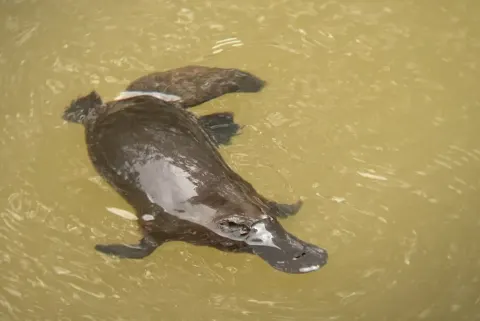
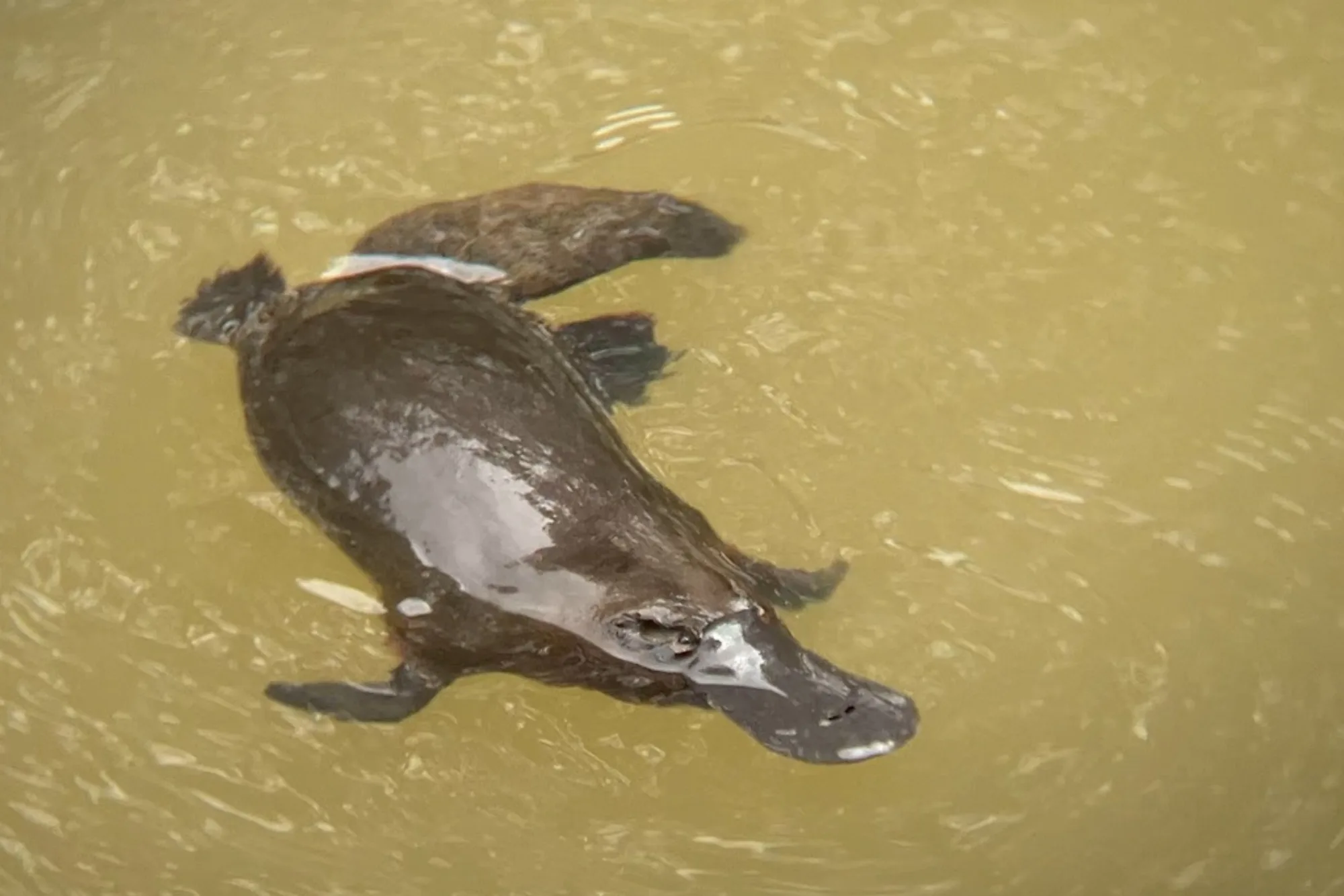
With its duck-like bill, broad furry tail and short brown coat, the Duck-billed Platypus is a distinctive mammal that lays eggs. Its dense fur traps insulating air, helping it stay warm in and out of the water. Webbed front feet propel it through the water, while its hind feet and tail help it steer. Males have a spur on each hind foot that can deliver extremely painful venom.
The platypus lives in eastern Australia, including Tasmania, and needs permanent freshwater habitat. Look for it in rivers, streams, lakes and lagoon-like pools, surrounded by landscapes ranging from tropical rainforest to colder alpine country. It is mainly nocturnal, though it is also active at dusk in summer and during the day in winter. It can spend half a day in the water, then return to a burrow excavated in the bank. It searches along the bottom for food, including insect larvae, worms, shrimp, crayfish and tadpoles. With its eyes, ears and nose closed underwater, it detects tiny electrical currents produced by its prey. Food is stored in cheek pouches to be eaten later.
Breeding follows the seasons, starting later in southern populations than in those to the north. A female lays her eggs and raises her young in a nesting burrow, normally laying two small, leathery eggs. The blind, hairless young feed on their mother's milk and emerge from the burrow at around four months. Habitat disruption from dams, pollution, urban expansion and runoff threatens the species, as do drought and demands for water. Platypuses also drown in inland fishing nets, while climate change and invasive species add to the pressures they face.
Written from the English Wikipedia article Platypus (CC BY-SA 4.0).
- Records
- 11,347
- Countries
- 1
- Atlas places
- 6
These are open occurrence records, so they show where people looked for and recorded the Duck-billed Platypus as much as where it lives. Cells are up to 25 km across, and every location is generalised to its cell.
Generalised encounter areas, not exact locations. Each shape is a grid cell coloured by how likely the species is there.
- Very likelyAustralia25 km zone · medium confidence · 11347 records · updated 80 days ago
Conservation status not assessed here yet, so every location is generalised to its grid cell.