Black Kokanee Salmon
Oncorhynchus kawamurae
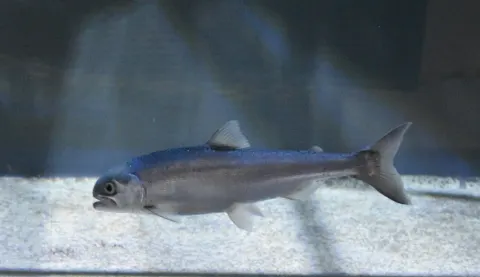
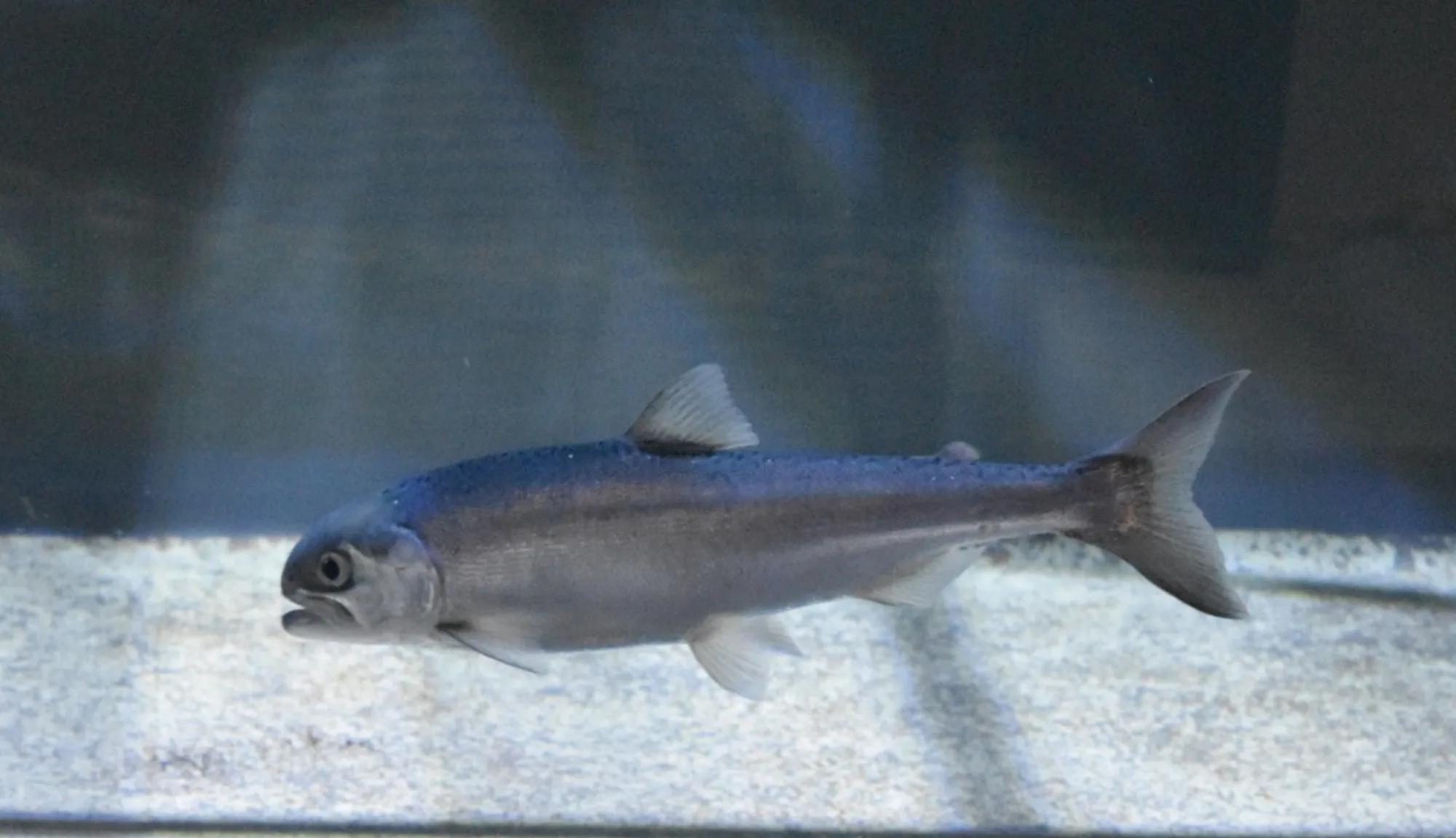
Often referred to as the Kunimasu, the Black Kokanee Salmon was once thought to be lost to history. This landlocked trout was native only to Akita Prefecture's Lake Tazawa until it vanished from those waters in 1940. The disaster occurred when acidic water was diverted into the lake for power generation, killing the local population. However, the species survived in secret for 70 years in Lake Saiko, roughly 500 kilometres away, after a 1935 attempt to move fertilized eggs proved successful. Today, this lake is the only place where these fish are found.
Adults reach about 30 centimetres in length and have slender, flat bodies. They are typically dark olive or grey with black spots, though their appearance shifts as they mature. During the breeding season, which occurs in the winter and spring, they turn a dark olive green. Unlike similar salmon in the same area, these fish spawn in deep water reaching depths of 30 to 40 meters. To prepare for their eggs, females use their bodies to create beds on the lake floor, a process that can wear down their fins.
These fish live just above the bottom of the lake in cold, deep water. Because they are sensitive to changes in water chemistry, the species remains vulnerable to environmental shifts. While little is known about their daily habits, their physical features suggest they feed on zooplankton found in the deep or middle layers of the lake. Travellers should look for them in their specific freshwater habitat, where they remain reproductively isolated from other trout species.
Written from the English Wikipedia article Oncorhynchus kawamurae (CC BY-SA 4.0).
- Atlas places
- 0
These are open occurrence records, so they show where people looked for and recorded the Black Kokanee Salmon as much as where it lives. Cells are up to 25 km across, and every location is generalised to its cell.
No encounter zones yet
Where and when you can expect to see Black Kokanee Salmon is calculated from observation density. No zones have been computed for this species yet.