Cutthroat Trout
Oncorhynchus clarkii
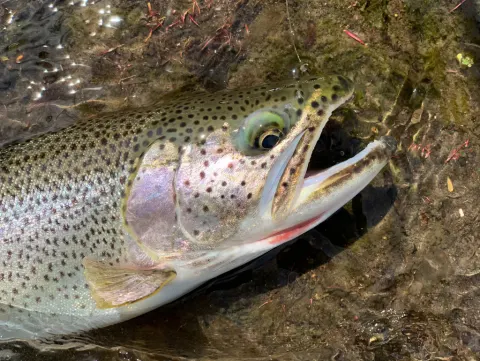
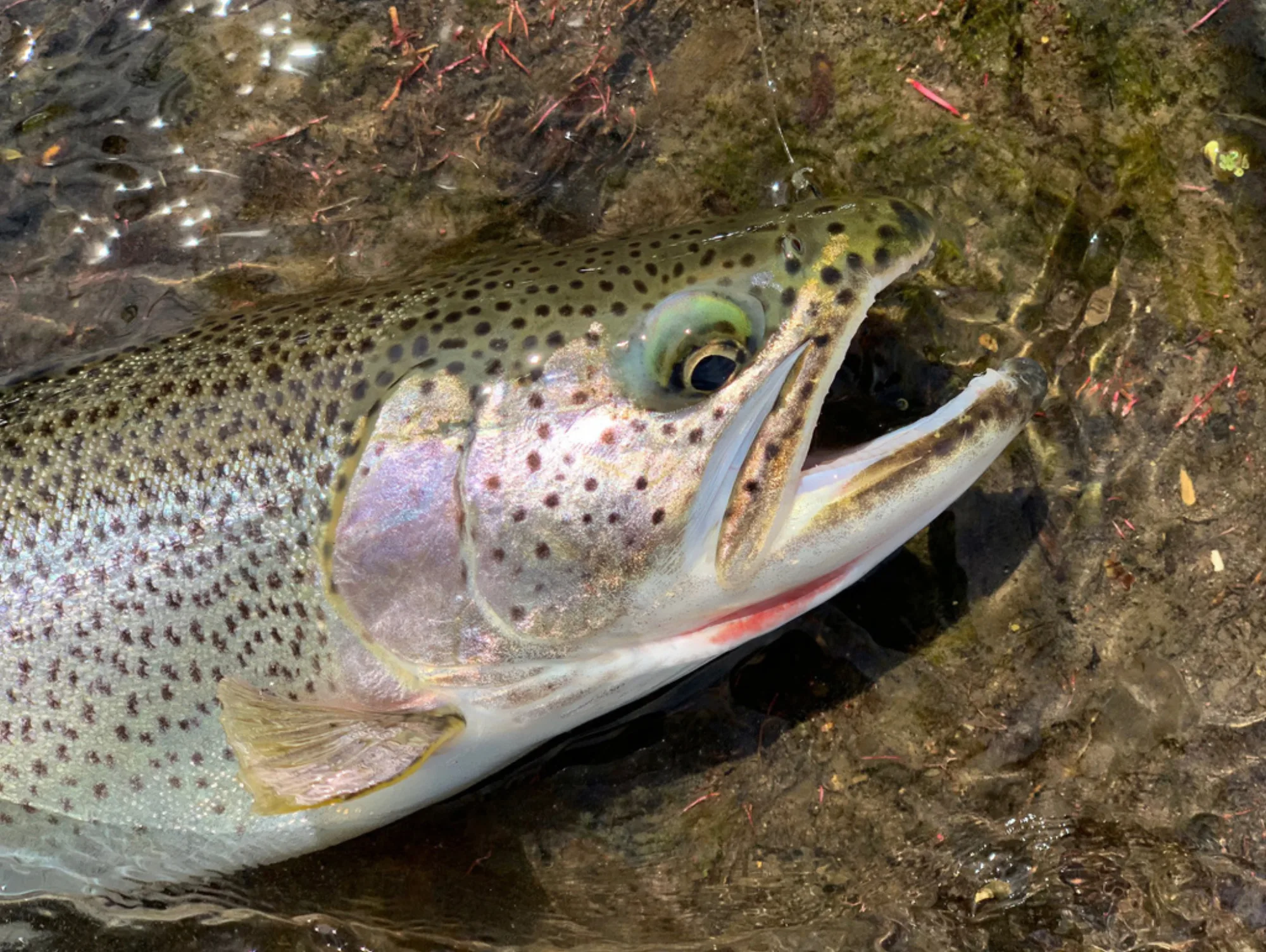
Look for red, pink or orange streaks beneath the lower jaw: these give the Cutthroat Trout its name, though some rainbow trout have similar markings. Its back can be golden, grey or green, and its size varies widely with habitat and food. Mature fish from different populations range from 15 to 102 cm long. Native to western North America, cutthroat trout occur from Alaska along the Pacific Northwest coast to northern California, as well as in the Cascade Range, Great Basin and Rocky Mountains. They favour clear, cold, shallow rivers with gravel bottoms, but also live in cool, moderately deep lakes with vegetated shallows. Streamside vegetation helps keep silt out of their habitat, while beaver ponds can offer shelter during drought and winter.
Most cutthroat trout spend their lives in fresh water, although some coastal fish feed at sea for a few months before returning to fresh water. Opportunistic feeders, stream residents take aquatic insects, insects that fall into the water, small fish, fish eggs and crustaceans. As the fish grow, fish make up a larger share of the diet in most populations. They spawn in spring, with timing ranging from February in coastal rivers to July in high mountain waters. Lake populations generally need access to gravel-bottomed streams to sustain themselves, though they sometimes breed in shallow lake gravel where water circulates well. Habitat loss, overfishing and competition from introduced species have reduced populations and their range. Breeding with introduced rainbow trout and other introduced cutthroat trout can also threaten distinct populations, while whirling disease has caused declines in spawning tributaries.
Written from the English Wikipedia article Cutthroat trout (CC BY-SA 4.0).
- Records
- 5,063
- Countries
- 2
- Atlas places
- 6
These are open occurrence records, so they show where people looked for and recorded the Cutthroat Trout as much as where it lives. Cells are up to 25 km across, and every location is generalised to its cell.
Generalised encounter areas, not exact locations. Each shape is a grid cell coloured by how likely the species is there.
- Very likelyUnited States25 km zone · high confidence · 5038 records · updated 80 days ago
- LikelyCanada25 km zone · medium confidence · 25 records · updated 80 days ago
Conservation status not assessed here yet, so every location is generalised to its grid cell.