Galápagos Batfish
Ogcocephalus darwini
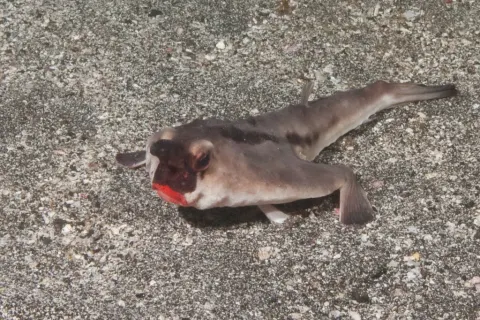
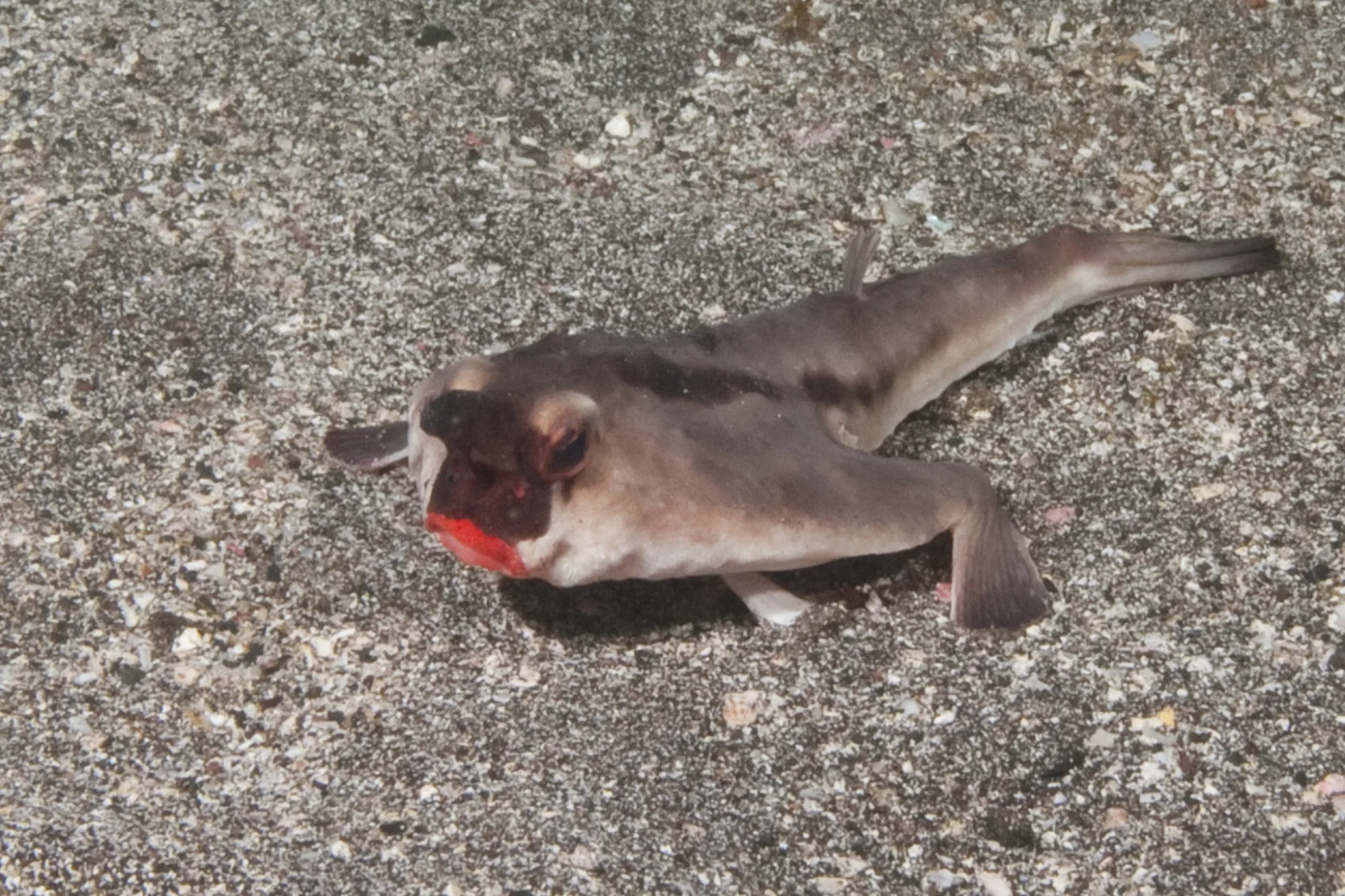
Bright red lips make the Galápagos Batfish stand out from other batfish, though its light brown and greyish back can be hard to see in the sea. It can reach 40 centimetres in length and has a white underside, a dark brown stripe along its back, and a brown snout and horn. Large eyes sit high on its head, giving it a wide view while it remains hidden on the seabed. It can also change its body colour to blend with sand or rocks, helping it evade predators and ambush prey.
This bottom-dwelling fish lives in the Pacific around Ecuador's Galápagos Islands, usually on sand or close to the ocean floor. Its recorded depth range is 3 to 76 m, and it tends to associate with reef edges as deep as about 120 m. It is a poor swimmer and instead uses its fins to walk across the seabed. Its movements resemble a frog's gait, helping it navigate rocky or sandy ground. It tends to be more active at night, feeding on small fish and seafloor invertebrates such as shrimp, crabs, worms and molluscs. A projection on its head helps lure prey close, and the fish draws food into its mouth by suction.
Males sway and shake their heads during courtship, while females lay sticky eggs that attach to the ocean floor. Males guard the eggs and fan them with their fins until they hatch. No direct threats are known, but rising sea temperatures and coral bleaching could alter its habitat and reduce its food supply. Living on the bottom also increases its risk of ingesting microplastics and getting caught in fishing gear left in the sea.
Written from the English Wikipedia article Red-lipped batfish (CC BY-SA 4.0).
- Records
- 5
- Countries
- 1
- Atlas places
- 1
These are open occurrence records, so they show where people looked for and recorded the Galápagos Batfish as much as where it lives. Cells are up to 25 km across, and every location is generalised to its cell.
Generalised encounter areas, not exact locations. Each shape is a grid cell coloured by how likely the species is there.
- Very likelyEcuador25 km zone · medium confidence · 5 records · updated 80 days ago
Conservation status not assessed here yet, so every location is generalised to its grid cell.