Ili Pika
Ochotona iliensis
Resembling a rabbit with short ears, the Ili Pika is a large member of its family, weighing as much as 250 grams. Its hair is brightly colored, featuring distinct rusty-red spots on the neck, crown, and forehead. These mammals measure between 20.3 and 20.4 centimetres in length and are known for being asocial. Unlike many related species, they rarely make vocal sounds. They are active at different times depending on the season, moving during the day in winter but switching to nocturnal activity during the spring and fall.
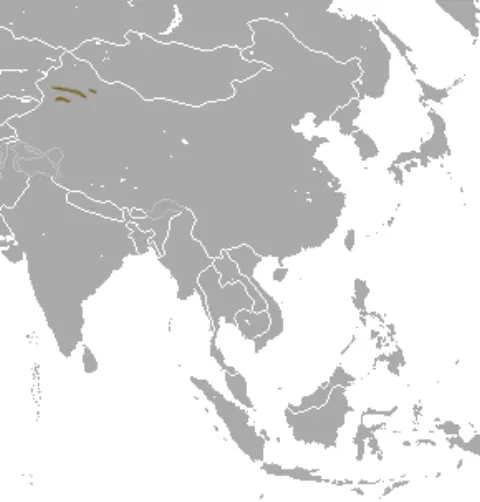
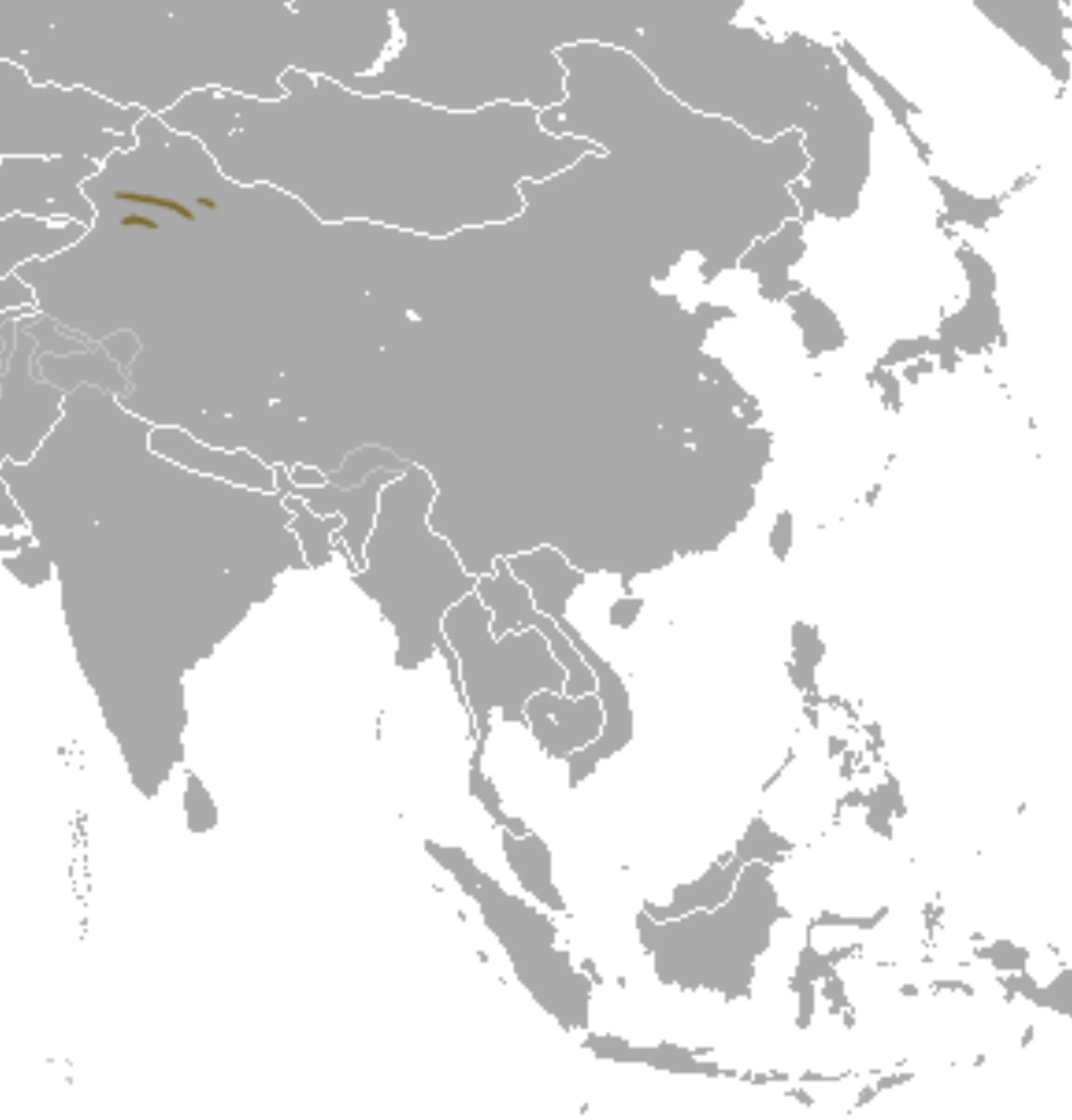
Travellers must head to the high mountains of northwest China to find this species. It lives exclusively on two ridges within the Tian Shan range, typically at elevations between 2,800 and 4,100 meters. To avoid predators, it stays where oxygen levels are low, living on cliff faces or rock walls filled with holes and gaps. These herbivores mainly eat herbs and grasses, which they also gather into haypiles. They are solitary and have low population densities, usually producing only one successful offspring each breeding season.
Fewer than 1,000 of these animals remain, and their numbers have dropped by 70% in just 15 years. Rising temperatures are a major threat, forcing the pikas to move higher up the peaks until they have no habitat left. This warming also allows predators like foxes to move into higher elevations. Additionally, the species faces pressure from increased livestock grazing, air pollution, and human activity. Because they do not spread easily to new areas and reproduce slowly, they struggle to recover from these losses.
Written from the English Wikipedia article Ili pika (CC BY-SA 4.0).
- Atlas places
- 0
These are open occurrence records, so they show where people looked for and recorded the Ili Pika as much as where it lives. Cells are up to 25 km across, and every location is generalised to its cell.
No encounter zones yet
Where and when you can expect to see Ili Pika is calculated from observation density. No zones have been computed for this species yet.