Eskimo Curlew
Numenius borealis
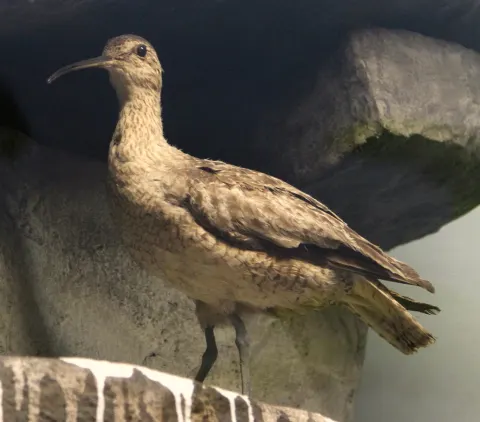
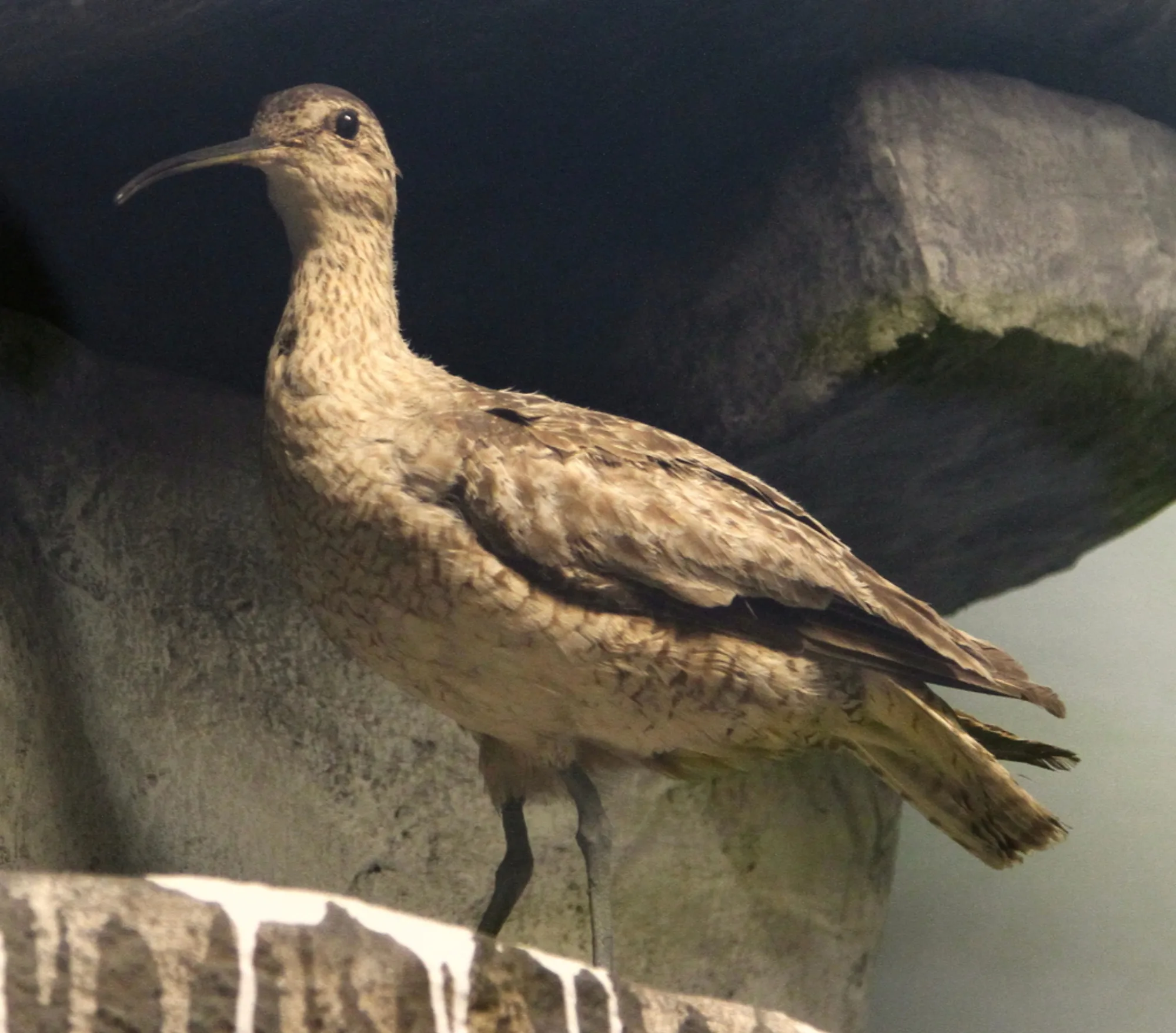
This small shorebird of the New World measures roughly 30 centimetres long, with a wingspan of 70 cm. Its mottled brown back and pale brown belly are distinctive, though it looks much like a Hudsonian whimbrel. In flight, you might notice its cinnamon-coloured wing linings. The bird's long, dark grey legs and slightly downward-curving beak are characteristic of its genus. On the ground, it weighs about 360 g and is best identified by the lack of bars on the undersides of its primary feathers.
Historically, the Eskimo Curlew nested in the tundra of Alaska and western Arctic Canada. These birds were long-distance travellers, flying south across the Atlantic to the Argentine Pampas for the winter and returning north through the Great Plains. They foraged by sight, probing for snails and other invertebrates. While migrating through Canada, they relied heavily on berries, but they switched to a diet of insects on their breeding grounds. Their nests were simple hollows lined with dried leaves or grass, hidden in open terrain.
Once among the most common shorebirds in North America, the species suffered a massive decline. During the late 1800s, hunters killed thousands of birds annually. Because their meat was a prized food source, yearly losses reached 2 million individuals near the end of the century. Although hunting was banned around 1916, the population never recovered. No confirmed sightings have occurred since 1963, and while unconfirmed reports persist, the bird remains exceptionally rare or potentially lost forever.
Written from the English Wikipedia article Eskimo curlew (CC BY-SA 4.0).
- Atlas places
- 0
These are open occurrence records, so they show where people looked for and recorded the Eskimo Curlew as much as where it lives. Cells are up to 25 km across, and every location is generalised to its cell.
No encounter zones yet
Where and when you can expect to see Eskimo Curlew is calculated from observation density. No zones have been computed for this species yet.