Hainan Black Crested Gibbon
Nomascus hainanus
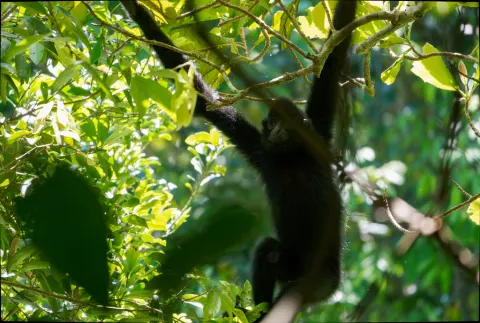
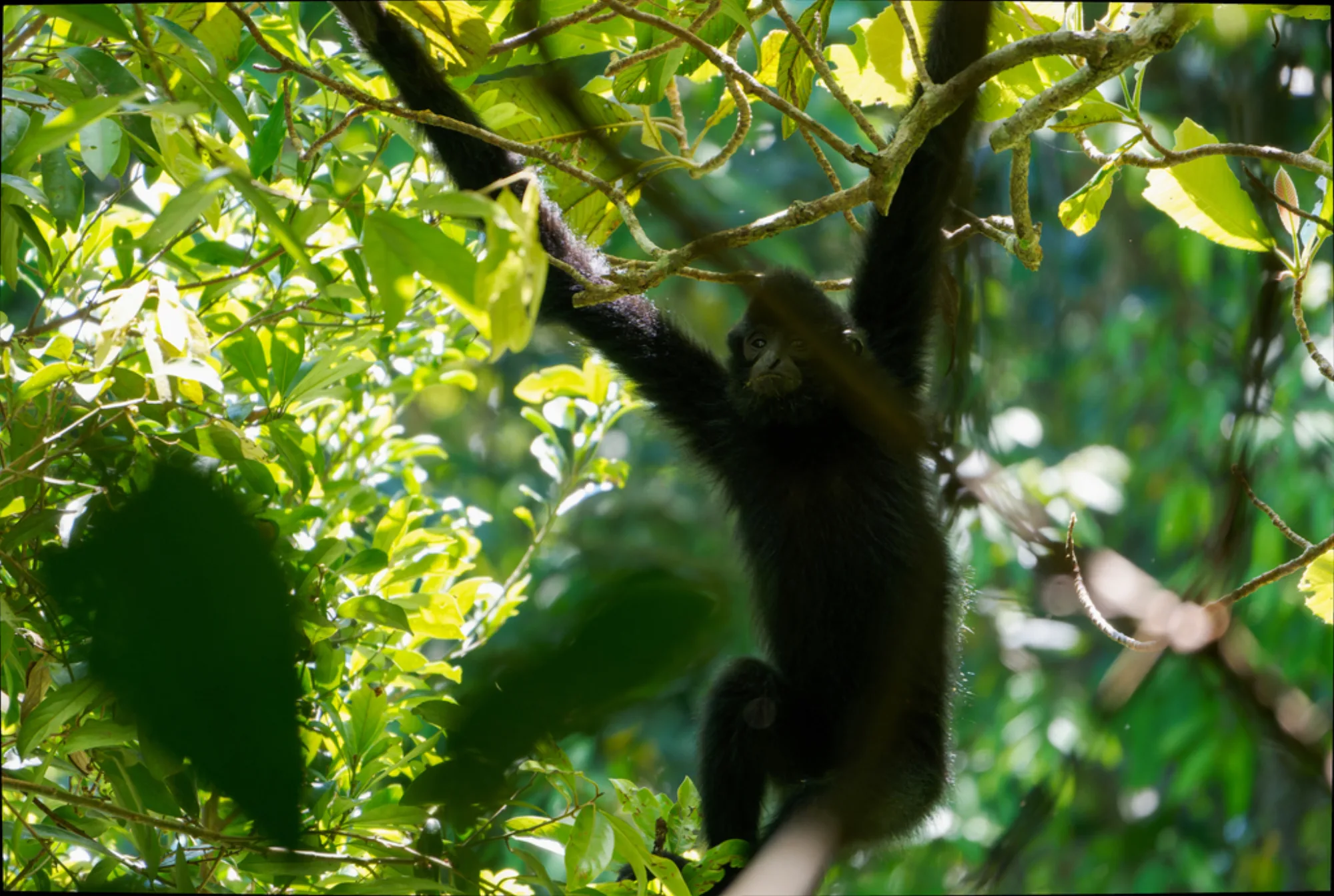
Restricted to the forests of Hainan Island in the South China Sea, these slender primates are distinguished by their long limbs and lack of a tail. The species displays a striking color difference between the sexes. Males are almost entirely black, though they occasionally have buff or white cheeks. In contrast, females are golden or buff and feature black patches, including a distinctive dark streak on their heads. These agile animals use their long arms to swing between trees, a movement known as brachiation, and perform singing duets to strengthen social bonds.
The Hainan Black Crested Gibbon primarily inhabits old-growth forests, where they prefer trees at least ten meters tall for shelter and singing rituals. Their diet centers on sugar-rich, ripe fruits like figs, supplemented by insects and leaves. In response to a shrinking habitat, they have adopted a polygynous social structure. A typical family unit consists of a single breeding male, two adult females, and their young. This arrangement helps them maintain a two-year interval between births, which is shorter than other species and timed to match the island's fruiting cycles.
Human activity is the primary threat to their survival. Historically numbering over 2,000 in the 1950s, the population plummeted to just 22 individuals in the most recent count, all located within the Bawangling National Nature Reserve. Massive deforestation for rubber and pulp paper plantations has destroyed 95% of the island's original vegetation, forcing the gibbons into less suitable, high-altitude terrain. Additionally, the species has suffered from poaching for traditional medicine and the illegal pet trade. Because they are now concentrated in one small area, the entire population remains at risk from a single major storm or disease outbreak.
Written from the English Wikipedia article Hainan black crested gibbon (CC BY-SA 4.0).
- Atlas places
- 0
These are open occurrence records, so they show where people looked for and recorded the Hainan Black Crested Gibbon as much as where it lives. Cells are up to 25 km across, and every location is generalised to its cell.
No encounter zones yet
Where and when you can expect to see Hainan Black Crested Gibbon is calculated from observation density. No zones have been computed for this species yet.