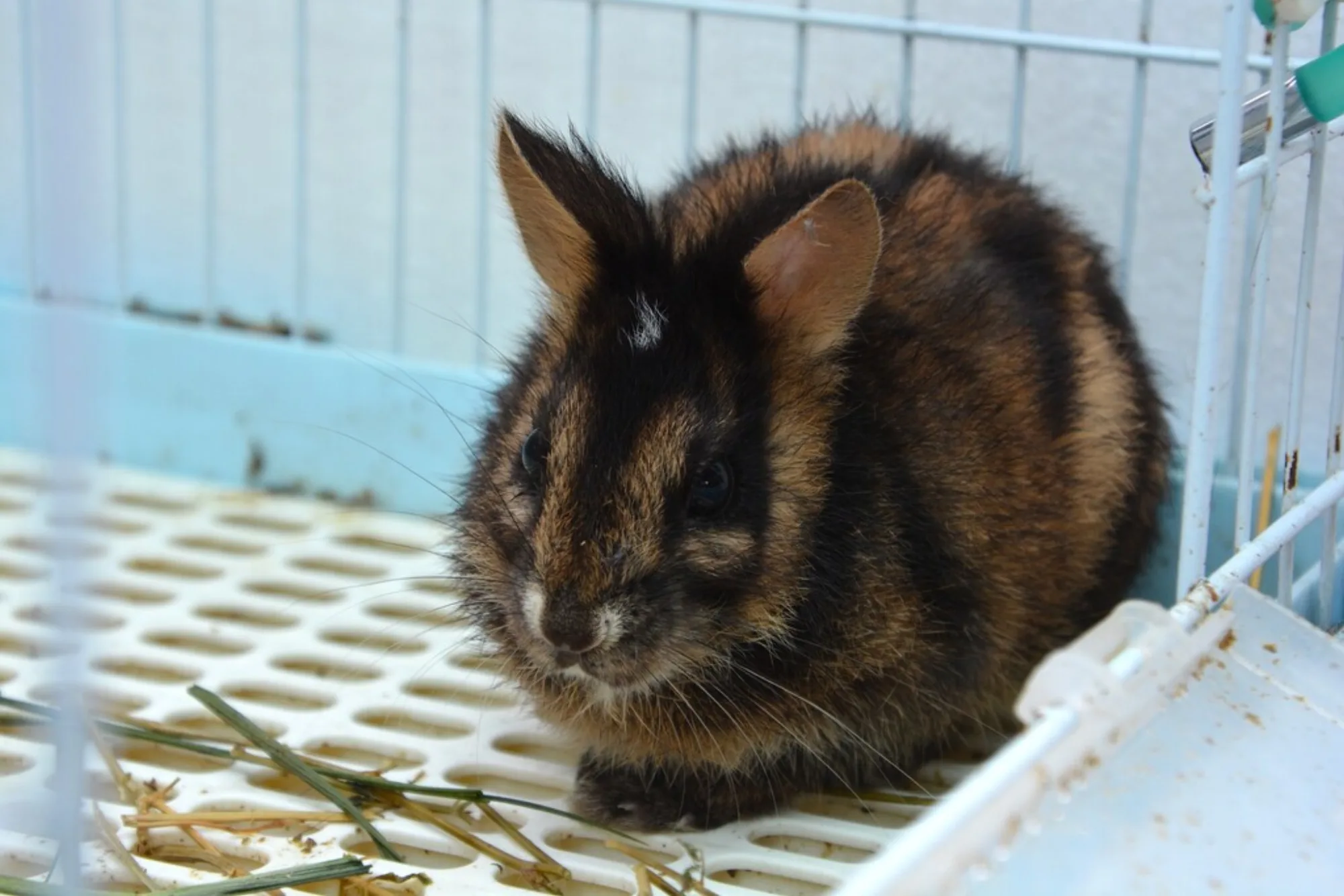
Annamite Striped Rabbit
Nesolagus timminsi
This short-eared rabbit is distinguished by black or dark brown stripes that stand out against a buff-colored body. A single dark line stretches from the tip of the nose to the start of the tail, while other markings fork near the eyes and extend up the ears. The Annamite Striped Rabbit also features a rust-colored rump and a white underside. It is very similar in appearance to its relative from Indonesia, though it is slightly larger.
Native to the Annamite mountain range along the border of Laos and Vietnam, these animals inhabit wet evergreen forests. They are found at altitudes between 50 and 1,400 meters above sea level, typically in areas with a consistently damp climate. While they prefer dense forest, they have been recorded in degraded woods and heavily logged rice fields. These rabbits are solitary, nocturnal herbivores that generally avoid open spaces. Females are known to guard their young closely, with kittens having been spotted in shallow depressions during January.
The primary threat to the species is hunting and poaching. They are frequently caught in snare traps set by both commercial poachers and subsistence hunters. Because they freeze when surprised by a headlamp in the dark, they are relatively easy to capture. Although road construction and agriculture cause habitat loss, intensive snaring remains the greatest danger. Conservationists are working to remove thousands of traps and have proposed captive breeding programs to help the population recover.
Written from the English Wikipedia article Annamite striped rabbit (CC BY-SA 4.0).
- Atlas places
- 0
These are open occurrence records, so they show where people looked for and recorded the Annamite Striped Rabbit as much as where it lives. Cells are up to 25 km across, and every location is generalised to its cell.
No encounter zones yet
Where and when you can expect to see Annamite Striped Rabbit is calculated from observation density. No zones have been computed for this species yet.