Australian Sea Lion
Neophoca cinerea
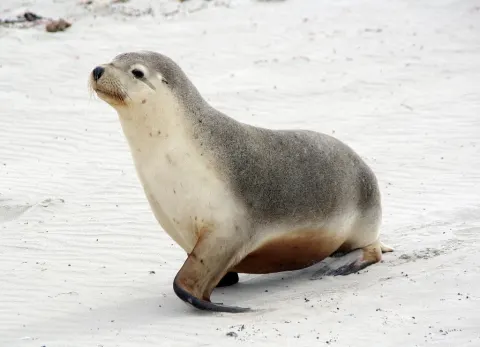
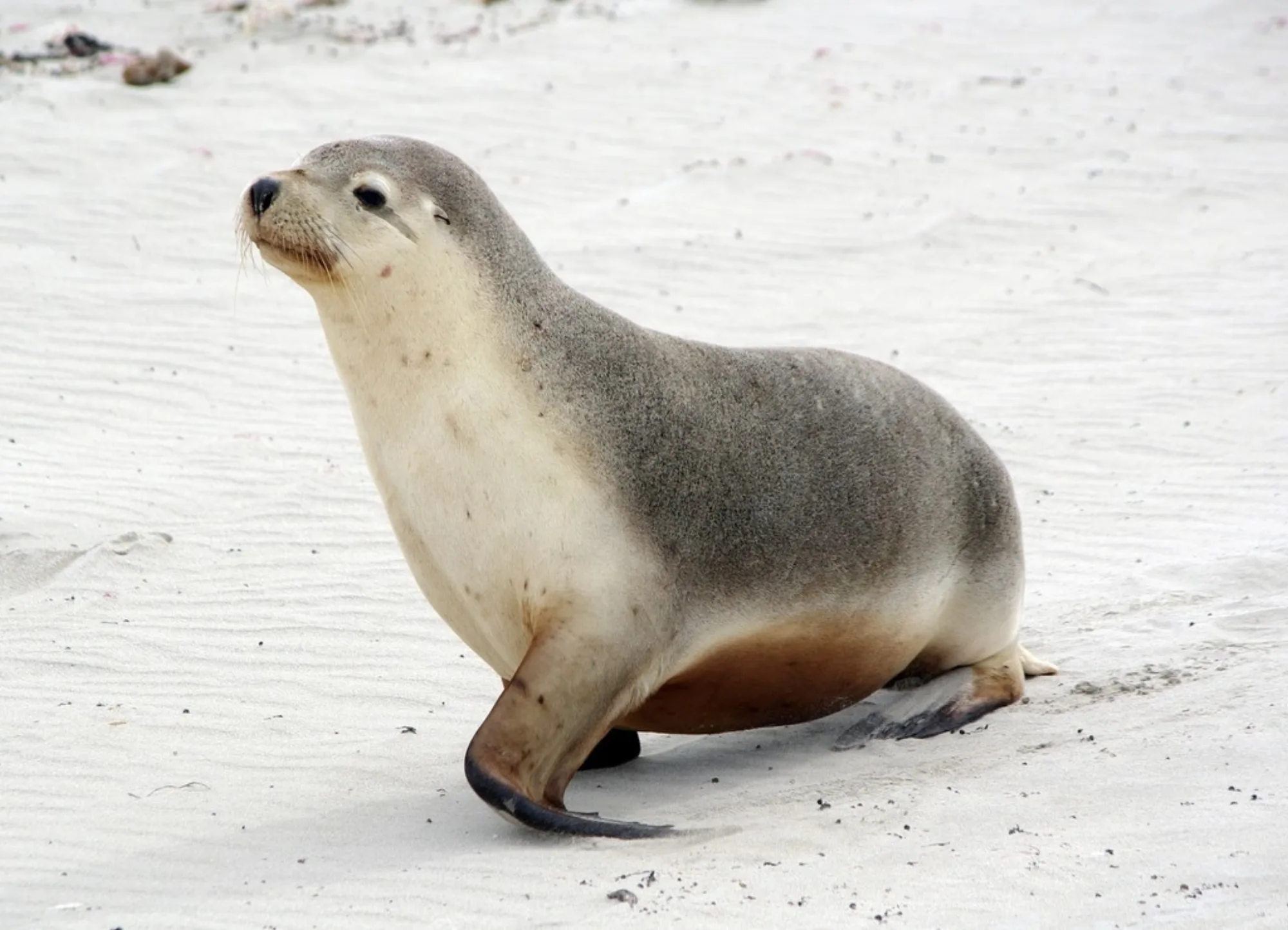
Along Australia's southern coast, the Australian Sea Lion can be recognised by its bulky body, short fur and short flippers. Females are silver or fawn with cream underneath, while the larger males have dark brown coats and yellow manes. The species ranges from the Houtman Abrolhos Islands in Western Australia to The Pages Islands in South Australia. Most breeding colonies are on offshore islands, although some are on the mainland, including at Point Labatt and the Bunda Cliffs. Seal Bay on Kangaroo Island, The Pages and Dangerous Reef hold a substantial share of the known population.
At sea, they swim using their flippers and forage mainly for animals living on or near the seabed. Their varied diet includes fish, squid, cuttlefish, octopus, sharks, rays, southern rock lobster and little penguins. On land, mothers and pups can recognise one another, with calls appearing especially reliable in a crowded colony. Breeding is not synchronised between colonies, and the season can last from five to seven months, or longer at Seal Bay. An adult may also take care of another sea lion's pups if their parents die or become separated from them.
Heavy hunting after European settlement reduced the population, and both its numbers and range have declined. Fishing gear and illegal shooting remain major threats, while some sea lions have drowned after becoming trapped or entangled in lobster pots and gear. Pollution, disease, oil spills, noise and marine fish aquaculture pose further threats. Visitors should approach Australian sea lions only with a park ranger: they can behave defensively and bite.
Written from the English Wikipedia article Australian sea lion (CC BY-SA 4.0).
- Records
- 38,703
- Countries
- 1
- Atlas places
- 1
These are open occurrence records, so they show where people looked for and recorded the Australian Sea Lion as much as where it lives. Cells are up to 25 km across, and every location is generalised to its cell.
Generalised encounter areas, not exact locations. Each shape is a grid cell coloured by how likely the species is there.
- Very likelyAustralia25 km zone · high confidence · 38703 records · updated 81 days ago
Conservation status not assessed here yet, so every location is generalised to its grid cell.