Kihansi Spray Toad
Nectophrynoides asperginis
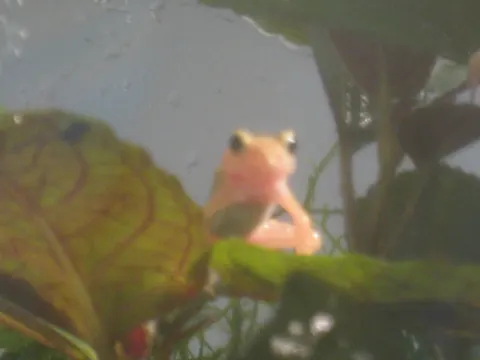
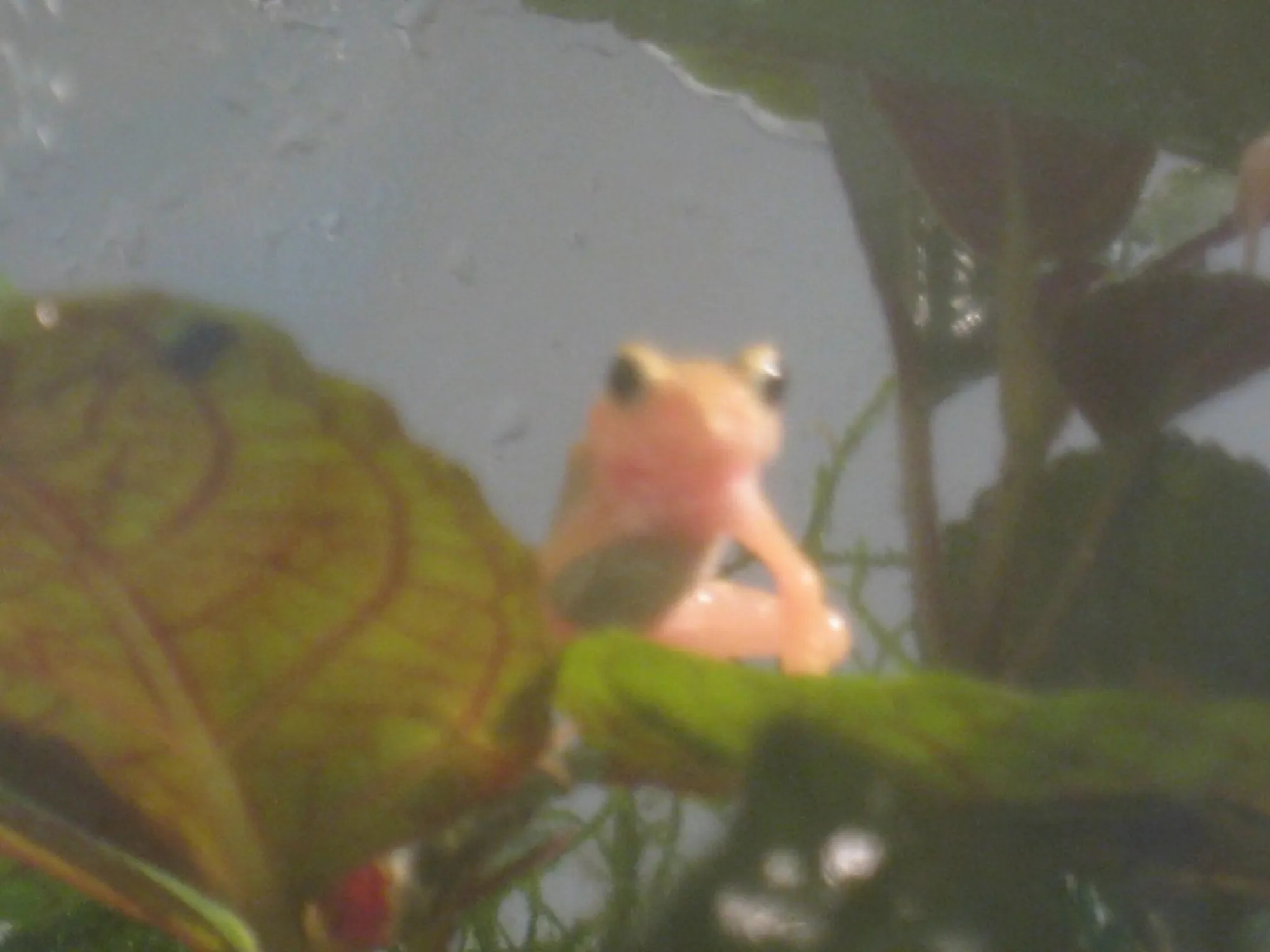
Small enough to sit among the grasses of a waterfall wetland, the Kihansi Spray Toad has yellow skin with brownish markings. Females reach up to 2.9 cm long and tend to be duller, while males reach up to 1.9 cm and usually have more pronounced markings. The toad eats insects and gives birth to live young.
Its native home was a tiny patch below the Kihansi River waterfall, in Tanzania's Udzungwa escarpment. The wetlands there were fed by waterfall spray and covered in dense vegetation, including grasses, clubmosses and snail ferns. Within the spray zones, temperatures stayed nearly constant and humidity reached 100%. Searches around other waterfalls on the escarpment found no additional populations. The last confirmed record of wild toads was in 2004, and captive breeding populations are maintained in zoos.
The construction of Kihansi Dam in 1999 reduced the water coming down the waterfall by 90 percent, cutting the spray on which the toads depended and changing the vegetation. A sprinkler system now imitates the original spray-zone conditions, although an earlier system was not operating when the dam opened. The final population crash in 2003 coincided with a sprinkler breakdown in the dry season, the appearance of chytridiomycosis and a brief release of sediment containing pesticides from the dam. Captive toads have also died after attacks by chytrid fungus and failures of air conditioning and water filtration systems. Researchers expect a return to the wild to take time, as the toads must adapt to finding food, avoiding predators and coping with disease.
Written from the English Wikipedia article Kihansi spray toad (CC BY-SA 4.0).
- Records
- 4
- Countries
- 1
No atlas park has a record of the Kihansi Spray Toad in or around it yet.
These are open occurrence records, so they show where people looked for and recorded the Kihansi Spray Toad as much as where it lives. Cells are up to 25 km across, and every location is generalised to its cell.
Generalised encounter areas, not exact locations. Each shape is a grid cell coloured by how likely the species is there.
- Very likelyTanzania25 km zone · medium confidence · 4 records · updated 80 days ago
Conservation status not assessed here yet, so every location is generalised to its grid cell.