Dama Gazelle
Nanger dama
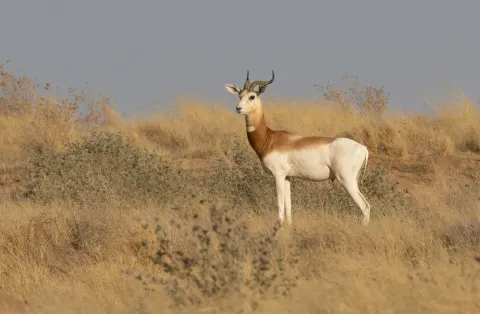
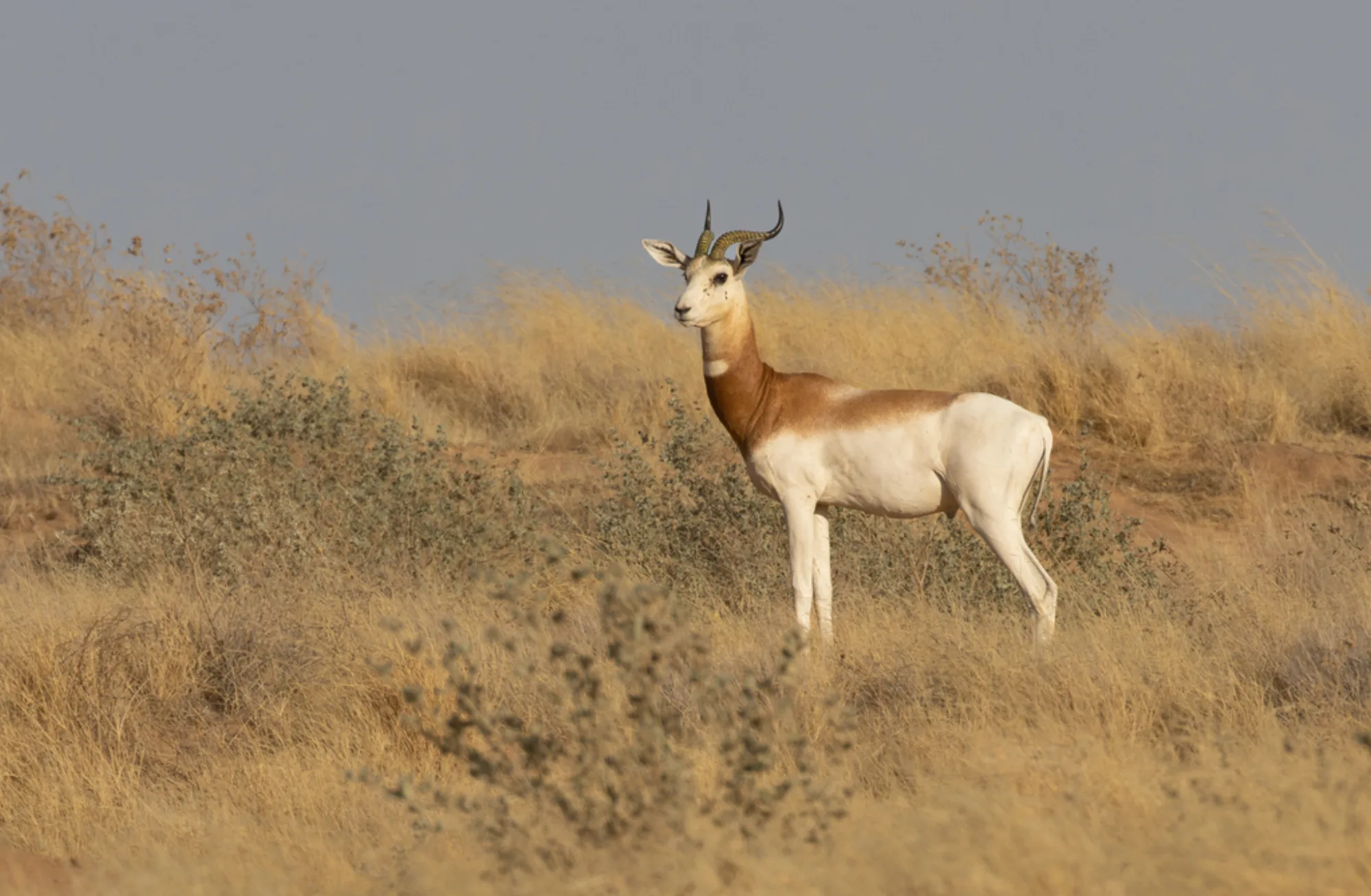
Standing up to 95 cm at the shoulder, the Dama Gazelle is recognized as the largest gazelle species. It has a white body paired with a reddish-brown neck and head, featuring relatively large eyes and a slim muzzle. Both sexes possess S-shaped, ringed horns, though those of the male are significantly longer. To manage the heat of its desert home, this animal relies on its exceptionally long legs to dissipate warmth.
While it once ranged across a wider area, wild populations are now restricted to Mali, Chad, and Niger. These gazelles inhabit diverse landscapes including shrublands, grasslands, mountain plateaus, and open savanna. They are active during the day and feed on fruit, herbs, shoots, and the leaves of Acacia trees. Though they can endure long droughts, they require more water than other desert-dwelling relatives. When danger nears, they alert their herd by pronking, a behavior where they hop stiffly so all four feet hit the ground simultaneously.
Human activity is the primary threat to their survival. Hunters using motorized vehicles have caused numbers to plummet, while civil unrest and a lack of park security allow poaching to continue. Habitat is lost when people prune tree limbs for their own use, causing the food sources of the gazelle to die. Additionally, the animals face pressure from livestock diseases and may even die from the stress of fleeing tourists during the hot season.
Written from the English Wikipedia article Dama gazelle (CC BY-SA 4.0).
- Atlas places
- 0
These are open occurrence records, so they show where people looked for and recorded the Dama Gazelle as much as where it lives. Cells are up to 25 km across, and every location is generalised to its cell.
No encounter zones yet
Where and when you can expect to see Dama Gazelle is calculated from observation density. No zones have been computed for this species yet.