Andaman Cobra
Naja sagittifera
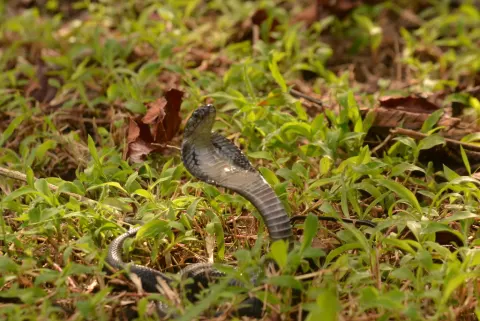
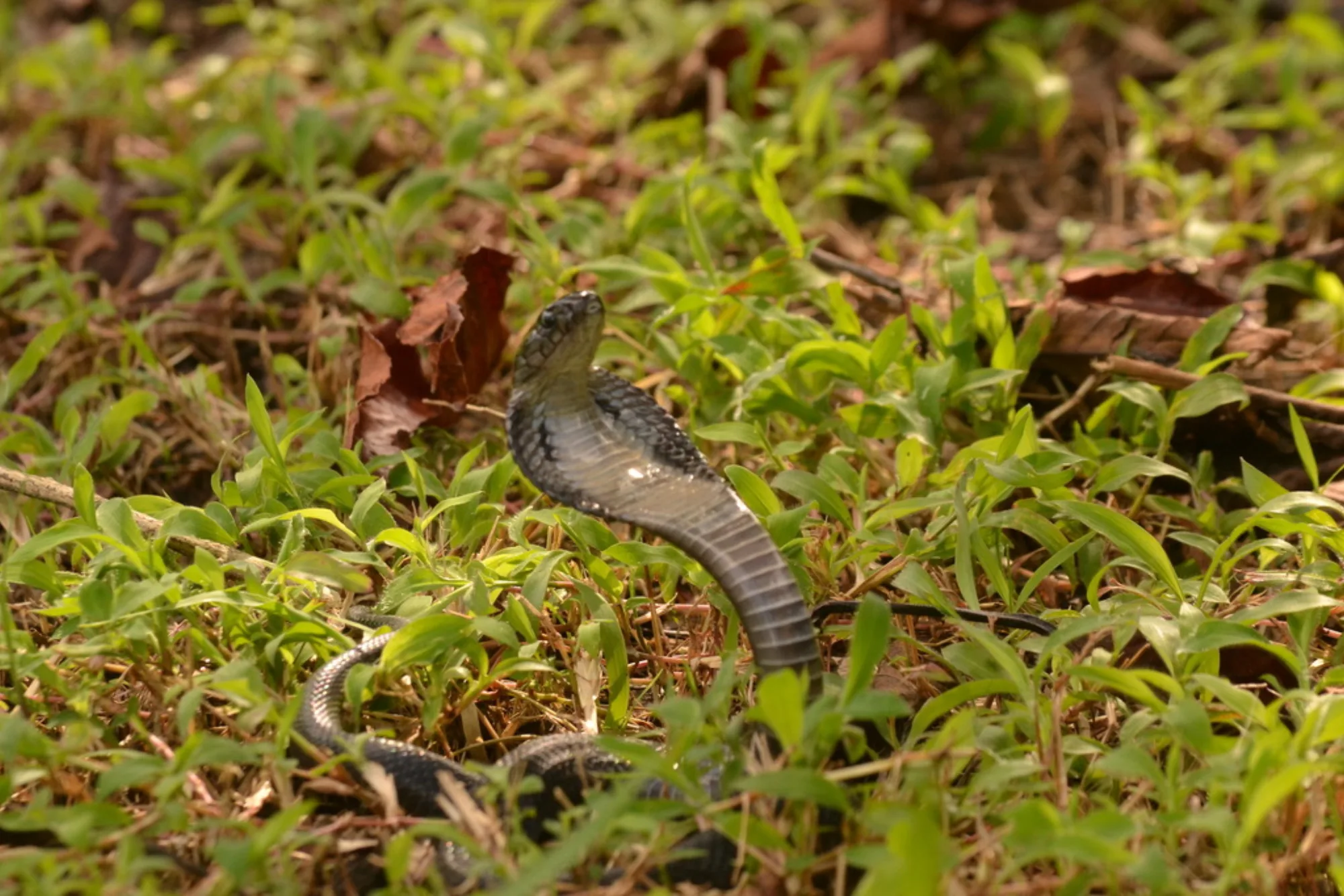
Endemic to the Andaman and Little Andaman Islands of India, this snake belongs to the Elapidae family. Travellers might encounter the Andaman Cobra in three distinct adult color patterns, ranging from uniform glossy black to light brown or grayish shades. Some individuals display black cross-bars or black lines circling the body and tail, while others have pale white patches on their black heads. These heavy-bodied snakes average 0.9 metres in length, though they regularly reach 1.5 metres and have been found as long as 1.8 metres. When threatened, they expand their long cervical ribs to form a hood, which often features an indistinct or distinct black monocle mark.
While they are not considered true spitting cobras, these snakes are capable of ejecting a very potent venom from their fangs. This defensive spitting is rare and often inaccurate, but the venom can cause blindness and intense pain if it enters the eyes. A bite from this species may result in progressive swelling, blistering, and skin necrosis that takes three to seven days to fully develop. Systemic symptoms include nausea, abdominal pain, and limb weakness, potentially leading to respiratory paralysis. Long-term morbidity is a risk for survivors, as squamous cell carcinoma can eventually develop in extensive wounds that are difficult to heal. Beyond the immediate physical danger of its venom, the snake faces no specific environmental threats mentioned in the record.
Written from the English Wikipedia article Andaman cobra (CC BY-SA 4.0).
- Records
- 2
- Countries
- 1
- Atlas places
- 0
These are open occurrence records, so they show where people looked for and recorded the Andaman Cobra as much as where it lives. Cells are up to 25 km across, and every location is generalised to its cell.
Generalised encounter areas, not exact locations. Each shape is a grid cell coloured by how likely the species is there.
- Very likelyIndia50 km zone · medium confidence · 2 records · updated 1 day ago