Caspian Cobra
Naja oxiana
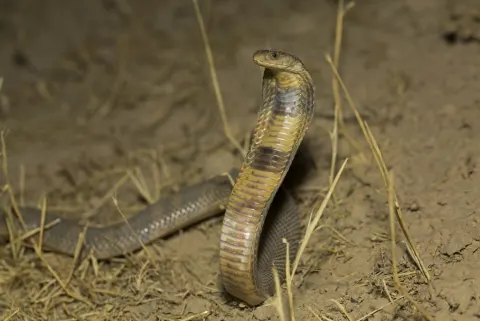
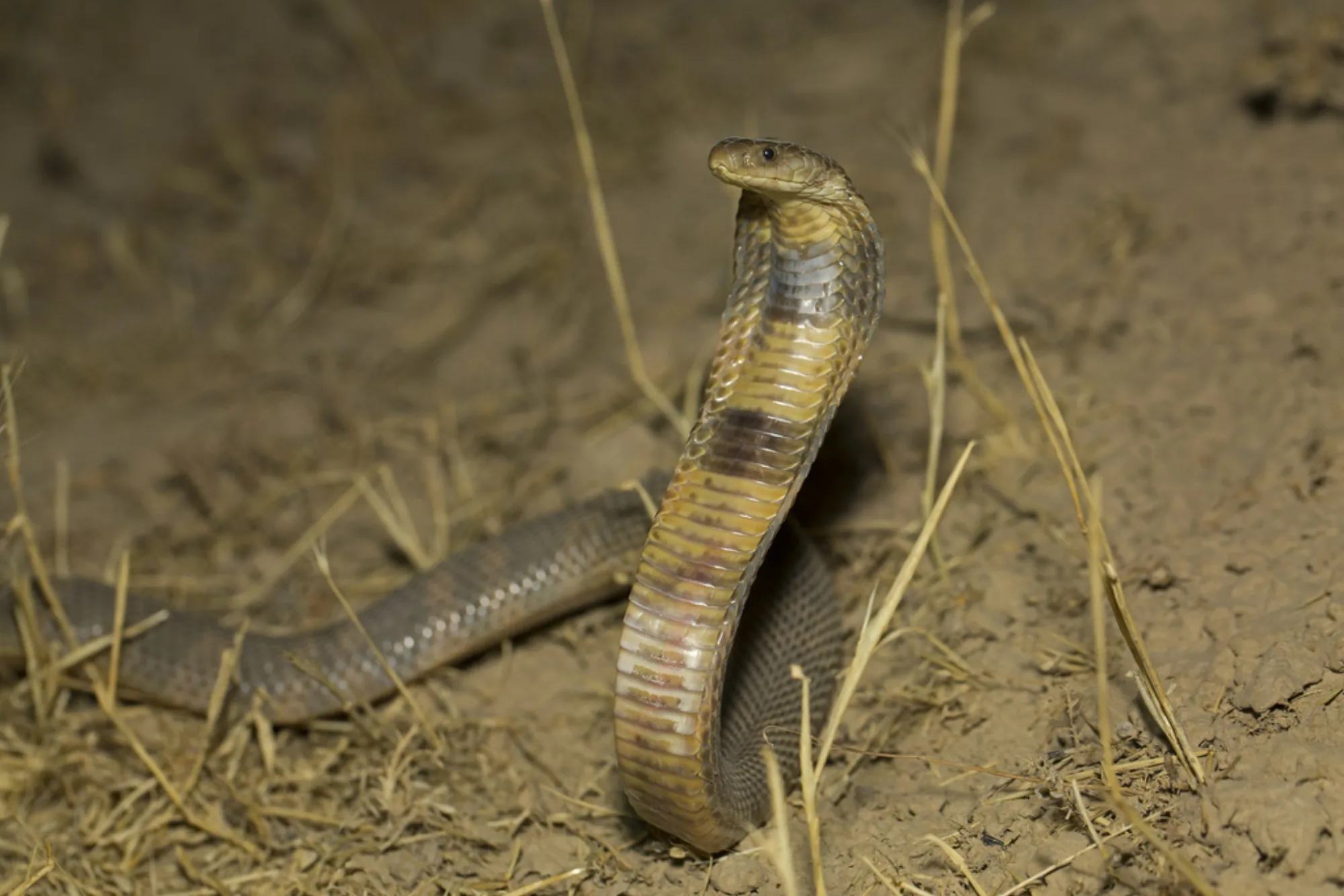
Found across Central Asia, the Caspian Cobra is a medium-sized, heavy-bodied snake that typically measures between 1 and 1.4 m. While juveniles display distinct light and dark cross-bands, adults are a uniform yellowish or chocolate brown. This species lacks the hood markings found on some relatives, but it possesses long ribs that allow it to spread a gradually tapering hood. It is an agile climber and a capable swimmer, often making its home in tree holes or embankment burrows.
This terrestrial snake is primarily active during the day, though it may shift to twilight or nighttime activity during the heat of July. It prefers arid or stony foothills and scrublands, reaching elevations of 3,000 m. While it generally avoids human contact, it will defend itself fiercely if cornered, swaying and striking repeatedly. Its diet is varied, consisting of small mammals, birds, eggs, amphibians, and even other snakes.
Though it is the most dangerous snake in its region, it faces significant human-related pressure. In Iran and Pakistan, it is responsible for high mortality rates among snakebite victims, leading to many specimens being shot when they encounter people. Its venom is so potent that even with antivenom treatment, deaths still occur. Consequently, researchers continue to study its venom for medical purposes and to develop more effective serums to manage the high risk it poses to local villages.
Written from the English Wikipedia article Caspian cobra (CC BY-SA 4.0).
- Atlas places
- 0
These are open occurrence records, so they show where people looked for and recorded the Caspian Cobra as much as where it lives. Cells are up to 25 km across, and every location is generalised to its cell.
No encounter zones yet
Where and when you can expect to see Caspian Cobra is calculated from observation density. No zones have been computed for this species yet.
Conservation status not assessed here yet, so every location is generalised to its grid cell.