Chinese Cobra
Naja atra
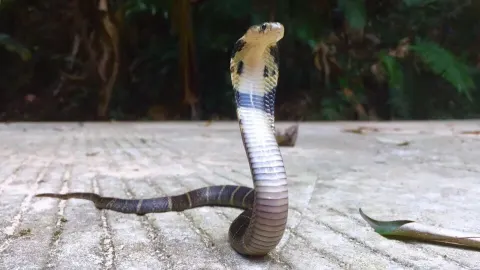
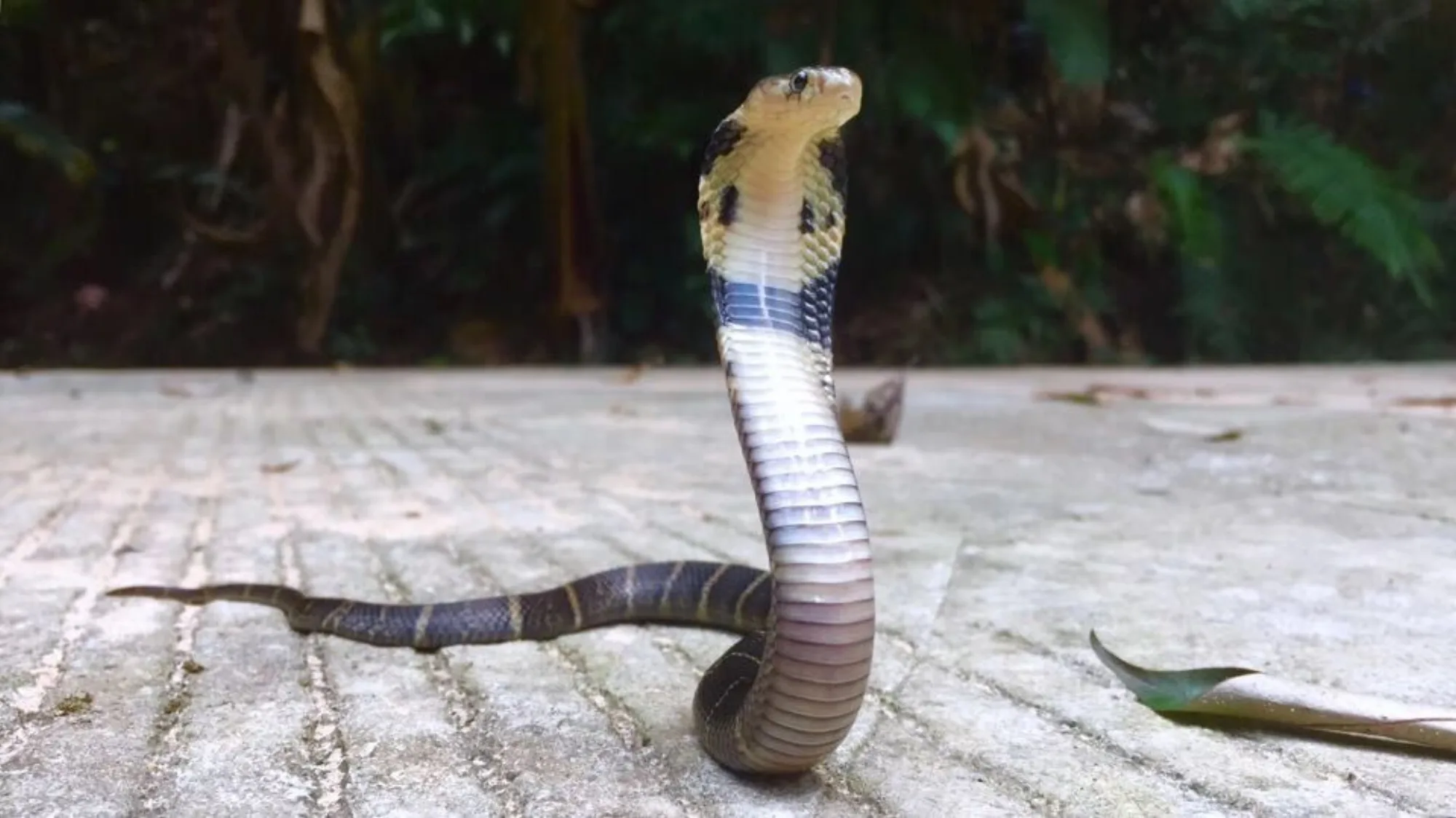
A spread hood makes the Chinese Cobra (Naja atra) recognisable, though the mark on it varies in shape from a spectacle or mask to a horseshoe or O. The mark is often connected on at least one side to a pale throat, which usually has a clearly defined spot on each side. Its back is usually brown, grey or black, sometimes crossed by narrow, pale lines at irregular intervals. These lines are especially prominent in young snakes, while the underside is pearl or slate coloured. A medium-sized cobra, it usually measures 1.2 to 1.5 metres long, though rarely it can reach 2 metres.
The species occurs across southeastern China, including Hong Kong and Hainan, as well as Taiwan, northern Laos and northern Vietnam. It can live in woodland, shrubland, grassland and mangroves, and its adaptability allows it to persist in a variety of habitats. The Chinese Cobra lives on the ground and is active during the day and at twilight. When faced with people, it usually escapes to avoid a confrontation, although adults can be very aggressive. Young snakes are generally more aggressive, being more nervous about what surrounds them. Females lay between 6 and 23 eggs from May through to the end of July.
This highly venomous cobra is among China's most widespread venomous snakes. It has caused many snakebite incidents involving people, and bites can cause pain, swelling, blisters and tissue death. Breathing difficulties can also occur, and bites are occasionally fatal. Antivenom is readily available, and far fewer people die from bites than in the past.
Written from the English Wikipedia article Chinese cobra (CC BY-SA 4.0).
- Records
- 138
- Countries
- 5
No atlas park has a record of the Chinese Cobra in or around it yet.
These are open occurrence records, so they show where people looked for and recorded the Chinese Cobra as much as where it lives. Cells are up to 25 km across, and every location is generalised to its cell.
Generalised encounter areas, not exact locations. Each shape is a grid cell coloured by how likely the species is there.
- Very likelyTaiwan25 km zone · medium confidence · 87 records · updated 80 days ago
- Very likelyChina25 km zone · medium confidence · 23 records · updated 80 days ago
- Very likelyHong Kong SAR China25 km zone · medium confidence · 17 records · updated 80 days ago
- Very likelyVietnam25 km zone · medium confidence · 10 records · updated 80 days ago
- PossibleMacao SAR China25 km zone · medium confidence · 1 record · updated 80 days ago
Conservation status not assessed here yet, so every location is generalised to its grid cell.