Indiana Bat
Myotis sodalis
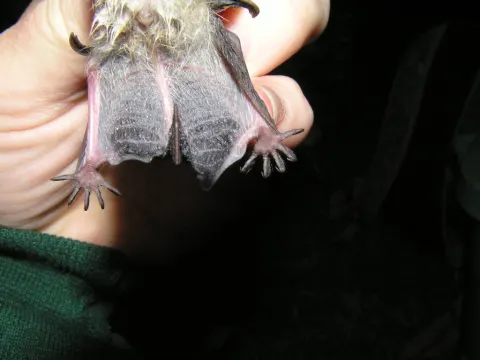
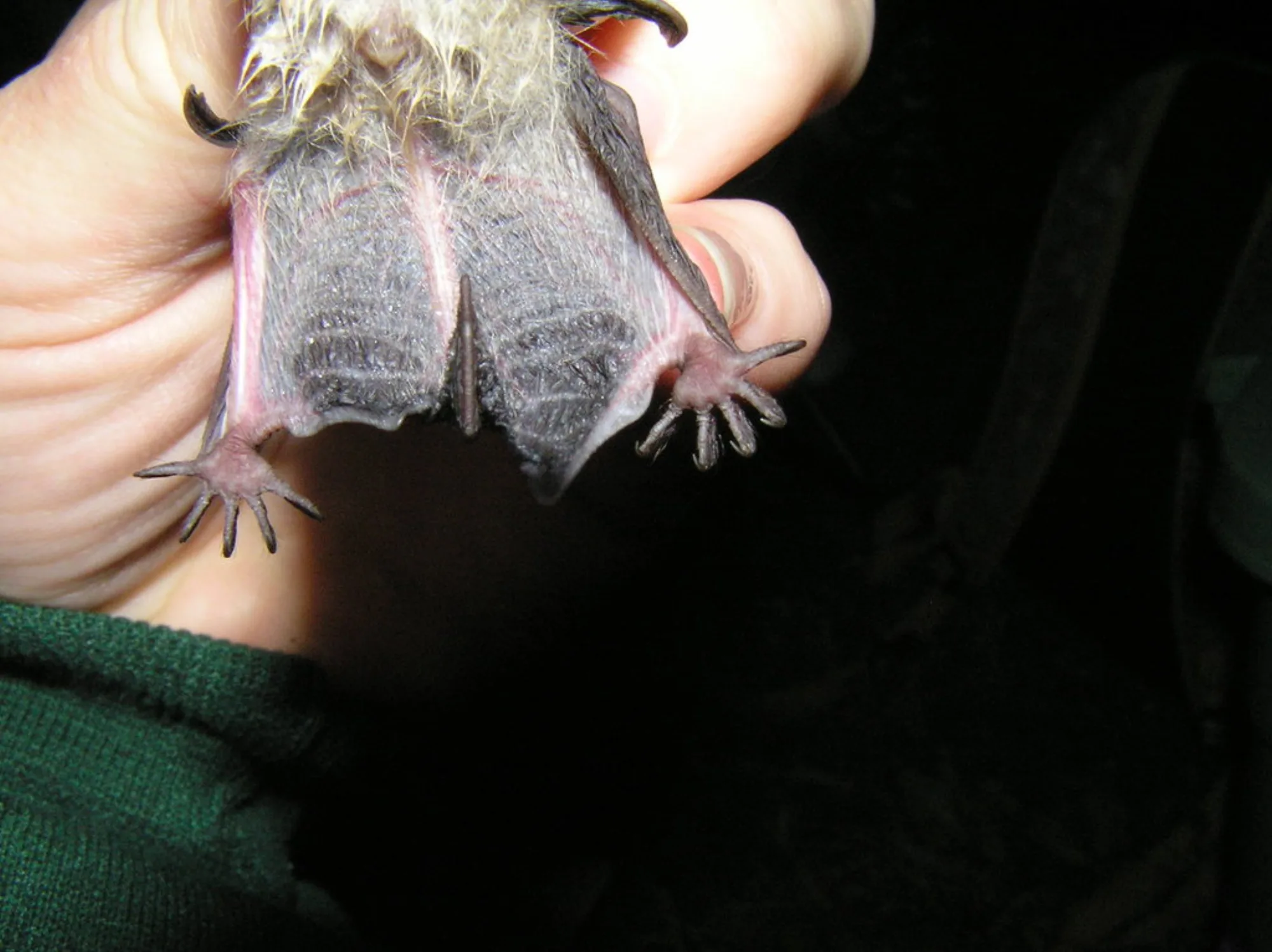
The Indiana Bat is a medium-sized species from North America with fur ranging from black to chestnut and a lighter belly. It is often confused with the little brown bat, but it can be identified by its pink lips, small feet, and a ridge on the calcar. These animals typically weigh around 8 g and measure between 1.2 and 2.0 in long. They are long-lived for their size, with some individuals reaching 12 to 20 years of age.
In summer, these bats inhabit hardwood or pine forests across the eastern United States, often roosting under the loose bark of large, sun-exposed trees. They are insectivores that hunt at night for beetles, moths, and mosquitoes. While females gather in nursery colonies of up to 100 individuals, males often roost alone. During the winter, the population moves to a limited number of caves and mines to hibernate. They require specific, stable temperatures to conserve fat and often huddle in tight clusters of thousands.
Human activity and habitat loss pose significant risks to these bats. People entering caves can wake hibernating colonies, causing them to burn vital energy. Additionally, white-nose syndrome has caused a massive population crash, killing between 5.7 and 6.7 million bats in the country since 2007. Other dangers include collisions with wind turbines, pesticide use, and the installation of improper cave gates that disrupt airflow. Natural predators like snakes, raccoons, and owls also hunt them, though their impact is small compared to human-driven threats.
Written from the English Wikipedia article Indiana bat (CC BY-SA 4.0).
- Records
- 0
- Countries
- 1
- Atlas places
- 0
These are open occurrence records, so they show where people looked for and recorded the Indiana Bat as much as where it lives. Cells are up to 25 km across, and every location is generalised to its cell.
Generalised encounter areas, not exact locations. Each shape is a grid cell coloured by how likely the species is there.
- Very likelyUnited States25 km zone · low confidence · 0 records · updated 1 day ago
Conservation status not assessed here yet, so every location is generalised to its grid cell.