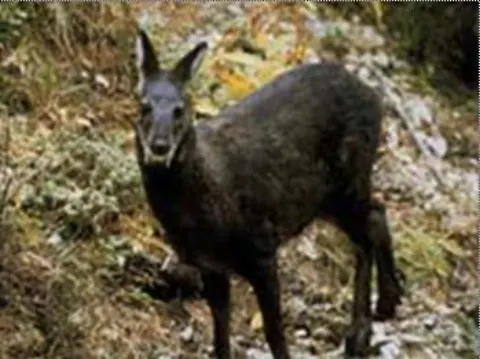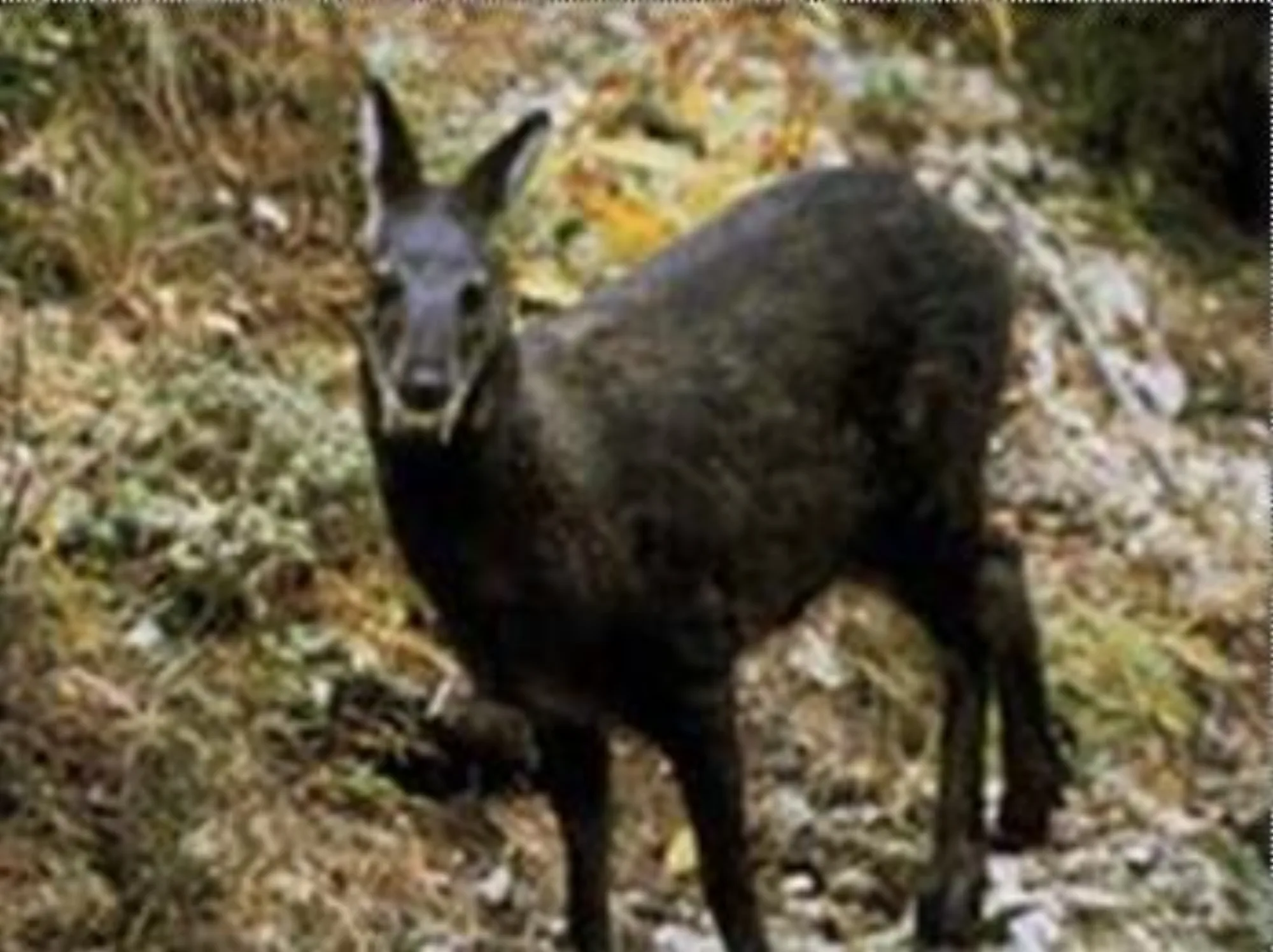
Black Musk Deer
Moschus fuscus
Found in the mountainous forests of Bhutan, China, India, Myanmar, and Nepal, the Black Musk Deer is a small, agile ungulate. It lacks antlers but is easily identified by its thick brown hair, large ears, and hind legs that are significantly longer than its front limbs. Adult males and females weigh between 10 and 15 kg and reach lengths of 70 to 100 cm. A key feature of the males is their long, saber-like upper teeth which extend past the jaw.
These solitary animals are most active at night or during the twilight hours of dawn and dusk. They are incredibly nimble, capable of climbing trees and navigating the sheer edges of cliffs or dense thickets. While they primarily eat grass and other vegetation, they can be fierce when defending territory or competing for mates, using their tusks and hooves to fight. Females usually give birth to one or two spotted young in June or July, caring for them for several months until they are weaned.
Despite being naturally wary, this species faces severe pressure from humans. People hunt them far more than natural predators like lynx or wolverines. The primary motivation is the musk gland found in mature males, which has historically been valued at four times the price of gold for use in perfumes, soaps, and traditional medicines. Additionally, the deer are losing their homes to deforestation, and their declining numbers are beginning to disrupt the local food web.
Written from the English Wikipedia article Black musk deer (CC BY-SA 4.0).
- Atlas places
- 0
These are open occurrence records, so they show where people looked for and recorded the Black Musk Deer as much as where it lives. Cells are up to 25 km across, and every location is generalised to its cell.
No encounter zones yet
Where and when you can expect to see Black Musk Deer is calculated from observation density. No zones have been computed for this species yet.