Harvest Mouse
Micromys minutus
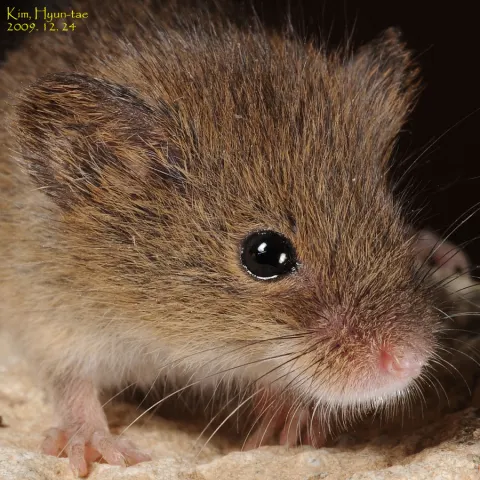
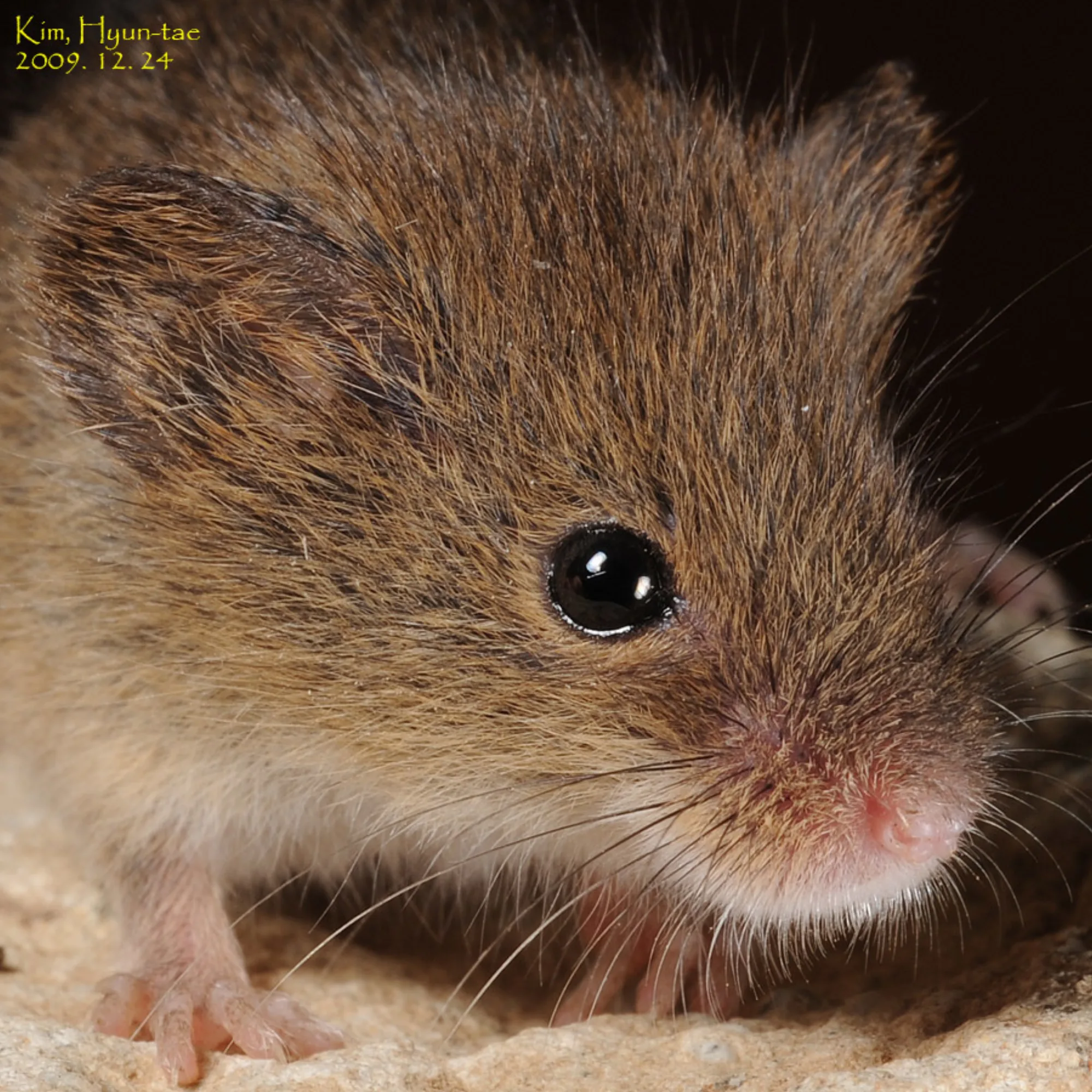
Small enough to weigh just 4 grams as an adult, the Harvest Mouse (Micromys minutus) is Europe's smallest rodent. Its fur is soft and thick, with brown, sometimes reddish or yellowish upperparts and white to cream underparts. Large eyes and ears, a small nose and short whiskers add to its distinctive appearance. Its tail is mostly bare, often two-coloured and useful for both balance and climbing.
Native to Europe and Asia, it lives among tall ground vegetation, including long grass, reeds and hedgerows. It also uses cereal fields, railway banks and, in western England, woodland and forest. In England it is common in east coast counties as far north as the North York Moors. Most harvest mice favour wetlands for nesting, while mice in Japan make winter nests from dried grass near the ground. This cover matters in winter as well as during the warmer seasons.
Harvest mice are thought to live alone, spending much of their lives in grasses and other vegetation. As they climb, they use their feet and tail to hold onto vegetation, freeing their forepaws for feeding and grooming. Seeds and insects make up most of their diet, supplemented by nectar and fruit. Their round breeding nests are woven from grass and secured to stems above the ground. In Britain, the first breeding nests of the year are usually built in June or July, though some appear earlier. Predators include domestic cats, owls and kestrels. In Japan, farming, pesticides, habitat destruction and the draining and fragmentation of wetlands threaten the mouse, while surveys in Britain found a decline in its nests and a substantial loss of suitable habitat.
Written from the English Wikipedia article Eurasian harvest mouse (CC BY-SA 4.0).
- Records
- 6,696
- Countries
- 13
No atlas park has a record of the Harvest Mouse in or around it yet.
These are open occurrence records, so they show where people looked for and recorded the Harvest Mouse as much as where it lives. Cells are up to 25 km across, and every location is generalised to its cell.
Generalised encounter areas, not exact locations. Each shape is a grid cell coloured by how likely the species is there.
- Very likelyFrance25 km zone · medium confidence · 2589 records · updated 80 days ago
- Very likelyUnited Kingdom25 km zone · medium confidence · 1779 records · updated 80 days ago
- Very likelySwitzerland25 km zone · high confidence · 1442 records · updated 80 days ago
- Very likelyFinland25 km zone · medium confidence · 536 records · updated 80 days ago
- Very likelyGermany25 km zone · high confidence · 130 records · updated 80 days ago
- Very likelyNorway25 km zone · medium confidence · 67 records · updated 80 days ago
- Very likelyAustria25 km zone · medium confidence · 40 records · updated 80 days ago
- Very likelyLuxembourg25 km zone · medium confidence · 34 records · updated 80 days ago
- Very likelyDenmark25 km zone · medium confidence · 17 records · updated 80 days ago
- LikelyTaiwan25 km zone · medium confidence · 27 records · updated 80 days ago
Conservation status not assessed here yet, so every location is generalised to its grid cell.