Madame Berthe's Mouse Lemur
Microcebus berthae
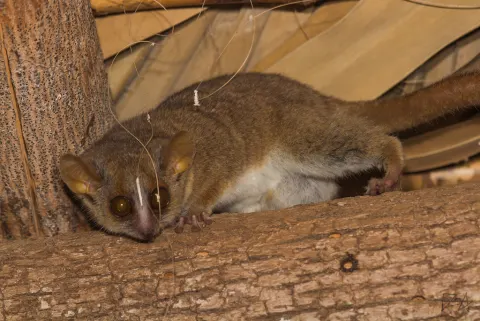
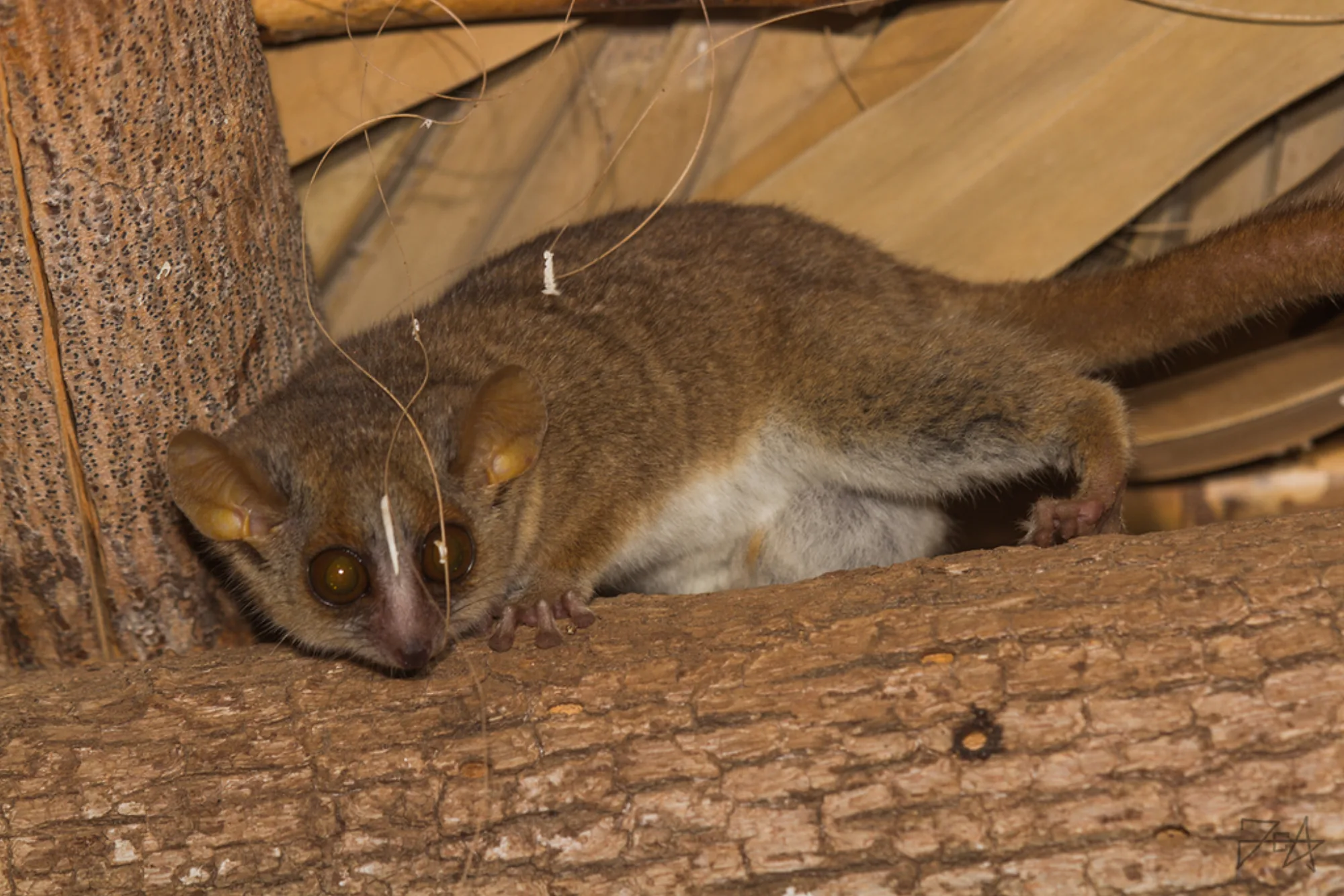
Recognized as the smallest primate on Earth, Madame Berthe's mouse lemur measures an average of 9.2 cm in length. This tiny creature weighs approximately 30 g and is covered in short, thick fur. Its back displays a blend of cinnamon and yellow ochre with a tawny stripe running down the middle, while its underbelly is a chamois color. A thin dark band circles each eye, and its tail, crown, and ears are all tawny.
This species is found in the dry deciduous forests of western Madagascar, specifically within the Kirindy Forest. It relies on tangles of tree vines or hollows for shelter, often sleeping in nests made of leaves. While these lemurs are typically solitary when foraging, they are social enough to sleep alongside others. Unlike some relatives, they stay active throughout the cold dry season. To survive when food is scarce, they use a larger home range rather than entering hibernation. Their omnivorous diet includes fruit, flowers, gum, and insects, as well as small vertebrates like chameleons.
Survival is difficult for this specialist species because it is restricted to a very small area. It faces intense competition for resources from the larger gray mouse lemur and suffers a high predation mortality rate of 70%. Human activity is the most significant threat, as illegal logging, charcoal production, and slash and burn agriculture cause rapid deforestation. In the late twentieth century, over half of the surrounding forests were lost. If this habitat destruction continues at the current pace, the species could vanish within 10 years.
Written from the English Wikipedia article Madame Berthe's mouse lemur (CC BY-SA 4.0).
- Records
- 1
- Countries
- 1
- Atlas places
- 0
These are open occurrence records, so they show where people looked for and recorded the Madame Berthe's Mouse Lemur as much as where it lives. Cells are up to 25 km across, and every location is generalised to its cell.
Generalised encounter areas, not exact locations. Each shape is a grid cell coloured by how likely the species is there.
- Very likelyMadagascar50 km zone · medium confidence · 1 record · updated 4 days ago