Deraniyagala's Beaked Whale
Mesoplodon hotaula
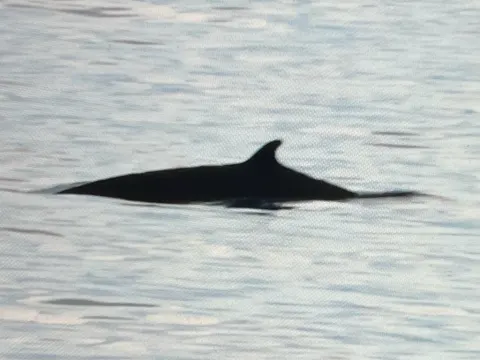
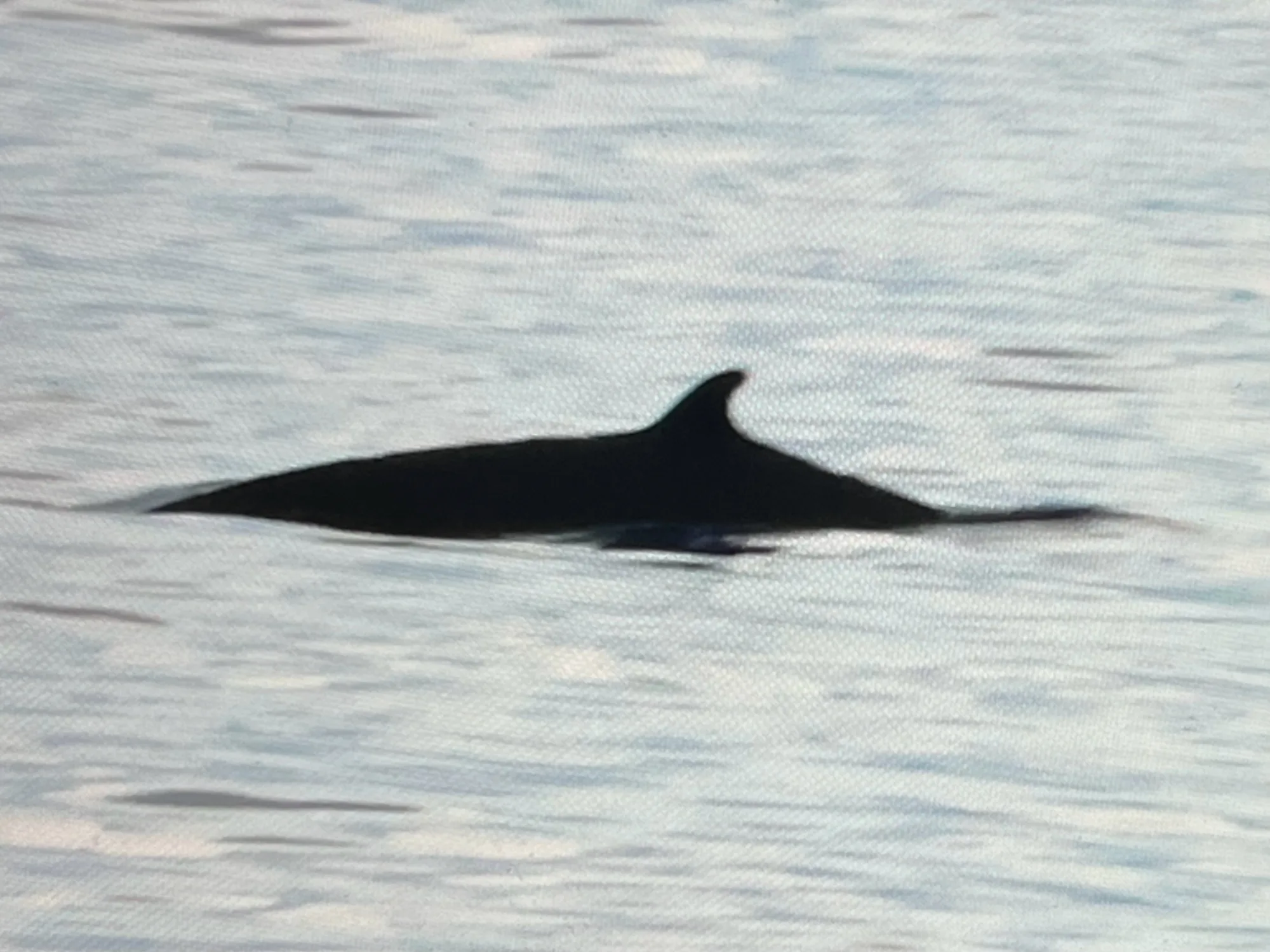
Found in the tropical waters of the Indian and South Pacific Oceans, Deraniyagala's Beaked Whale is a elusive marine mammal that prefers island habitats. While sightings are rare, this species has been identified near the Seychelles, Maldives, and Sri Lanka, as well as the Kiribati, Line, and Gilbert Islands. These whales appear to live in isolated, insular communities. Reaching lengths of 13 to 16 feet, they are smaller than many of their relatives. You can recognize them by their dark blue-black or brownish-black backs and lighter underbellies. Look for a white lower lip and pale, mottled cheeks, which are key indicators of the species. They also possess a small, curved fin located about two-thirds of the way down their bodies.
These deep-diving whales are capable of staying submerged for nearly two hours at a time. They forage for deep-water fish and squid using a complex system of echolocation clicks to track and capture prey. Instead of using teeth to bite, they are suction feeders that pull food into their mouths by creating a low-pressure environment. Socially, these whales may live in small groups consisting of a single mature male and several females with their young. Adult males likely fight one another for access to these groups, as stranded specimens often show signs of combat like chipped teeth.
The survival of Deraniyagala's Beaked Whale is threatened by the presence of ocean debris and plastic pollution. Ingesting plastics can cause internal blockages or release harmful toxins, leading to malnutrition or chemical poisoning. Researchers have also found stranded individuals with stomachs containing rope and coal, and others with lip indentations potentially caused by fishing lines.
Written from the English Wikipedia article Deraniyagala's beaked whale (CC BY-SA 4.0).
- Atlas places
- 0
These are open occurrence records, so they show where people looked for and recorded the Deraniyagala's Beaked Whale as much as where it lives. Cells are up to 25 km across, and every location is generalised to its cell.
No encounter zones yet
Where and when you can expect to see Deraniyagala's Beaked Whale is calculated from observation density. No zones have been computed for this species yet.
Conservation status not assessed here yet, so every location is generalised to its grid cell.