Red-bellied Woodpecker
Melanerpes carolinus
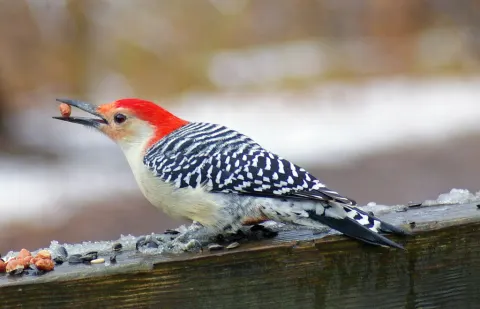
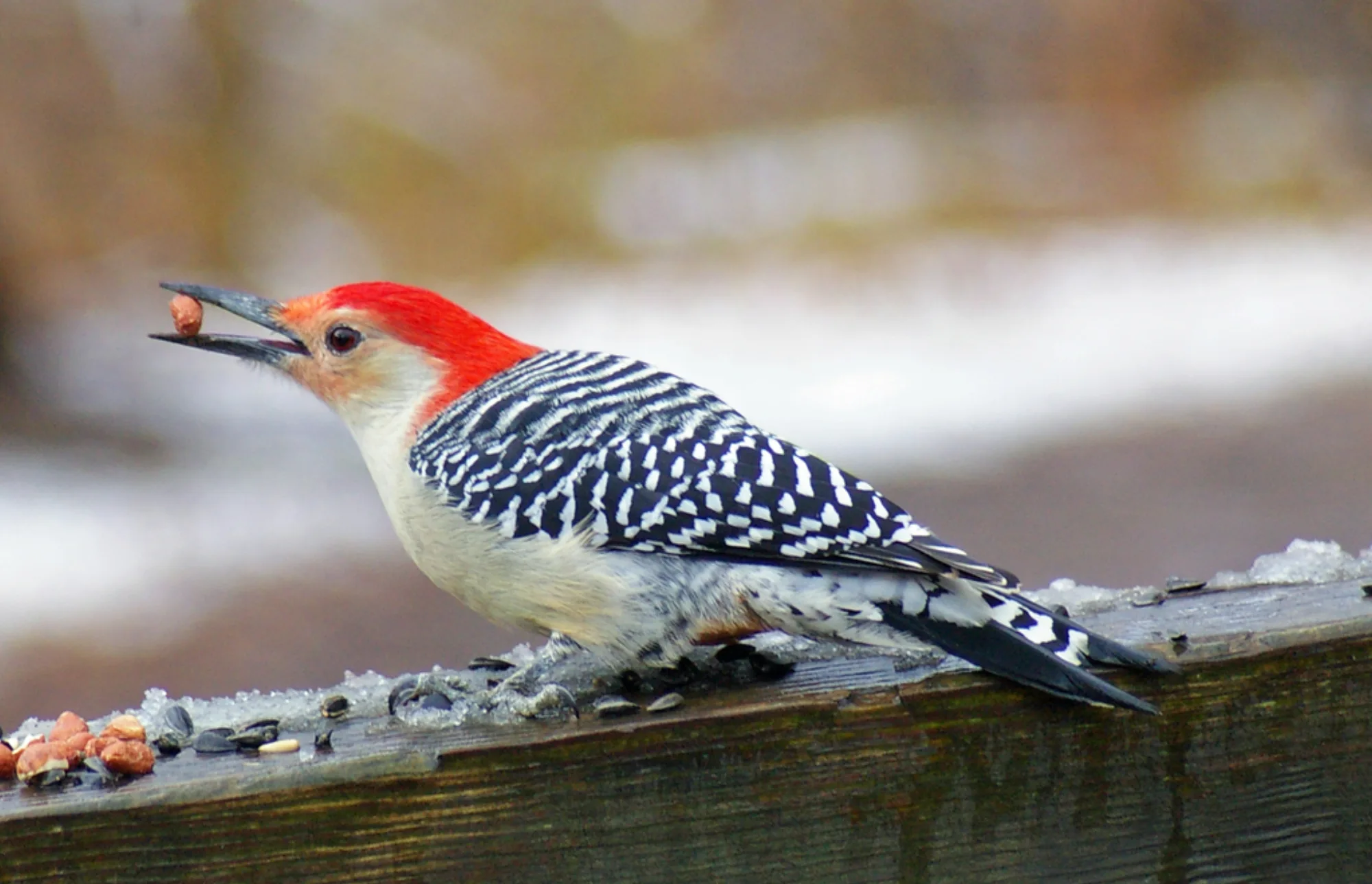
Look for a pale grey face and underparts, a barred black and white back, and a flash of white on the wings in flight. The Red-bellied Woodpecker is a medium-sized bird, 22.85 to 26.7 cm long, with an orange-red crown and nape. Males have a red cap stretching from the bill to the back of the neck, while females have separate red patches above the bill and on the nape. The faint reddish wash that gives the bird its name can be difficult to see in the field.
This woodpecker breeds mainly in the eastern United States, from Florida north to Canada, usually in deciduous forest. It is a noisy bird with varied calls, and both sexes drum, sometimes on hollow trees or metal structures. Listen, too, for its bill working against bark as it searches tree trunks for insects, including beetles. Fruit, nuts and seeds are also on the menu, and it stores food such as berries and acorns in crevices. Pairs hold territory year-round and begin nesting in April or May, excavating cavities in dead trees, old stumps or living trees with softer wood. Both parents help dig the nest, and young birds are ready to leave it at 24 to 26 days old.
Large trees, including dead and dying ones, are important for nesting and feeding, and extensive deforestation can leave few of these woodpeckers in an area. Cutting dead trees has been linked to low breeding, while predators remain a major concern. Hawks, snakes and house cats take adults; eggs and nestlings are also vulnerable to animals including owls, squirrels and other woodpeckers. Near the nest, the adults defend their young and may attack an approaching predator.
Written from the English Wikipedia article Red-bellied woodpecker (CC BY-SA 4.0).
- Records
- 5,820,770
- Countries
- 2
- Atlas places
- 2
These are open occurrence records, so they show where people looked for and recorded the Red-bellied Woodpecker as much as where it lives. Cells are up to 25 km across, and every location is generalised to its cell.
Generalised encounter areas, not exact locations. Each shape is a grid cell coloured by how likely the species is there.
- Very likelyUnited States25 km zone · high confidence · 5703752 records · updated 86 days ago
- Very likelyCanada25 km zone · high confidence · 117018 records · updated 86 days ago
Conservation status not assessed here yet, so every location is generalised to its grid cell.