Megamouth Shark
Megachasma pelagios
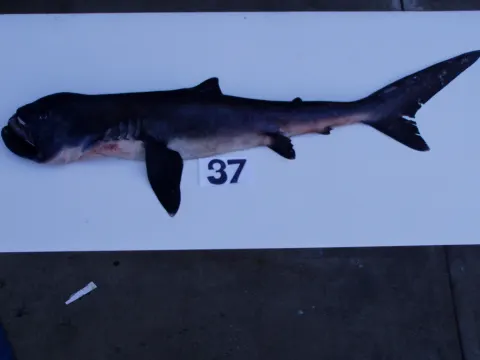
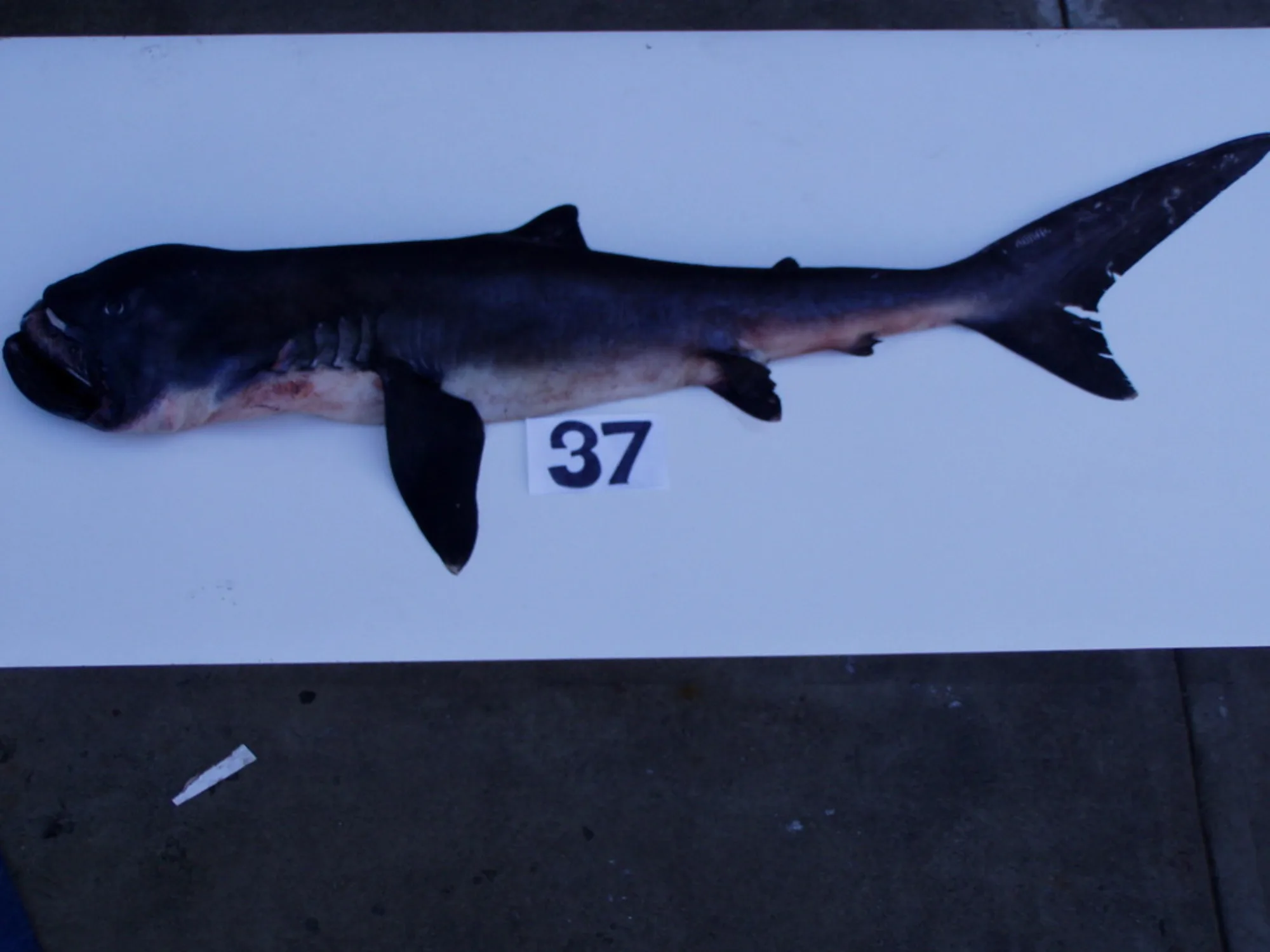
A vast mouth and a broad, rounded snout give the Megamouth Shark its distinctive appearance, though people rarely see this deepwater species. It usually measures around 4 to 5.5 m long, with a stout, soft body and a large head edged by rubbery lips. Its upper side may be dark blue, brownish-black or grey, while its underside is lighter. A white band runs along the upper jaw, and the inside of the upper lip appears silvery-white when the mouth opens.
The species occurs across the Pacific, Atlantic and Indian Oceans, with Japan, the Philippines and Taiwan accounting for more than half of all specimens recorded worldwide. They occur at depths of up to 1,500 metres, although tracking shows that they can move much closer to the surface at night. One shark followed off California travelled slowly, spending its days around 120 to 160 m deep before rising to between 12 and 25 m at night. Three sharks tracked off Taiwan also reached their shallowest depths at night, a pattern seen in marine animals that follow plankton through the water.
The shark swims with its mouth open and filters food from the water, taking plankton and jellyfish. Its diet includes krill, shrimp larvae, squat lobsters and crab larvae. Little is known about its social life, but fishermen once observed two megamouths together off California. Young develop in eggs inside the mother's body and remain there until they hatch. Megamouths have been caught by fishermen, and the first recorded specimen became entangled in a research vessel's sea anchor.
Written from the English Wikipedia article Megamouth shark (CC BY-SA 4.0).
- Records
- 7
- Countries
- 1
No atlas park has a record of the Megamouth Shark in or around it yet.
These are open occurrence records, so they show where people looked for and recorded the Megamouth Shark as much as where it lives. Cells are up to 25 km across, and every location is generalised to its cell.
Generalised encounter areas, not exact locations. Each shape is a grid cell coloured by how likely the species is there.
- Very likelyPhilippines25 km zone · medium confidence · 7 records · updated 80 days ago
Conservation status not assessed here yet, so every location is generalised to its grid cell.