Philippine Pangolin
Manis culionensis
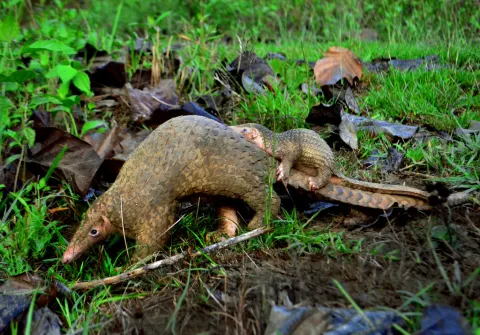
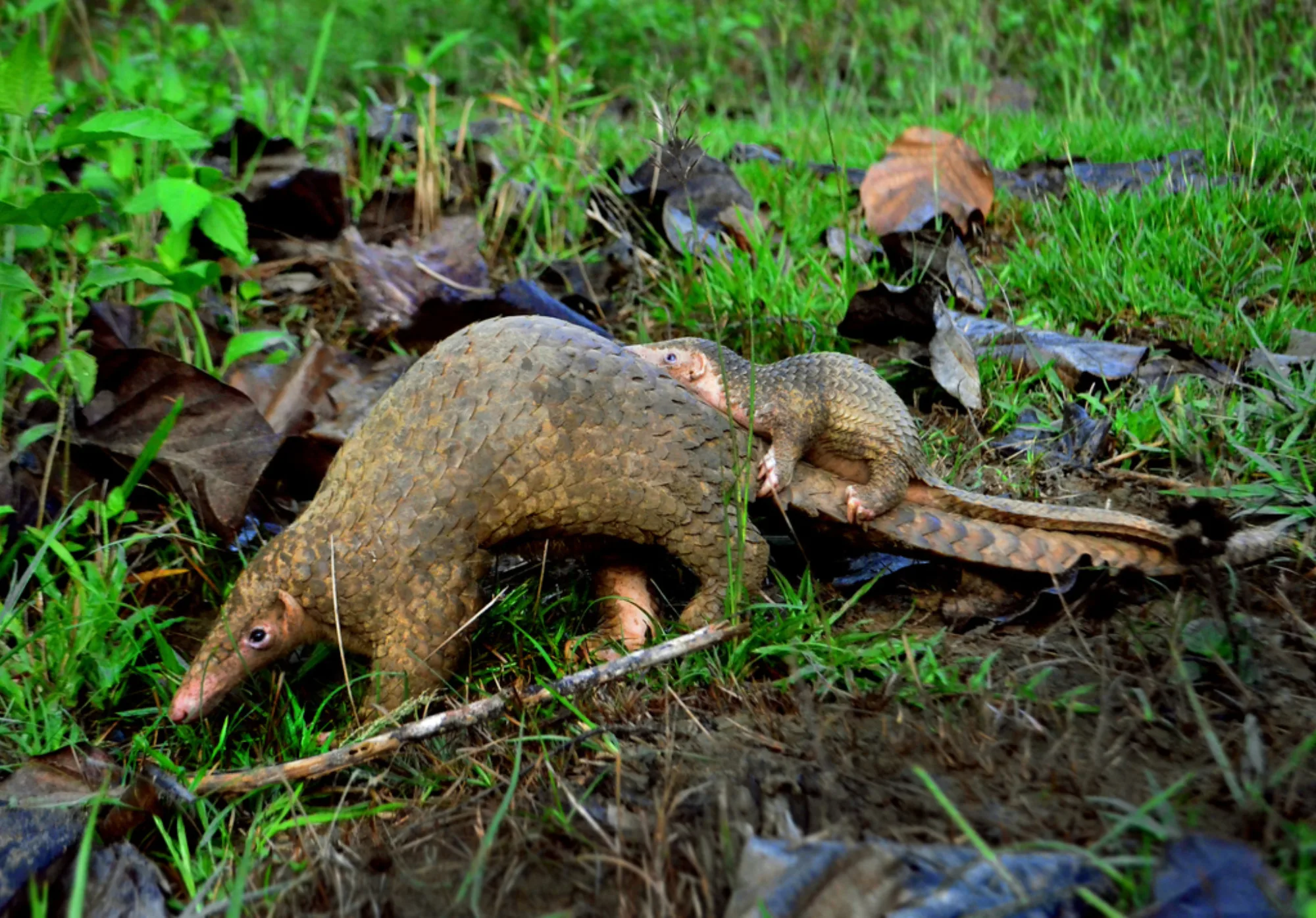
Found only within the Palawan province of the Philippines, this reclusive mammal is also known locally as the balintong. It lives in primary and secondary forests as well as the surrounding grasslands, spending much of its time in the tree canopy. The Philippine Pangolin is recognized by its cone-shaped head and a body covered in small, triangular brown or yellow scales. These creatures typically weigh between 1 and 3 kg and measure 60 to 89 centimetres, excluding a long, prehensile tail used for balance and climbing.
Active at night, these solitary animals use an extraordinary sense of smell to locate ant and termite colonies. They use powerful limbs and sharp claws to dig into mounds, using a long, sticky tongue to harvest insects. To ensure a continuous food source, they only eat a portion of a colony at a time. When a predator like a reticulated python approaches, the pangolin can release a sharp scent and curl into a tight sphere for protection. Mothers also use this defensive posture to cradle their single offspring, which they carry on their backs for several months.
Heavy hunting poses the primary threat to this species. They are frequently targeted for their meat, which is considered a delicacy, and their skin, organs, and scales are used in traditional medicine. Because of the impact of international trade, the animal is now legally protected, though it remains at risk due to its high value to hunters.
Written from the English Wikipedia article Philippine pangolin (CC BY-SA 4.0).
- Atlas places
- 0
These are open occurrence records, so they show where people looked for and recorded the Philippine Pangolin as much as where it lives. Cells are up to 25 km across, and every location is generalised to its cell.
No encounter zones yet
Where and when you can expect to see Philippine Pangolin is calculated from observation density. No zones have been computed for this species yet.