Indian Pangolin
Manis crassicaudata
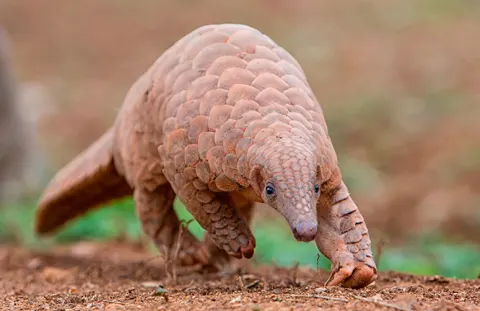
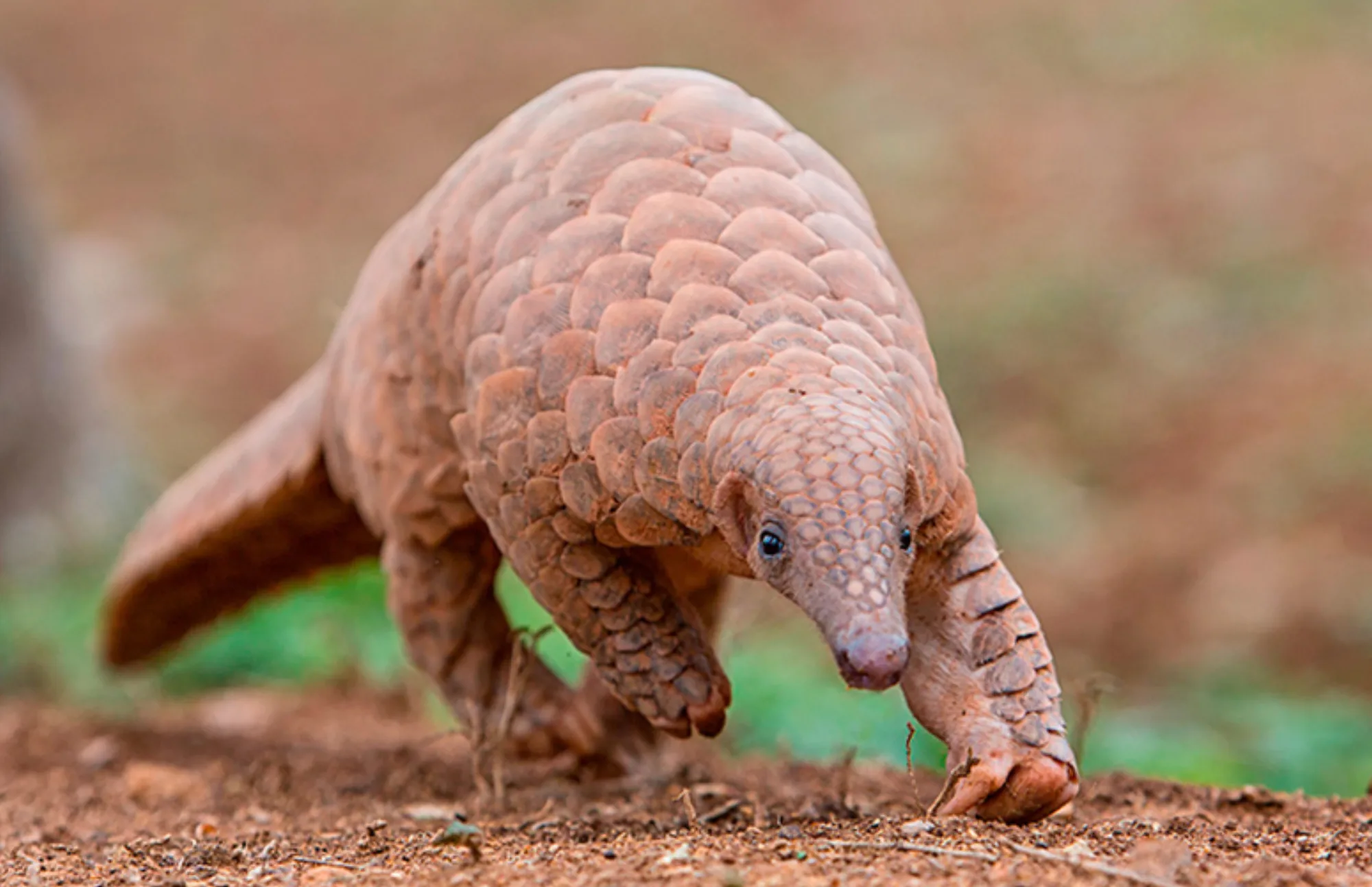
This shy, solitary mammal is defined by the massive armour of rigid keratin scales covering its head and body. Native to the Indian subcontinent, the Indian Pangolin typically weighs between 10 and 16 kg and measures up to 122 cm from its cone-shaped head to the tip of its thick tail. Its colouration often matches the earth in its immediate surroundings. When a predator like a tiger approaches, the animal protects its soft belly by curling into a tight ball.
Preferring barren, hilly regions and soft soil, these mammals live in deep burrows. They are primarily nocturnal, resting during the day and emerging to forage for ants and termites. Lacking teeth, they use long, sharp claws to tear into mounds and a sticky tongue to capture prey. Strong stomach muscles and swallowed stones help them digest their food. While they usually live alone, a male and female may share a burrow during the breeding period. Mothers typically give birth to a single young, which they carry on their tails.
Despite being protected in every country where they are found, these animals face severe pressure from poachers. They are hunted for their meat and for their scales, which are used in traditional medicines or crafted into charms. Their skins are also turned into leather for boots and shoes. Beyond the illegal trade, the species is losing ground to habitat destruction such as deforestation.
Written from the English Wikipedia article Indian pangolin (CC BY-SA 4.0).
- Atlas places
- 0
These are open occurrence records, so they show where people looked for and recorded the Indian Pangolin as much as where it lives. Cells are up to 25 km across, and every location is generalised to its cell.
No encounter zones yet
Where and when you can expect to see Indian Pangolin is calculated from observation density. No zones have been computed for this species yet.