Capelin
Mallotus villosus
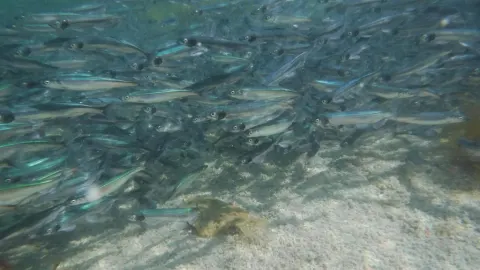
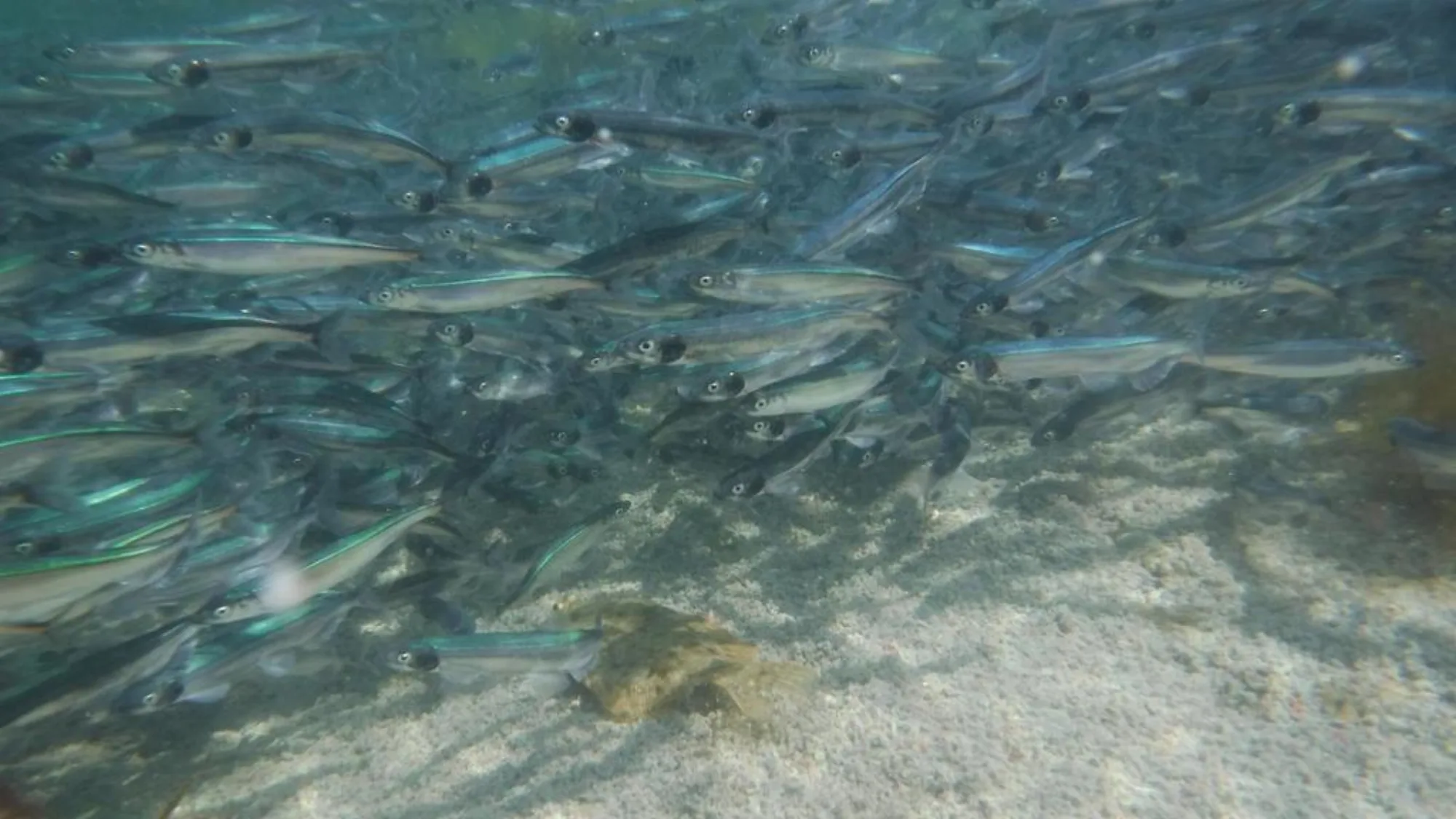
Small, silver-sided and olive along the back, the Capelin is a forage fish in the smelt family. Males can reach 20 cm in length, while females can grow to 25.2 cm. At spawning time, males develop a reddish sheen on their undersides.
Capelin forage in open water across the Arctic Ocean and the northern reaches of the Atlantic and Pacific, moving with the seasons. In summer they graze on dense concentrations of plankton near the edge of the ice shelf, while larger fish also eat plenty of krill and other crustaceans. Around Iceland, large schools move towards shore to spawn, then travel to feeding grounds between Iceland, Greenland and Jan Mayen. In the Barents Sea, they head towards northern Norway and the Kola Peninsula in winter and early spring, before moving north and north-east to feed in summer and autumn.
Spawning takes place mainly in spring, sometimes continuing into summer, and usually happens at night. In the North European Atlantic, Capelin typically spawn on sandy or gravelly bottoms, between 2 and 100 m deep. Off Newfoundland and in the North Pacific, most spawn on beaches, where some jump so far up the shore that they become stranded. Whales, seals, cod, mackerel, squid and seabirds eat Capelin, particularly during the southward spawning migration. Many die after spawning, with mortality especially high among males that breed on beaches. In the Barents Sea, competition for food and herring eating Capelin larvae probably contribute to stock collapses in some years. People also catch Capelin commercially for food, fish meal and oil.
Written from the English Wikipedia article Capelin (CC BY-SA 4.0).
- Records
- 11,824
- Countries
- 5
- Atlas places
- 1
These are open occurrence records, so they show where people looked for and recorded the Capelin as much as where it lives. Cells are up to 25 km across, and every location is generalised to its cell.
Generalised encounter areas, not exact locations. Each shape is a grid cell coloured by how likely the species is there.
- Very likelyCanada25 km zone · high confidence · 7514 records · updated 80 days ago
- Very likelySvalbard & Jan Mayen25 km zone · medium confidence · 1972 records · updated 80 days ago
- Very likelyNorway25 km zone · medium confidence · 1821 records · updated 80 days ago
- Very likelyUnited States25 km zone · high confidence · 389 records · updated 80 days ago
- Very likelyUnnamed area25 km zone · medium confidence · 96 records · updated 80 days ago
- Very likelyRussia25 km zone · medium confidence · 32 records · updated 80 days ago
Conservation status not assessed here yet, so every location is generalised to its grid cell.