Diamondback Terrapin
Malaclemys terrapin
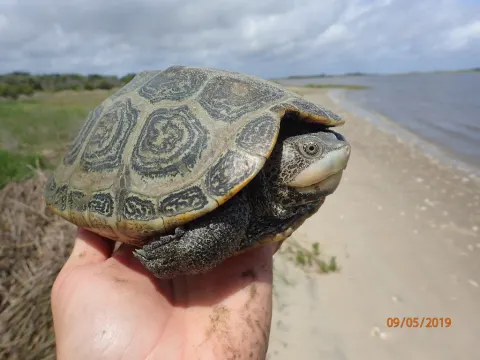
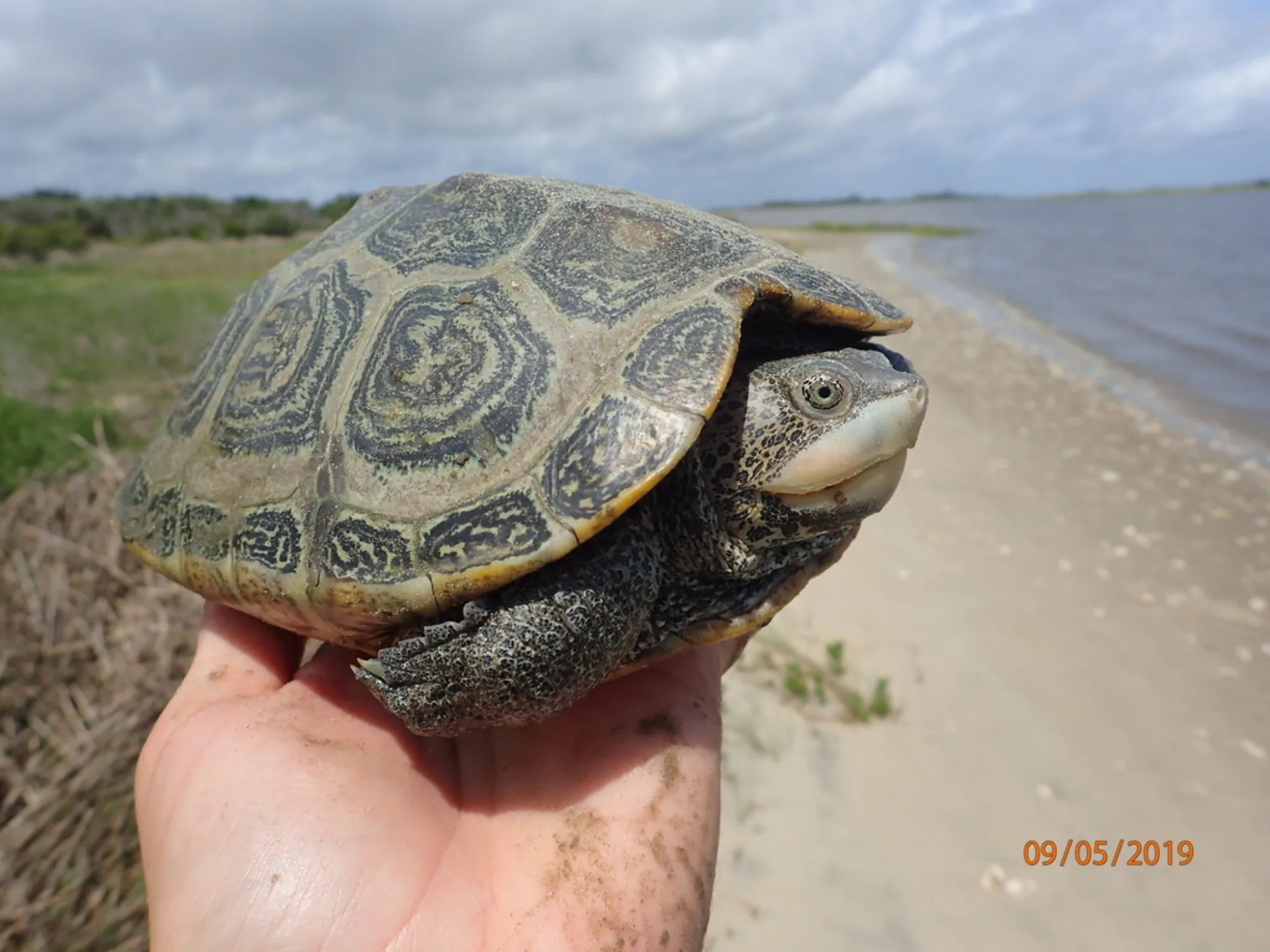
Look for the Diamondback Terrapin in the narrow band of coastal habitat stretching from Cape Cod to Florida and west along the Gulf Coast to Texas, as well as in Bermuda. It lives close to shore, typically in tidal marshes, and also uses mangrove swamps in Florida. Its shell carries a diamond pattern, though its colours and markings vary greatly between individuals. The shell can be brown or grey, while the body may be grey, brown, yellow or white, usually with black spots or wiggly markings on the head and body. Females are generally larger than males, averaging around 19 cm in shell length compared with approximately 13 cm for males.
A strong swimmer with webbed feet, the terrapin usually stays in the same area rather than making long migrations. Adults favour water of intermediate salinity, and may drink rainwater from the surface or catch falling drops with their mouths. Their varied diet includes fish, crabs, shrimp, marine snails, clams and insects, with small amounts of plant material sometimes eaten too. In early summer, females lay clutches of 4 to 22 eggs in sand dunes; the young hatch in late summer or early autumn. Some hatchlings remain in the nest through winter.
Coastal development has destroyed or altered marsh habitat, while seawalls and rising seas threaten nesting areas and remaining marshes. Terrapins can drown in crab traps, including traps that have been lost or abandoned, and nesting females are sometimes killed on roads. Raccoons and other predators eat eggs and young, while boat propellers can wound terrapins in the water.
Written from the English Wikipedia article Diamondback terrapin (CC BY-SA 4.0).
- Records
- 464
- Countries
- 2
- Atlas places
- 1
These are open occurrence records, so they show where people looked for and recorded the Diamondback Terrapin as much as where it lives. Cells are up to 25 km across, and every location is generalised to its cell.
Generalised encounter areas, not exact locations. Each shape is a grid cell coloured by how likely the species is there.
- Very likelyUnited States25 km zone · medium confidence · 464 records · updated 81 days ago
- RareTaiwan25 km zone · low confidence · 0 records · updated 81 days ago
Conservation status not assessed here yet, so every location is generalised to its grid cell.