Maleo
Macrocephalon maleo
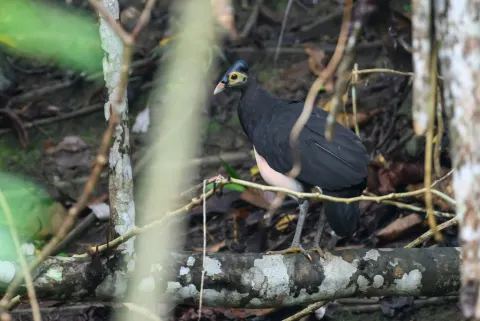
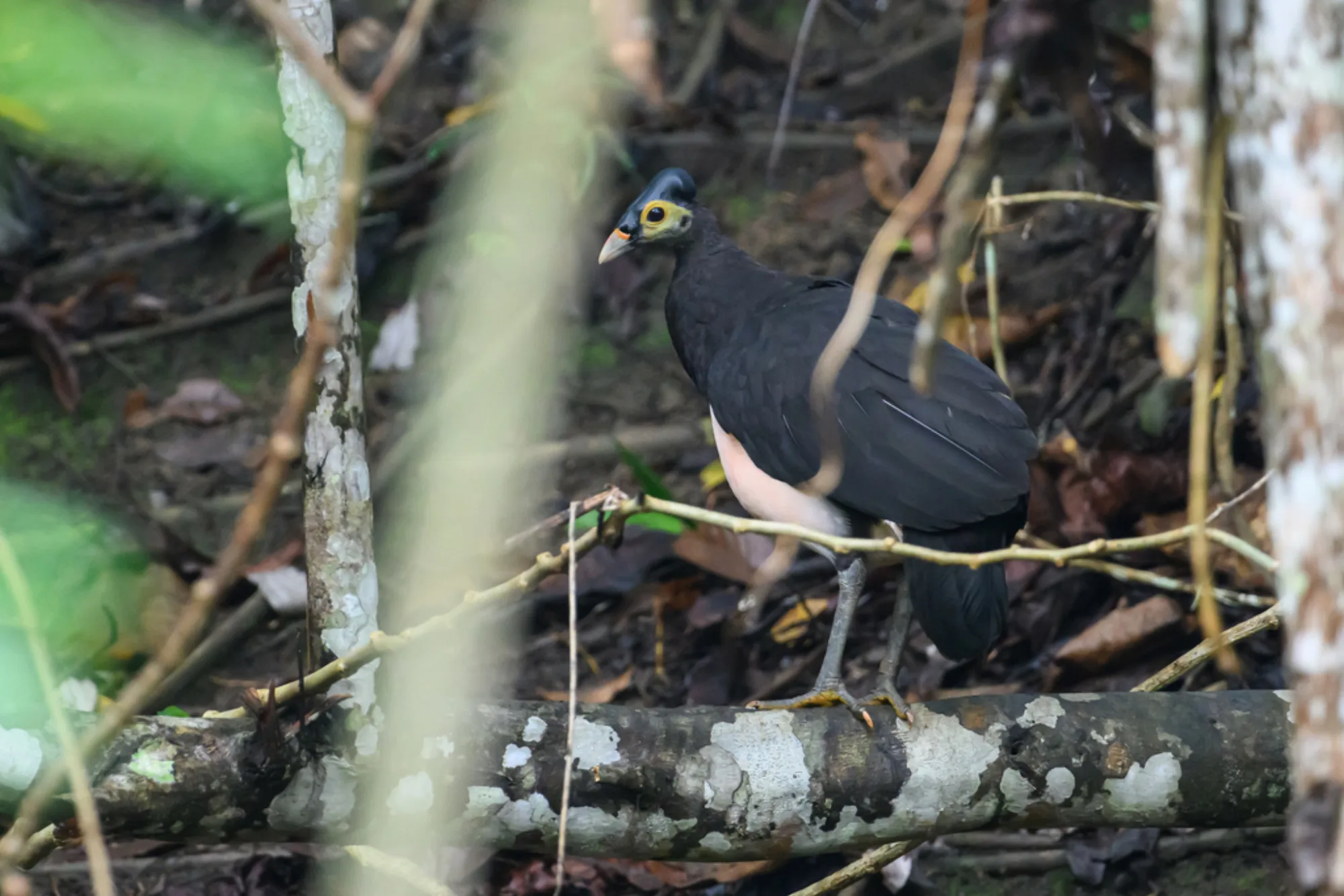
A dark, bony crest crowns the Maleo, a large ground-dwelling megapode found only on Sulawesi and nearby Buton in Indonesia. It measures 55 to 60 cm long, with blackish plumage, yellow skin around the face, a reddish-orange beak and rosy salmon underparts. Males and females look much alike, though the female is slightly smaller and duller; young birds have browner upperparts and paler, largely brownish heads.
Look for Maleos in tropical lowland and hill forests, usually below 1,000 metres. Pairs stay close together, feeding mainly on fruit, seeds, molluscs, ants, termites, beetles and other small invertebrates. They nest communally in open sand, volcanic soil and on beaches, including sites along rivers, lakes and the coast. Breeding takes place throughout the year, with the busiest season varying by location. A female may lay 8 to 12 eggs in a year, each buried in a deep hole and warmed by the sun or geothermal heat. The parents leave after burying an egg, and the chick must dig its own way to the surface. Within hours of hatching, it can fend for itself, fly and find food, then hide in the forest.
Egg poaching and the conversion of land to agriculture have caused many nesting sites to be abandoned. Forest loss and fragmentation also threaten the birds, while urban development has increasingly separated forest habitat from coastal breeding grounds, making journeys between them more dangerous. Wildfires have cleared large areas of forest, and the vegetation that grew afterwards was unsuitable for Maleos.
Written from the English Wikipedia article Maleo (CC BY-SA 4.0).
- Records
- 451
- Countries
- 1
- Atlas places
- 1
These are open occurrence records, so they show where people looked for and recorded the Maleo as much as where it lives. Cells are up to 25 km across, and every location is generalised to its cell.
Generalised encounter areas, not exact locations. Each shape is a grid cell coloured by how likely the species is there.
- Very likelyIndonesia25 km zone · medium confidence · 451 records · updated 80 days ago
Conservation status not assessed here yet, so every location is generalised to its grid cell.