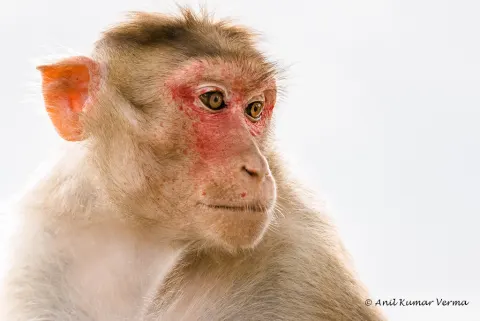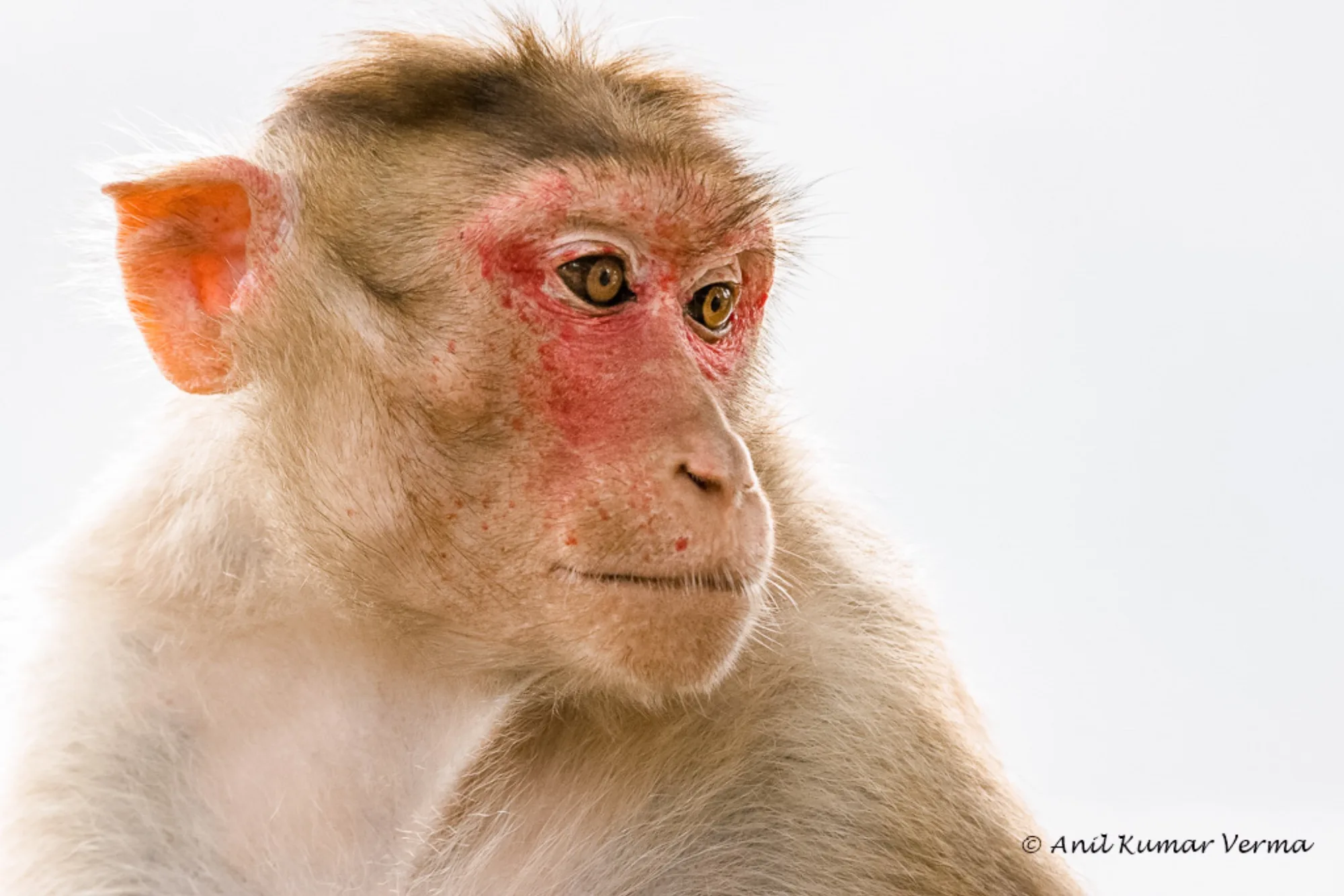
Bonnet Macaque
Macaca radiata
A cap of hair radiating out from the crown gives the Bonnet Macaque its distinctive appearance. Its body fur can be dark brown or yellow, and its ears are black. Native to southern India, it lives in forests as well as places shaped by people, including villages, temples, roadsides and towns. It spends time both in trees and on the ground, and is active during the day. It defends territory in trees, often choosing figs near human settlements or tall trees with plenty of leaves to eat.
Bonnet macaques live in groups containing several males and females, with a social hierarchy. Females tend to stay in the group where they were born, while males generally leave when they reach maturity. They communicate through facial expressions and calls, including different alarm calls for pythons and leopards. Their varied diet includes fruit, seeds, nuts, flowers and invertebrates. Around people, they also eat food given to them and raid farms and houses. Most births occur from February to April, before the monsoon, and a mother normally gives birth to one infant. Related females and other troop members show interest in the young infant.
Roads, agriculture and infrastructure fragment habitat, affecting the macaques' movements and access to familiar feeding areas. In places dominated by people, vehicles can injure them, while competition for food can increase aggression. Land use changes have also shifted the boundary between their range and that of the rhesus macaque, a related competitor to the north.
Written from the English Wikipedia article Bonnet macaque (CC BY-SA 4.0).
- Records
- 574
- Countries
- 1
- Atlas places
- 4
These are open occurrence records, so they show where people looked for and recorded the Bonnet Macaque as much as where it lives. Cells are up to 25 km across, and every location is generalised to its cell.
Generalised encounter areas, not exact locations. Each shape is a grid cell coloured by how likely the species is there.
- Very likelyIndia25 km zone · medium confidence · 574 records · updated 80 days ago
Conservation status not assessed here yet, so every location is generalised to its grid cell.