Iberian Lynx
Lynx pardinus
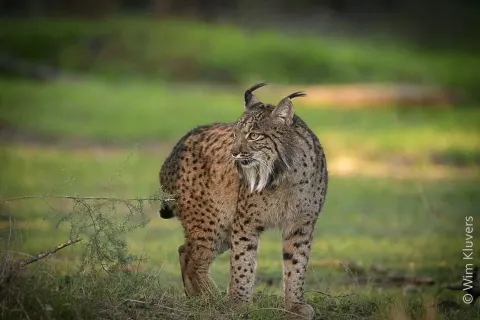
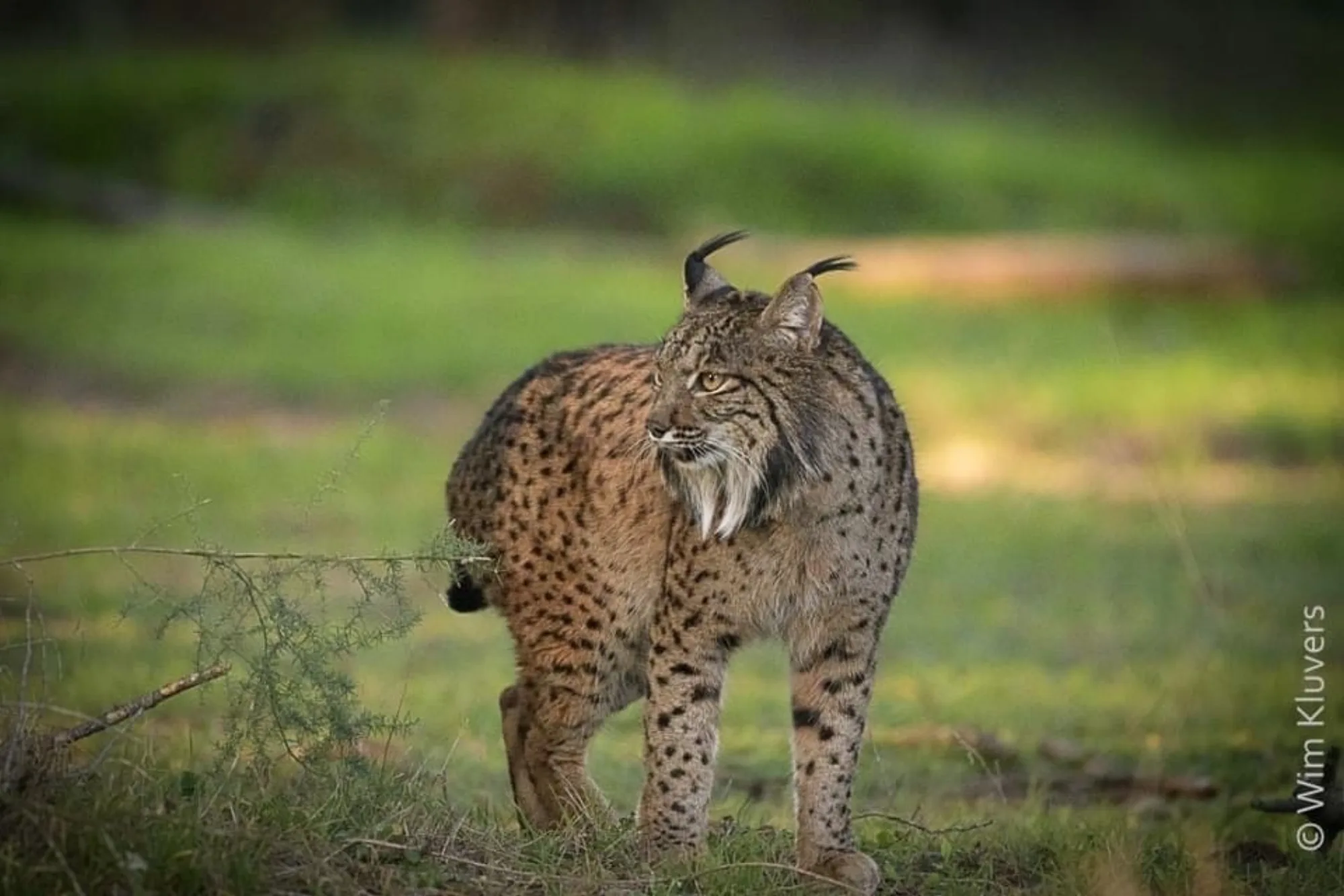
A small head, tufted ears and a ruff give the Iberian Lynx a distinctive outline. This medium-sized wild cat has long legs, a short body and tail, and a coat ranging from bright yellowish to tawny, marked with spots. The spots can be small and round or elongated, and tend to become smaller from the back towards the sides. Coat patterns vary between regions: in Sierra Morena the spots are numerous and fine, while in Doñana they are fewer and larger.
Found only on the Iberian Peninsula, the lynx lives in parts of Spain and Portugal. Its range includes the Sierra Morena and Montes de Toledo, as well as the Guadiana Valley in Portugal, and breeding animals have also been recorded in Extremadura and other Spanish regions. Adults maintain stable home ranges over many years, marking their territories with urine, scratches on tree bark and droppings. European rabbits make up most of the diet, supplemented by red-legged partridges and rodents, with wild ungulates taken less often. Young lynxes gain independence between 7 and 10 months of age, though they stay with their mother until around 20 months; their survival depends heavily on the availability of prey.
Habitat loss, road accidents and illegal hunting all threaten the lynx. Roads with heavy traffic kill several each year, while infrastructure, urban and resort development, and tree monocultures break up its range. Rabbit diseases have also caused steep declines in its main prey, leaving a cat that relies heavily on rabbits with less food. Finding a mate can be difficult, and the resulting inbreeding leads to fewer kittens. Conservation work includes restoring habitat, maintaining rabbit populations and releasing captive-bred lynxes.
Written from the English Wikipedia article Iberian lynx (CC BY-SA 4.0).
- Records
- 235
- Countries
- 2
No atlas park has a record of the Iberian Lynx in or around it yet.
These are open occurrence records, so they show where people looked for and recorded the Iberian Lynx as much as where it lives. Cells are up to 25 km across, and every location is generalised to its cell.
Generalised encounter areas, not exact locations. Each shape is a grid cell coloured by how likely the species is there.
- Very likelySpain25 km zone · medium confidence · 227 records · updated 80 days ago
- LikelyPortugal25 km zone · medium confidence · 8 records · updated 80 days ago
Conservation status not assessed here yet, so every location is generalised to its grid cell.