Canadian Lynx
Lynx canadensis
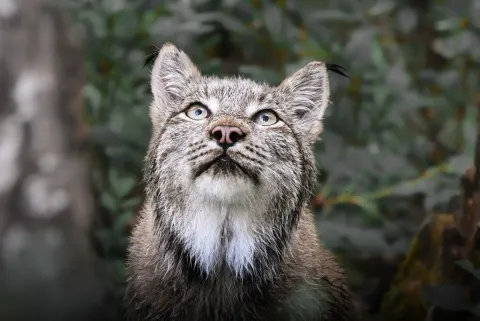
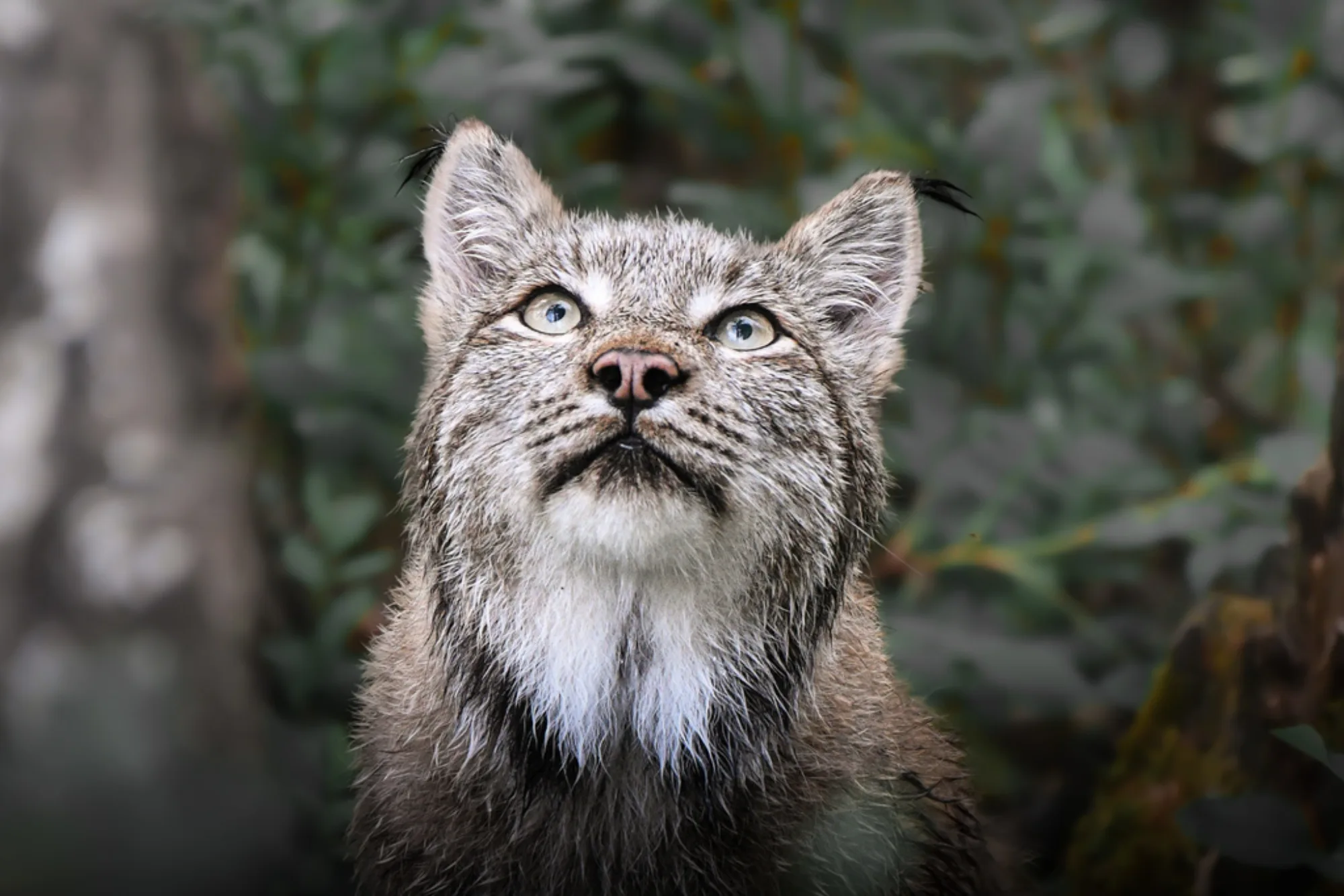
Long black ear tufts, broad furry paws and a short, black-tipped tail give the Canadian Lynx its distinctive outline. This medium-sized wild cat has a thick coat that is usually yellowish brown, with white underparts that can bear dark spots. Its large paws spread on soft snow, helping it travel and hunt in winter conditions. A capable swimmer and climber, it can escape predators by climbing high into trees, although it hunts on the ground.
The lynx ranges across Alaska, Canada and northern parts of the contiguous United States, favouring dense boreal forest. It generally avoids open areas and struggles in heavily logged country and farmland, though it can thrive in deforested areas left to regenerate for at least fifteen years. Mostly solitary, it tends to be active at twilight or at night, but can also be seen during the day. Snowshoe hares are its main prey, and the cat may wait along their trails before pouncing. When hares become scarce, it also eats animals such as grouse, voles and American red squirrels. Lynx numbers rise and fall with hare populations, and some cats move elsewhere when hares decline.
Most kittens are born between May and July, after their mother has prepared a den in thick brush or woody debris. Litters contain one to eight kittens, which leave the den at about five weeks and start hunting between seven and nine months old. In the contiguous United States, the greatest threat is the loss of habitat, while competition with the eastern coyote threatens lynxes in eastern Canada. Lynxes are also trapped for the fur trade in much of Alaska and Canada.
Written from the English Wikipedia article Canada lynx (CC BY-SA 4.0).
- Records
- 102
- Countries
- 2
- Atlas places
- 12
- Banff National Park· Canada
- Denali National Park· United States
- Gros Morne National Park· Canada
- Katmai National Park· United States
- Kenai Fjords National Park· United States
- Kluane National Park and Reserve· Canada
- Algonquin Provincial Park· Canada
- Cape Breton Highlands National Park· Canada
- Glacier Bay National Park· United States
- Isle Royale National Park· United States
- Kootenay National Park· Canada
- Yoho National Park· Canada
These are open occurrence records, so they show where people looked for and recorded the Canadian Lynx as much as where it lives. Cells are up to 25 km across, and every location is generalised to its cell.
Generalised encounter areas, not exact locations. Each shape is a grid cell coloured by how likely the species is there.
- Very likelyUnited States25 km zone · medium confidence · 73 records · updated 80 days ago
- Very likelyCanada25 km zone · medium confidence · 29 records · updated 80 days ago
Conservation status not assessed here yet, so every location is generalised to its grid cell.