European Otter
Lutra lutra
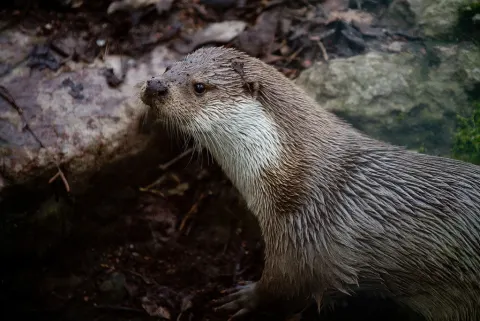
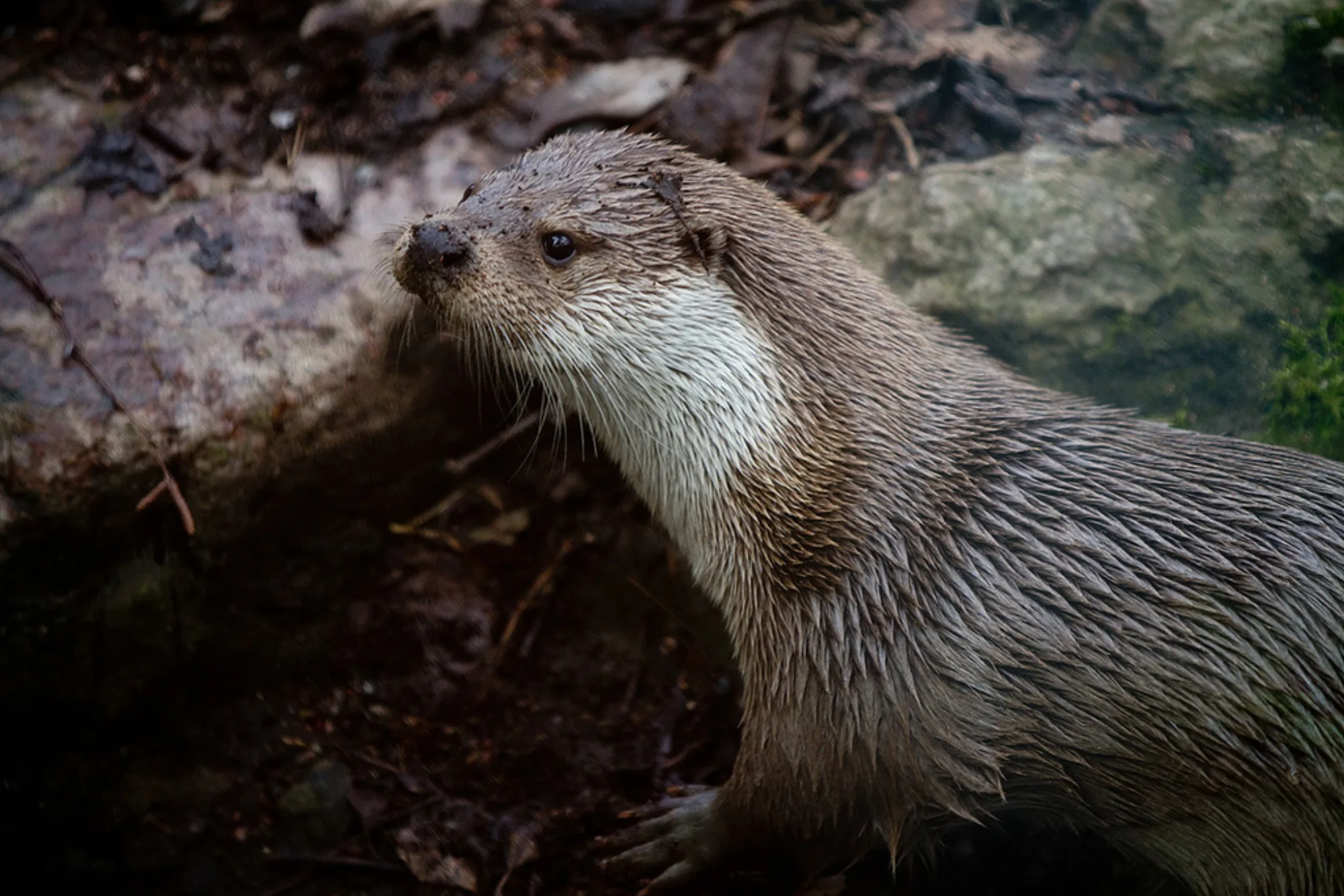
Long and slender, the European Otter has brown fur across its back and a cream-coloured belly. Its body is normally 57 to 95 cm long, with a further 35 to 45 cm of tail, and females are shorter than males. This semiaquatic mammal lives in waterways and along coasts, ranging from Europe through much of Asia to parts of North Africa. It is common across Great Britain and Ireland, along Norway's coast, in Latvia, and in western Spain and Portugal. It favours open stretches of streams and uses clean freshwater lakes, rivers, canals and ponds where food is plentiful. Otters also live beside the sea, but need regular access to fresh water to clean their fur.
Fish make up most of the diet, especially in Mediterranean and temperate fresh waters. In winter and cooler climates, otters also eat a range of other prey, including crustaceans, insects, birds, small mammals and amphibians. Usually solitary and strongly territorial, they mark their ranges with droppings called spraints. A territory is typically about 18 km long, although its size varies with food supply and the width of suitable hunting grounds. Males and females can breed throughout the year; after a gestation of 60 to 64 days, a female gives birth to one to four pups. The young depend on their mother for around 13 months.
Pollution from industrial chemicals and pesticides was the main cause of a widespread decline during the latter half of the 20th century, while habitat loss and hunting were also threats. Populations are recovering in many parts of Europe, helped by cleaner water, pesticide bans and legal protection. In Iberian rivers, declining native freshwater fish and the spread of introduced species could put otters at risk.
Written from the English Wikipedia article Eurasian otter (CC BY-SA 4.0).
- Records
- 55,978
- Countries
- 11
No atlas park has a record of the European Otter in or around it yet.
These are open occurrence records, so they show where people looked for and recorded the European Otter as much as where it lives. Cells are up to 25 km across, and every location is generalised to its cell.
Generalised encounter areas, not exact locations. Each shape is a grid cell coloured by how likely the species is there.
- Very likelyUnited Kingdom25 km zone · high confidence · 17414 records · updated 80 days ago
- Very likelyDenmark25 km zone · high confidence · 14950 records · updated 80 days ago
- Very likelyFrance25 km zone · high confidence · 9748 records · updated 80 days ago
- Very likelyNorway25 km zone · high confidence · 5735 records · updated 80 days ago
- Very likelySwitzerland25 km zone · high confidence · 4661 records · updated 80 days ago
- Very likelyFinland25 km zone · high confidence · 1308 records · updated 80 days ago
- Very likelyIreland25 km zone · high confidence · 820 records · updated 80 days ago
- Very likelyUkraine25 km zone · high confidence · 503 records · updated 80 days ago
- Very likelyLiechtenstein25 km zone · high confidence · 372 records · updated 80 days ago
- Very likelyGermany25 km zone · high confidence · 271 records · updated 80 days ago
Conservation status not assessed here yet, so every location is generalised to its grid cell.