Burbot
Lota lota
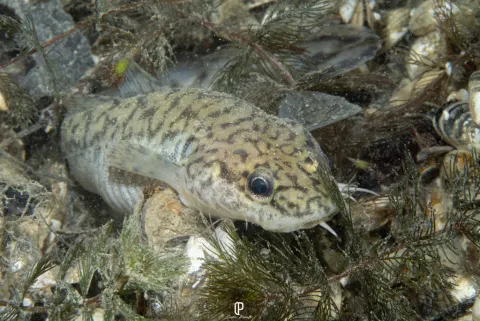
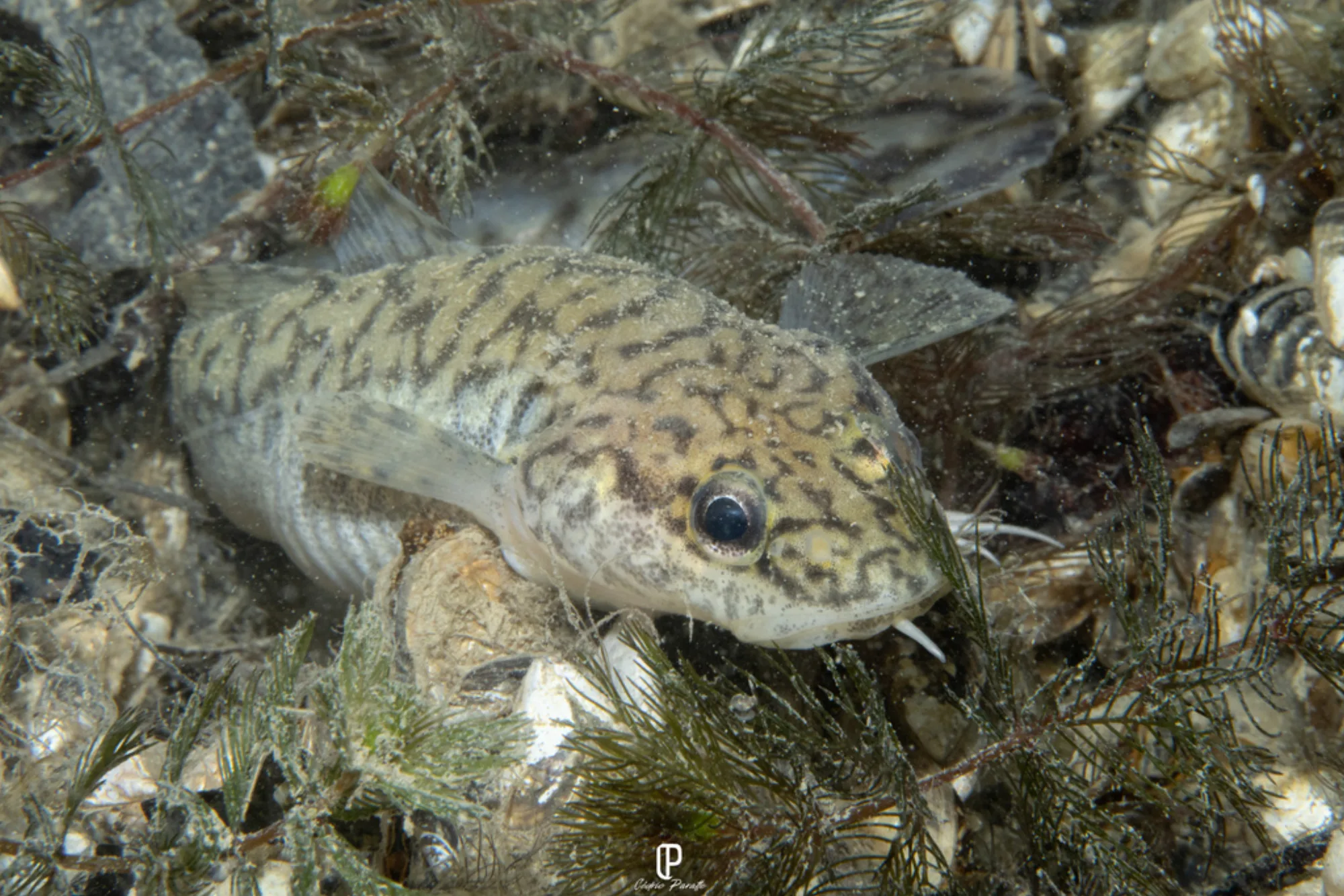
With its long, eel-like body and flattened head, the Burbot looks rather like a cross between an eel and a catfish. A single whisker on its chin helps distinguish it, and its tiny scales can make it appear scaleless. Its rounded tail and two soft fins along its back add to its distinctive outline.
This cold-water fish ranges across northern parts of Europe, Asia and North America, with populations extending from France to the Bering Strait and from Alaska to New Brunswick. It lives mainly in large, cold rivers, lakes and reservoirs, though one population also occupies the brackish Baltic Sea. In summer it usually stays in colder water below the thermocline, and in Lake Superior it can live deeper than 300 m. Adults shelter by day in burrows they make in the lake or river bed, and hunt actively around twilight. Young fish feed on small invertebrates, while adults eat mainly fish, including whitefish, trout and perch. They also sometimes eat insects, frogs, snakes and birds. In winter, Burbot move towards near-shore reefs and shoals to breed, favouring sand or gravel. Spawning usually takes place from December to March, often beneath ice.
Although Burbot remain widespread, some populations have disappeared and others face threats. Pollution and changes to habitat, including river dams, appear to be the main causes of declines in rivers. In lakes, pollution and invasive species are the strongest pressures on populations. Northern pike, muskellunge and some lampreys also prey on Burbot. The fish is readily caught on lures, and fishing regulations in Utah require caught Burbot to be killed rather than released.
Written from the English Wikipedia article Burbot (CC BY-SA 4.0).
- Records
- 145,547
- Countries
- 4
No atlas park has a record of the Burbot in or around it yet.
These are open occurrence records, so they show where people looked for and recorded the Burbot as much as where it lives. Cells are up to 25 km across, and every location is generalised to its cell.
Generalised encounter areas, not exact locations. Each shape is a grid cell coloured by how likely the species is there.
- Very likelySweden25 km zone · high confidence · 139876 records · updated 80 days ago
- Very likelyFrance25 km zone · high confidence · 3863 records · updated 80 days ago
- Very likelyNorway25 km zone · high confidence · 1444 records · updated 80 days ago
- Very likelyFinland25 km zone · high confidence · 364 records · updated 80 days ago
Conservation status not assessed here yet, so every location is generalised to its grid cell.