Marine Otter
Lontra felina
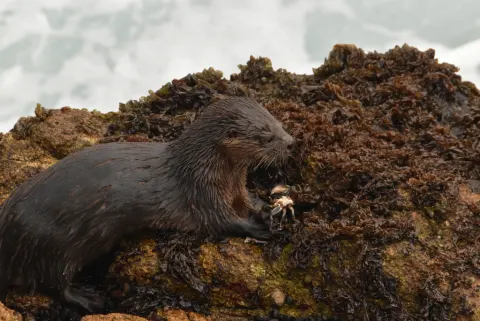
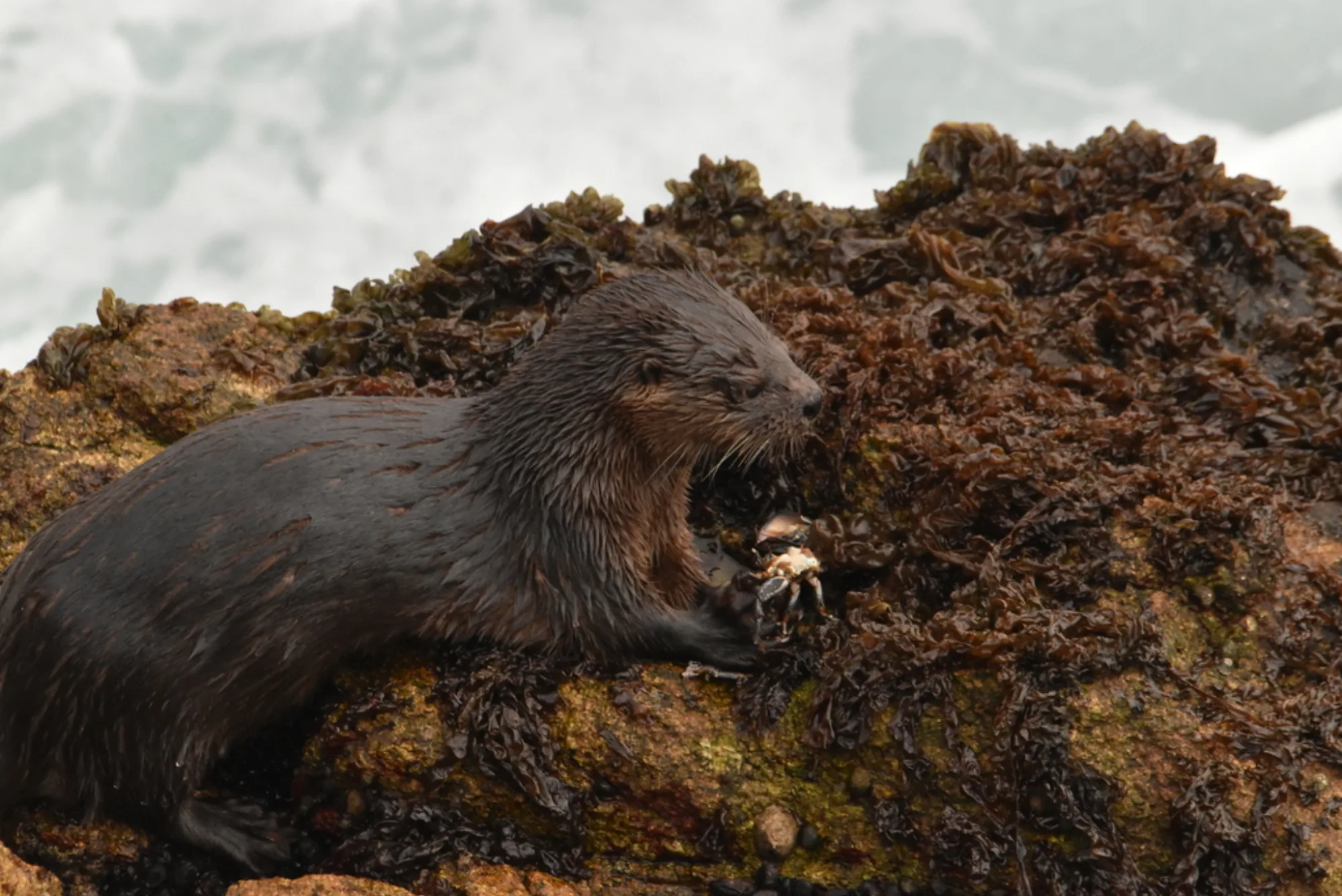
Along the rocky Pacific shores of South America, the Marine Otter is a small, elusive member of the weasel family. It measures 87 to 115 cm from nose to tail tip and weighs 3 to 5 kg. Look for coarse, dark brown fur on the back and sides, with a fawn throat and underside, as well as webbed paws and strong claws. Its range runs from northern Peru along the coast of Chile to the far south of Argentina, with occasional sightings in the Falkland Islands. It favours rocky shores rich in seaweed and kelp, often in places exposed to strong winds and swells, and avoids sandy beaches. Caves and crevices offer cover, and some dens cannot be reached from land at high tide.
Marine Otters spend much of their time hidden in caves and actively avoid people, making their behaviour difficult to observe. Fish form much of the diet in southern Chile, while otters farther north in Chile eat mostly crustaceans and molluscs. They feed opportunistically, sometimes taking small mammals and fruit. Breeding takes place in December or January, and litters of two to five pups arrive from January to March. Young stay with their mother for about 10 months, and may be seen resting on her belly as she swims on her back. Parents bring the pups food and teach them to hunt. Coastal activity and domestic animals can disturb the otters and their dens, while fishing nets can entangle and kill them. A study in north-central Chile found that attacks by free-ranging dogs were a leading recorded cause of human-related deaths. Hunting for fur and perceived competition with fisheries wiped out populations across most of Argentina and the Falkland Islands, and poaching remains a problem.
Written from the English Wikipedia article Marine otter (CC BY-SA 4.0).
- Records
- 48
- Countries
- 2
No atlas park has a record of the Marine Otter in or around it yet.
These are open occurrence records, so they show where people looked for and recorded the Marine Otter as much as where it lives. Cells are up to 25 km across, and every location is generalised to its cell.
Generalised encounter areas, not exact locations. Each shape is a grid cell coloured by how likely the species is there.
- Very likelyChile25 km zone · medium confidence · 48 records · updated 81 days ago
- RarePeru25 km zone · low confidence · 0 records · updated 81 days ago
Conservation status not assessed here yet, so every location is generalised to its grid cell.