North American River Otter
Lontra canadensis
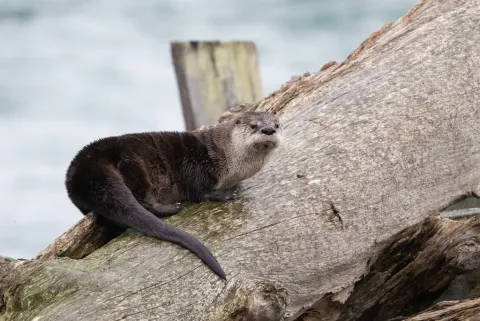
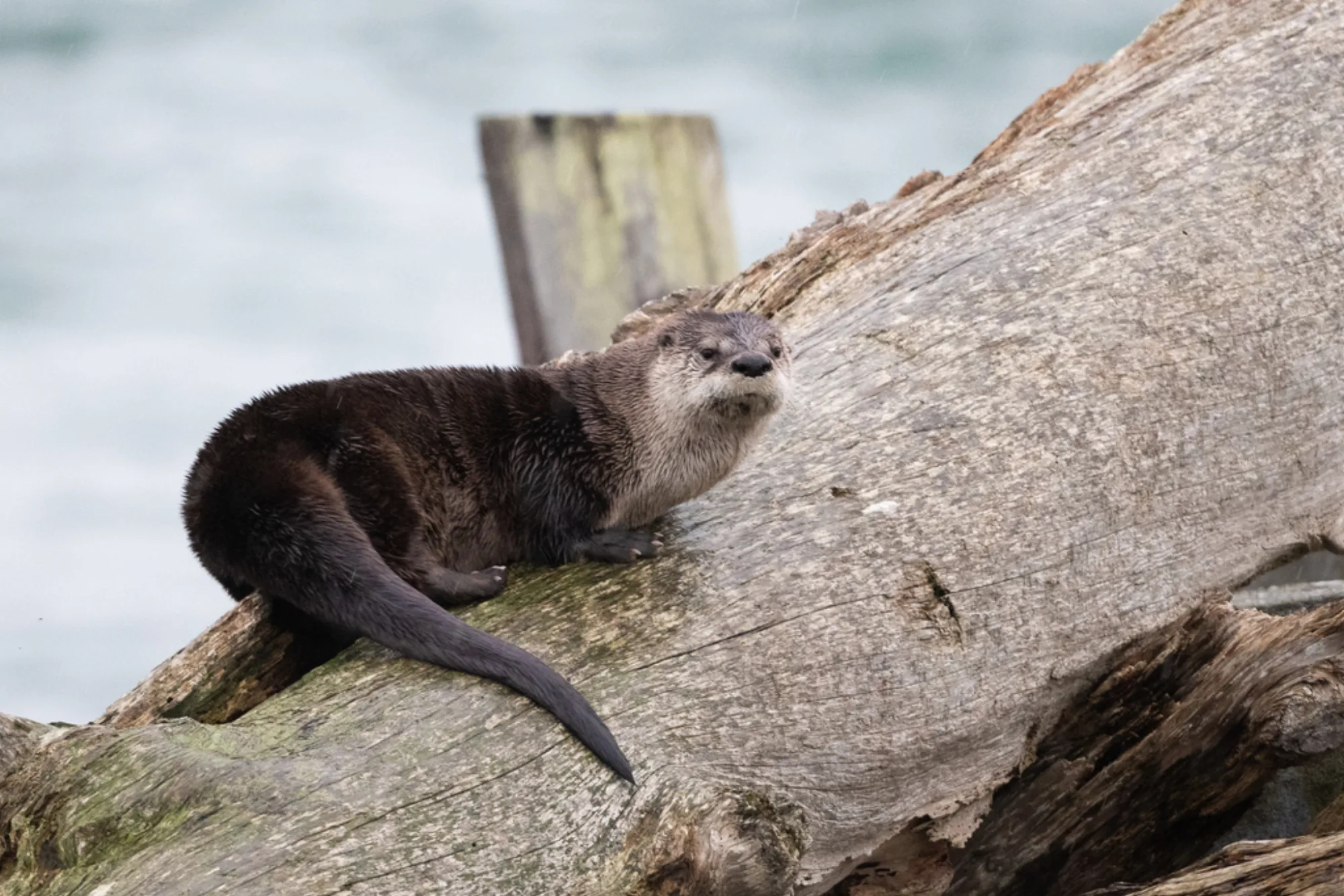
At home in water and on land, the North American River Otter (Lontra canadensis) has a thick, water-repellent coat, long whiskers and a tapered tail. Its body measures 66 to 107 cm, with the tail accounting for about a third of its total length. The whiskers help it find prey in dark water, and its underwater vision can bring it within a few metres of a boat or someone on shore.
These otters live across much of Canada and in Alaska, as well as along US coasts and inland waterways. They use freshwater and coastal habitats, from rivers and lakes to marshes, wetlands and estuaries, wherever they have food, access to water and enough cover. A den may occupy another animal's burrow or a natural hollow beneath a log or in a riverbank, with an entrance above or below the water. Otters can live alone or socially, and their play often involves wrestling and chasing. They hunt alone or in pairs, on land as well as in water, taking fish throughout the year and other available prey, including crayfish, frogs, small turtles and molluscs. Females give birth in dens and raise their young without help from adult males. At about two months old, the pups are introduced to water by their mother, and they usually remain with their families until the following spring.
Habitat loss, wetland destruction and trapping have caused local declines, while pollution has reduced the otter's range and can drive it from affected waters. Oil spills threaten coastal populations locally, and acid drainage from coal mines can eliminate prey and hinder the otters' return. Reintroduction, improved water quality and habitat restoration have helped populations recover in some areas.
Written from the English Wikipedia article North American river otter (CC BY-SA 4.0).
- Records
- 2,299
- Countries
- 2
- Atlas places
- 8
- Olympic National Park· United States
- Redwood National and State Parks· United States
- Pacific Rim National Park Reserve· Canada
- Algonquin Provincial Park· Canada
- Acadia National Park· United States
- Isle Royale National Park· United States
- Kenai Fjords National Park· United States
- Shenandoah National Park· United States
These are open occurrence records, so they show where people looked for and recorded the North American River Otter as much as where it lives. Cells are up to 25 km across, and every location is generalised to its cell.
Generalised encounter areas, not exact locations. Each shape is a grid cell coloured by how likely the species is there.
- Very likelyUnited States25 km zone · medium confidence · 1519 records · updated 80 days ago
- Very likelyCanada25 km zone · medium confidence · 780 records · updated 80 days ago
Conservation status not assessed here yet, so every location is generalised to its grid cell.