Indian Flap-shelled Turtle
Lissemys punctata
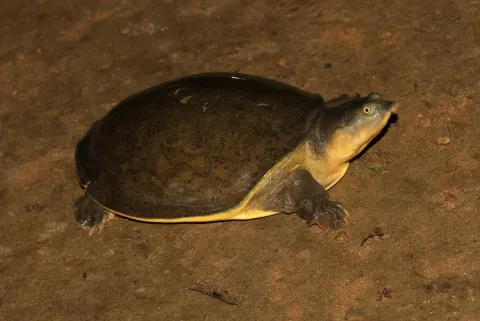
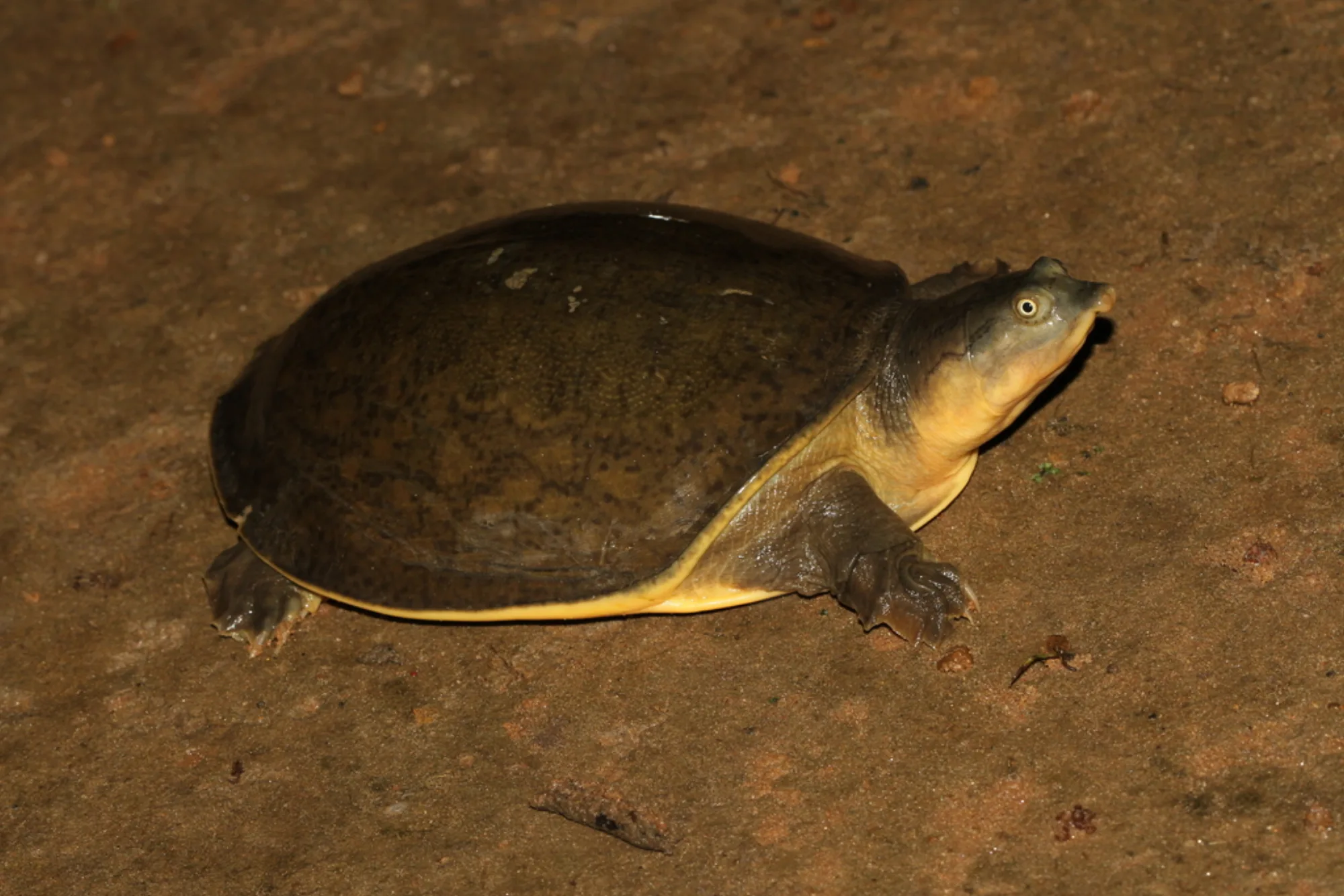
Across South Asia, the Indian Flap-shelled Turtle lives in fresh water, from rivers and streams to marshes, ponds, lakes, irrigation canals and tanks. Adults have a broadly oval shell, while the shell is rounder in young turtles. The nose is short and stout, and folds of skin cover the limbs when they are drawn into the shell. Its shell can measure 240 to 370 mm in length, with females reaching around 35 cm and males up to 23 cm. It occurs in Pakistan, India, Sri Lanka, Nepal, Bangladesh and Myanmar; people have also introduced it to the islands of Andaman and Nicobar. In Rajasthan, it also lives in desert ponds.
Look for it in shallow, quiet water, often stagnant, with a sandy or muddy bottom where it can burrow. During drought, it burrows or moves between water holes to avoid drying out, and may enter a period of dormancy. Some have survived dry conditions for up to 160 days, although many die. Its varied diet includes frogs, shrimp, snails, insects, aquatic plants, leaves, flowers, fruit, grasses and seeds, as well as fragments of dead animals. Nesting varies with location and habitat, but generally begins between late summer and the monsoon, around June to November. Females commonly choose sunny, swampy ground and bury clutches of two to 16 eggs in the soil, usually laying two or three times a year.
People use the turtles and their eggs for food, and the meat trade has contributed to illegal international exploitation and killing. Dams, barrages, cultivation along river banks and pollution also threaten their habitat. In Rajasthan's desert ponds, hundreds are killed each year during dry summers.
Written from the English Wikipedia article Indian flapshell turtle (CC BY-SA 4.0).
- Records
- 178
- Countries
- 3
- Atlas places
- 7
These are open occurrence records, so they show where people looked for and recorded the Indian Flap-shelled Turtle as much as where it lives. Cells are up to 25 km across, and every location is generalised to its cell.
Generalised encounter areas, not exact locations. Each shape is a grid cell coloured by how likely the species is there.
- Very likelyIndia25 km zone · medium confidence · 178 records · updated 80 days ago
- PossiblePakistan25 km zone · low confidence · 0 records · updated 80 days ago
- RareBangladesh25 km zone · low confidence · 0 records · updated 80 days ago
Conservation status not assessed here yet, so every location is generalised to its grid cell.