Ethiopian Hare
Lepus fagani
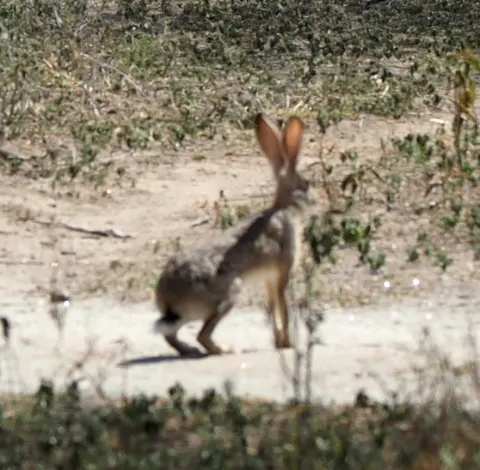
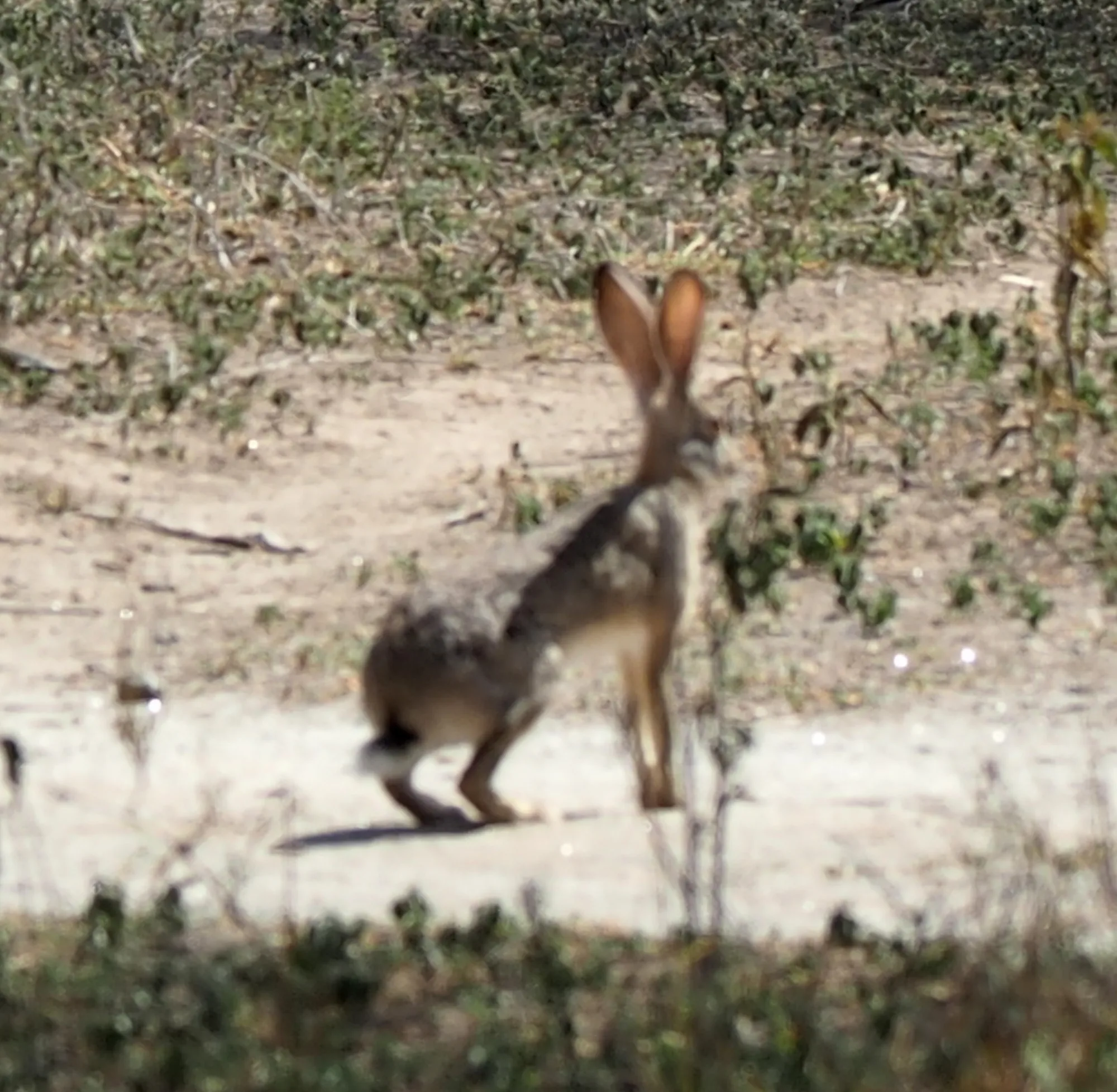
Travellers visiting the Ethiopian Highlands or the shores of Lake Tana have a good chance of spotting the Ethiopian Hare. This medium-sized mammal typically measures between 45 and 54 cm in length. Its appearance is defined by a dense, coarse coat that is brownish buff on the back and finely grizzled with black. The head is noticeably darker than the rest of the body, featuring a blacker crown. A rich cinnamon-ginger patch on the back of the neck extends toward the sides, while the belly and throat are covered in fluffy white fur. Its tail, which is 5 to 8.2 cm long, is black on top and buff-white underneath.
This species is endemic to Ethiopia, though potential sightings have been reported in northwestern Kenya and southeastern Sudan. It lives at elevations ranging from 500 to 2,500 m above sea level. You can look for them in the grassy sections of forests, along the edges of woodlands, and across steppes or grasslands. Within its range, it occupies the Afromontane Biozone and reaches the edges of the Sudanian Savanna Biozone. It generally chooses habitats that are less open than those preferred by the similar Abyssinian hare.
Very little has been recorded regarding the specific diet, breeding habits, or daily behavior of these hares. They are known to be prey for the spotted hyena and are sometimes host to the tick Rhipicephalus pulchellus. While the current population trend for the species is not clear, there are no known threats to its survival. For those hoping to see one in a protected area, the Ethiopian Hare can be found within the Gambella National Park and the Abijatta-Shalla National Park.
Written from the English Wikipedia article Ethiopian hare (CC BY-SA 4.0).
- Atlas places
- 0
These are open occurrence records, so they show where people looked for and recorded the Ethiopian Hare as much as where it lives. Cells are up to 25 km across, and every location is generalised to its cell.
No encounter zones yet
Where and when you can expect to see Ethiopian Hare is calculated from observation density. No zones have been computed for this species yet.
Conservation status not assessed here yet, so every location is generalised to its grid cell.