Yunnan Hare
Lepus comus
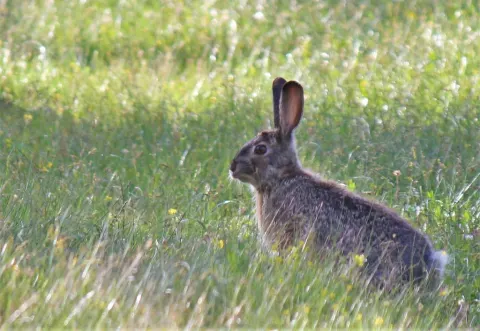
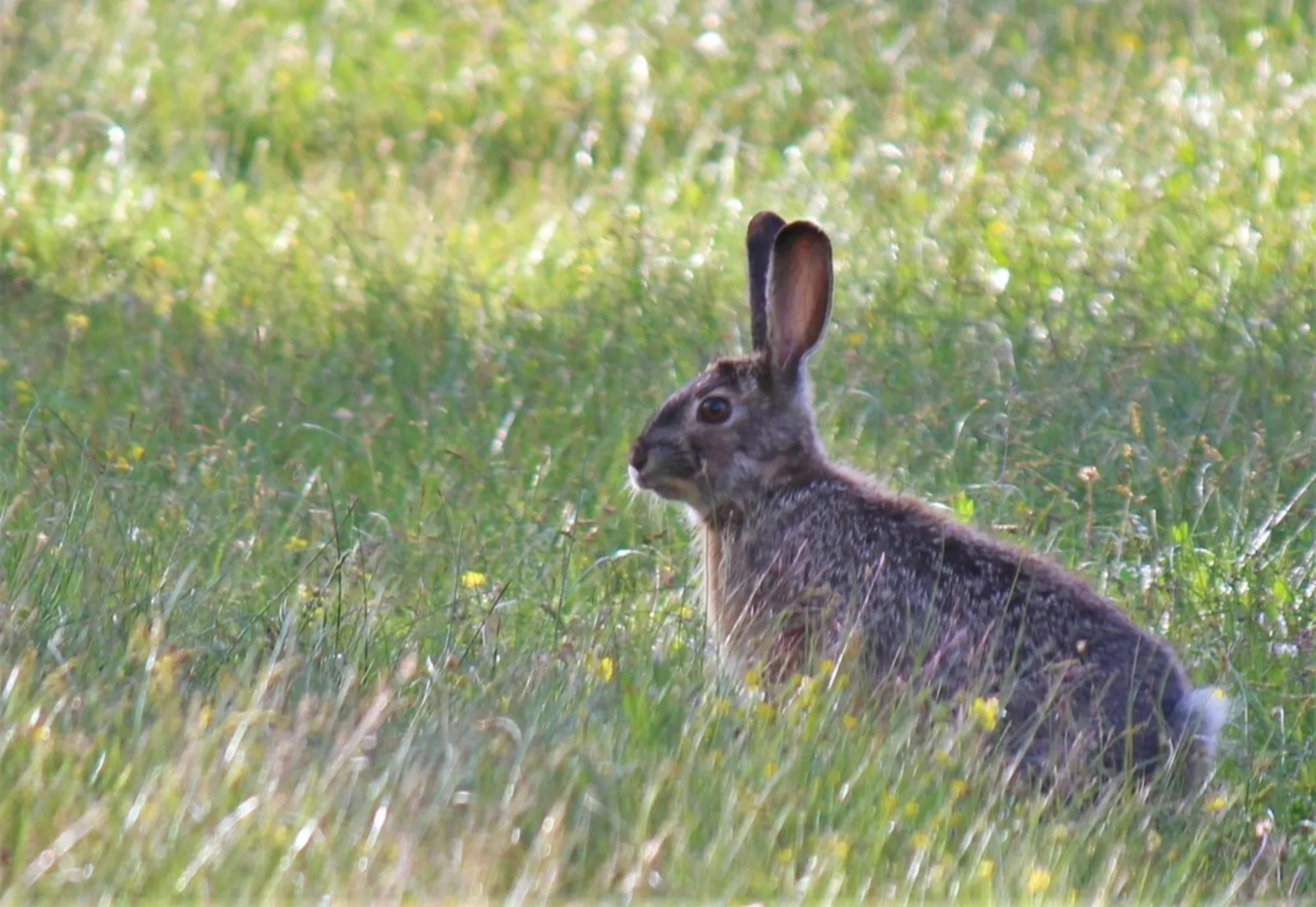
Spotted across the southern Hengduan Mountains and western Yungui Plateau, the Yunnan Hare is a medium-sized mammal with a distinctive coat. It is identified by its long, flat dorsal fur in shades of dark gray or grayish brown, contrasted by a white underside. A pale band stretches from the snout to the base of the ears, which are short and tipped with black. These hares typically weigh between 1.8 and 2.5 kg and reach lengths of 32.2 to 48 cm. While long considered a resident only of China, specifically in Yunnan, Guizhou, and Sichuan, sightings were also recorded in northern Myanmar in 2000.
This mountain-dwelling species favors warm, wet environments at elevations between 1,300 and 3,200 m. It is frequently found in high montane meadows and shrubs, though it also utilizes forest edges and open woodlands. Although active during the day, the Yunnan Hare also forages at night, feeding on a diet of forbs and shrubs. Local hunters report that adults maintain three burrows; those belonging to females are larger and oval, while males use straighter, shallower tunnels. Breeding begins in April, with females producing up to three litters in May, usually consisting of two young each.
While this hare remains common in remote regions, it faces potential risks from human expansion. Farming operations in its mountainous territory may threaten the species by causing its populations to become isolated. Despite these pressures, the hare is currently found within several protected locations, including the Gaoligongshan and Shilin Nature Reserves.
Written from the English Wikipedia article Yunnan hare (CC BY-SA 4.0).
- Atlas places
- 0
These are open occurrence records, so they show where people looked for and recorded the Yunnan Hare as much as where it lives. Cells are up to 25 km across, and every location is generalised to its cell.
No encounter zones yet
Where and when you can expect to see Yunnan Hare is calculated from observation density. No zones have been computed for this species yet.
Conservation status not assessed here yet, so every location is generalised to its grid cell.