Snowshoe Hare
Lepus americanus
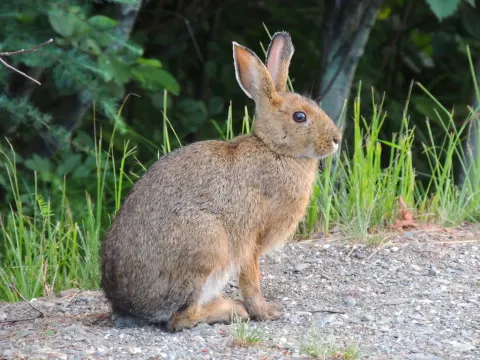
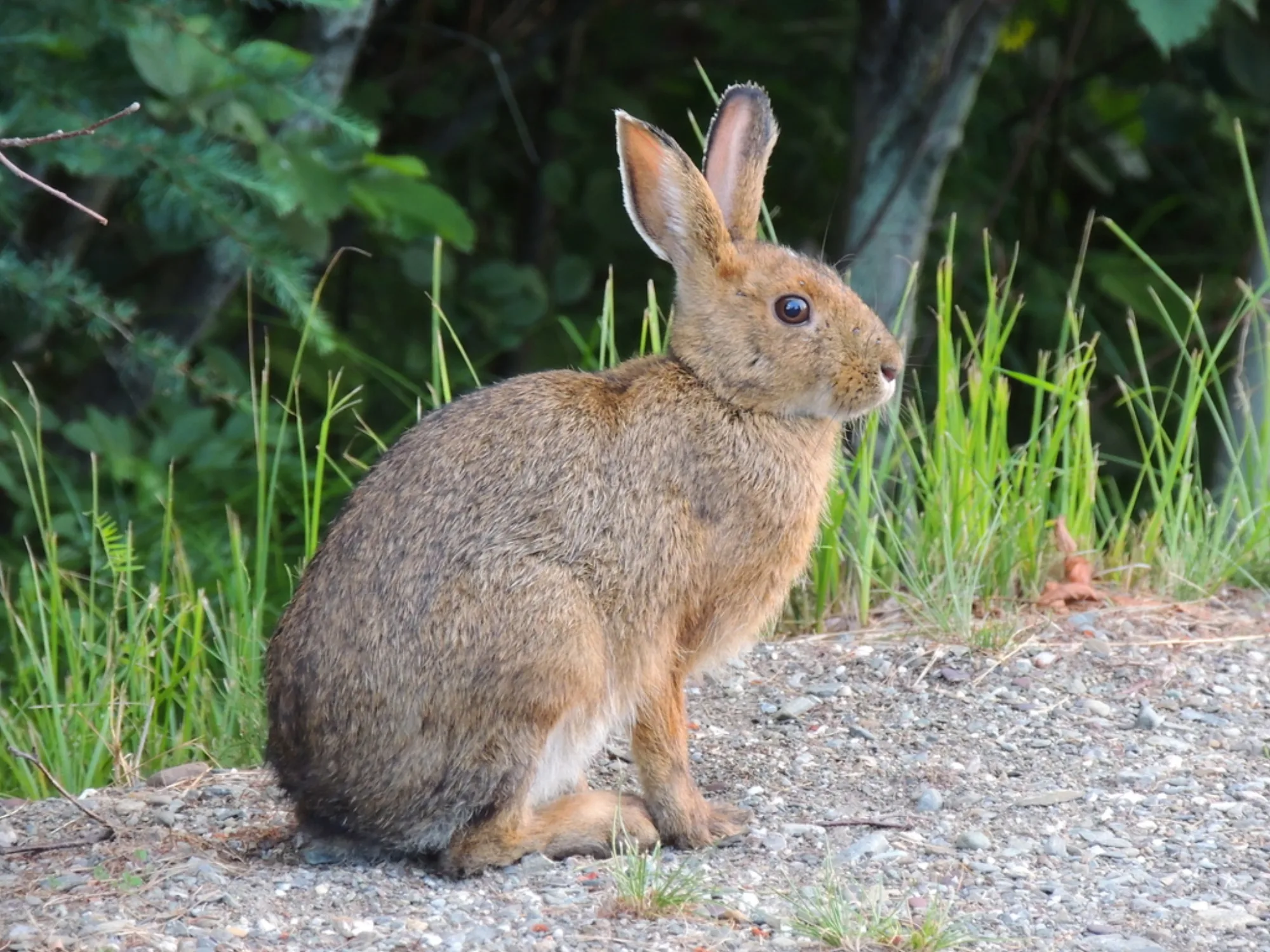
Large hind feet give the Snowshoe Hare its name and help it stay on top of soft snow. This North American hare changes colour with the seasons: its short summer coat is brown, while its longer winter coat is mostly white, with black ear tips. Its colouring provides camouflage, and its densely furred feet help it move through snow.
The hare ranges from Newfoundland to Alaska, reaching south through the Sierra Nevada, Rocky Mountains and Appalachians. It favours dense cover in boreal and mountain forests and wetlands, especially young woodland with a thick understorey. Shy and secretive, it is active throughout the year, mainly at dusk and at night, and spends much of the day tucked into shallow hollows beneath ferns, brush or fallen timber. On bright moonlit nights, it tends to avoid open ground, where it is more exposed to predators. It usually follows well-worn forest paths to feed at night, eating green plants from spring to autumn and turning largely to buds, twigs, evergreen needles and bark after frost.
Breeding generally begins between late December and January and continues until July or August, with the first litters born from mid-April to May. Litters average three to five young, which are born furred, with open eyes, and able to move. The Canada lynx is a major predator, and owls, foxes and many other animals also hunt hares. Where snow now lies for shorter periods, hares that still turn white in winter are more exposed to hunters because their coat no longer conceals them. Some populations at the southern edge of the range have disappeared.
Written from the English Wikipedia article Snowshoe hare (CC BY-SA 4.0).
- Records
- 1,694
- Countries
- 3
- Atlas places
- 18
- Banff National Park· Canada
- Denali National Park· United States
- Isle Royale National Park· United States
- Kootenay National Park· Canada
- Olympic National Park· United States
- Yellowstone National Park· United States
- Acadia National Park· United States
- Algonquin Provincial Park· Canada
- Glacier National Park· United States
- Gros Morne National Park· Canada
- Jasper National Park· Canada
- Kluane National Park and Reserve· Canada
- Rocky Mountain National Park· United States
- Grand Teton National Park· United States
- Katmai National Park· United States
- Kenai Fjords National Park· United States
- Waterton Lakes National Park· Canada
- Yoho National Park· Canada
These are open occurrence records, so they show where people looked for and recorded the Snowshoe Hare as much as where it lives. Cells are up to 25 km across, and every location is generalised to its cell.
Generalised encounter areas, not exact locations. Each shape is a grid cell coloured by how likely the species is there.
- Very likelyCanada25 km zone · medium confidence · 994 records · updated 80 days ago
- Very likelyUnited States25 km zone · medium confidence · 692 records · updated 80 days ago
- Very likelySt. Pierre & Miquelon25 km zone · medium confidence · 8 records · updated 80 days ago
Conservation status not assessed here yet, so every location is generalised to its grid cell.