Mountain Chicken
Leptodactylus fallax
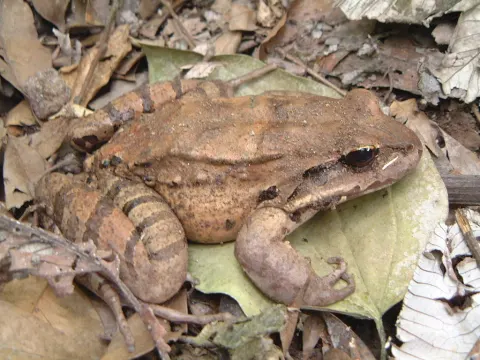
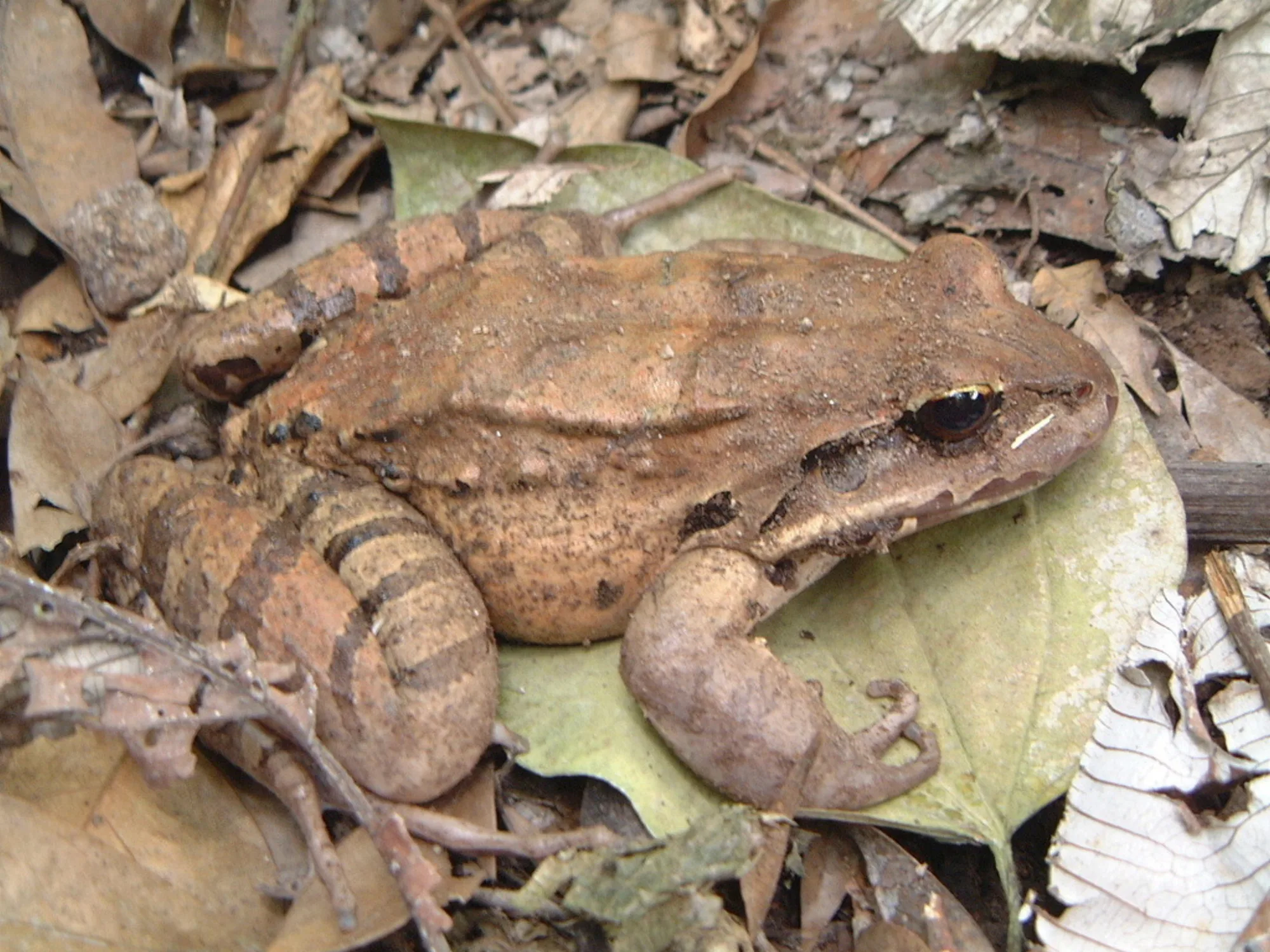
This massive Caribbean frog is one of the largest in the world, with a robust body that can weigh 1 kg. While its upperparts vary from uniform chestnut-brown to spotted patterns, its sides are more orange-yellow and its belly is pale yellow. A dark line runs from the snout to the mouth, and its large eyes have golden irises. Known as the mountain chicken on Montserrat and the crapaud on Dominica, it was named for its meat, which reportedly tastes like chicken.
Today, the species is restricted to Dominica and Montserrat, where it lives in moist environments like secondary forests, plantations, and ravines. These nocturnal, terrestrial frogs spend their days in soil burrows. At night, they act as sit-and-wait predators, using camouflage to ambush prey. Their varied diet includes insects, spiders, and crustaceans, as well as small vertebrates like snakes and bats. Unusually for amphibians, they breed in burrows rather than water. A mother provides for her young by laying thousands of unfertilized eggs for the tadpoles to eat.
Populations have crashed due to the deadly fungal disease chytridiomycosis, which caused rapid declines on both islands. Historically, the frogs were also heavily hunted for food, with annual harvests once reaching 36,000 animals. Additional pressures include habitat loss from agriculture and tourist developments, along with volcanic eruptions on Montserrat. Introduced predators such as feral cats, dogs, and pigs also threaten the remaining individuals.
Written from the English Wikipedia article Leptodactylus fallax (CC BY-SA 4.0).
- Atlas places
- 0
These are open occurrence records, so they show where people looked for and recorded the Mountain Chicken as much as where it lives. Cells are up to 25 km across, and every location is generalised to its cell.
No encounter zones yet
Where and when you can expect to see Mountain Chicken is calculated from observation density. No zones have been computed for this species yet.