Pampas Cat
Leopardus pajeros
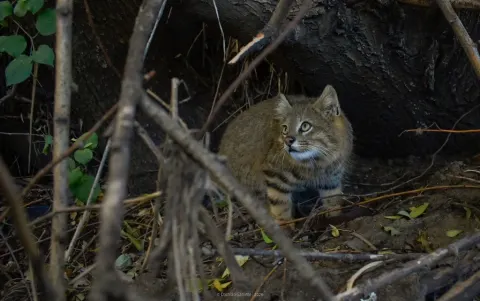
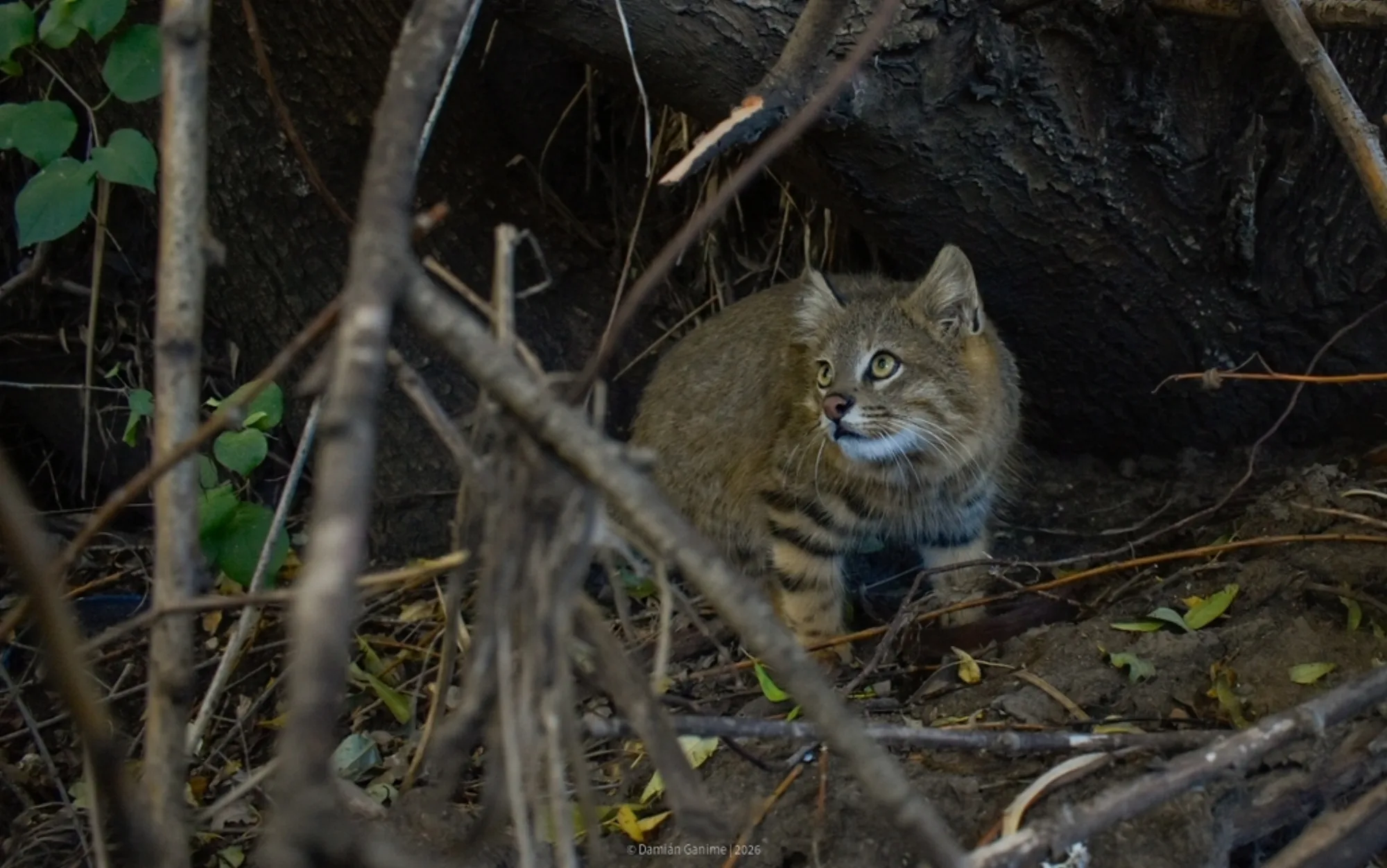
A relative of the domestic cat, the Pampas cat is slightly larger than its household cousin and carries a much bushier tail. Its appearance is highly variable across South America, with six distinct coat patterns recorded. Some individuals are reddish or dark grey with rusty stripes, while others feature large rosette spots or even entirely rusty-brown fur with black feet. Despite these differences, almost all of these cats share two characteristic dark lines on their cheeks. Their size also fluctuates by region, with body lengths spanning 46 to 75 cm and tails measuring between 23 and 29 cm.
These adaptable felines occupy an impressive range of environments, from the high Andes at 5,000 m down to the Patagonian steppes and the Sechura Desert. They are found in grasslands, shrublands, and dry forests across countries like Argentina, Chile, and Peru. Depending on the location, they may be active during the day or prefer the night. Their diet consists primarily of small birds and mammals, particularly guinea pigs, viscachas, and ground-dwelling tinamous.
Travellers should note that this species is difficult to spot due to its low population density. They typically have small litters of just one or two kittens, which weigh only 130 g when born. While they can live for over 16 years, their average lifespan in the wild is closer to nine. Today, the Pampas cat faces significant pressure from the outside world. Its survival is threatened by the ongoing destruction of its native environment and the conversion of wild land for other uses.
Written from the English Wikipedia article Pampas cat (CC BY-SA 4.0).
- Records
- 0
- Countries
- 1
- Atlas places
- 0
These are open occurrence records, so they show where people looked for and recorded the Pampas Cat as much as where it lives. Cells are up to 25 km across, and every location is generalised to its cell.
Generalised encounter areas, not exact locations. Each shape is a grid cell coloured by how likely the species is there.
- Very likelyArgentina50 km zone · low confidence · 0 records · updated 4 days ago