Kodkod
Leopardus guigna
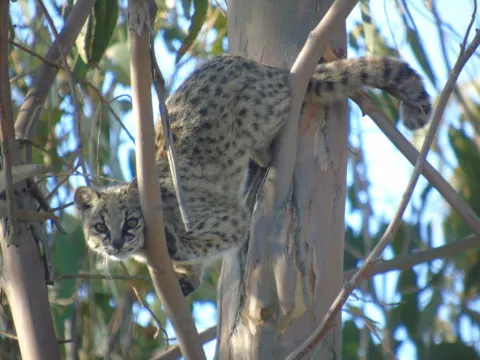
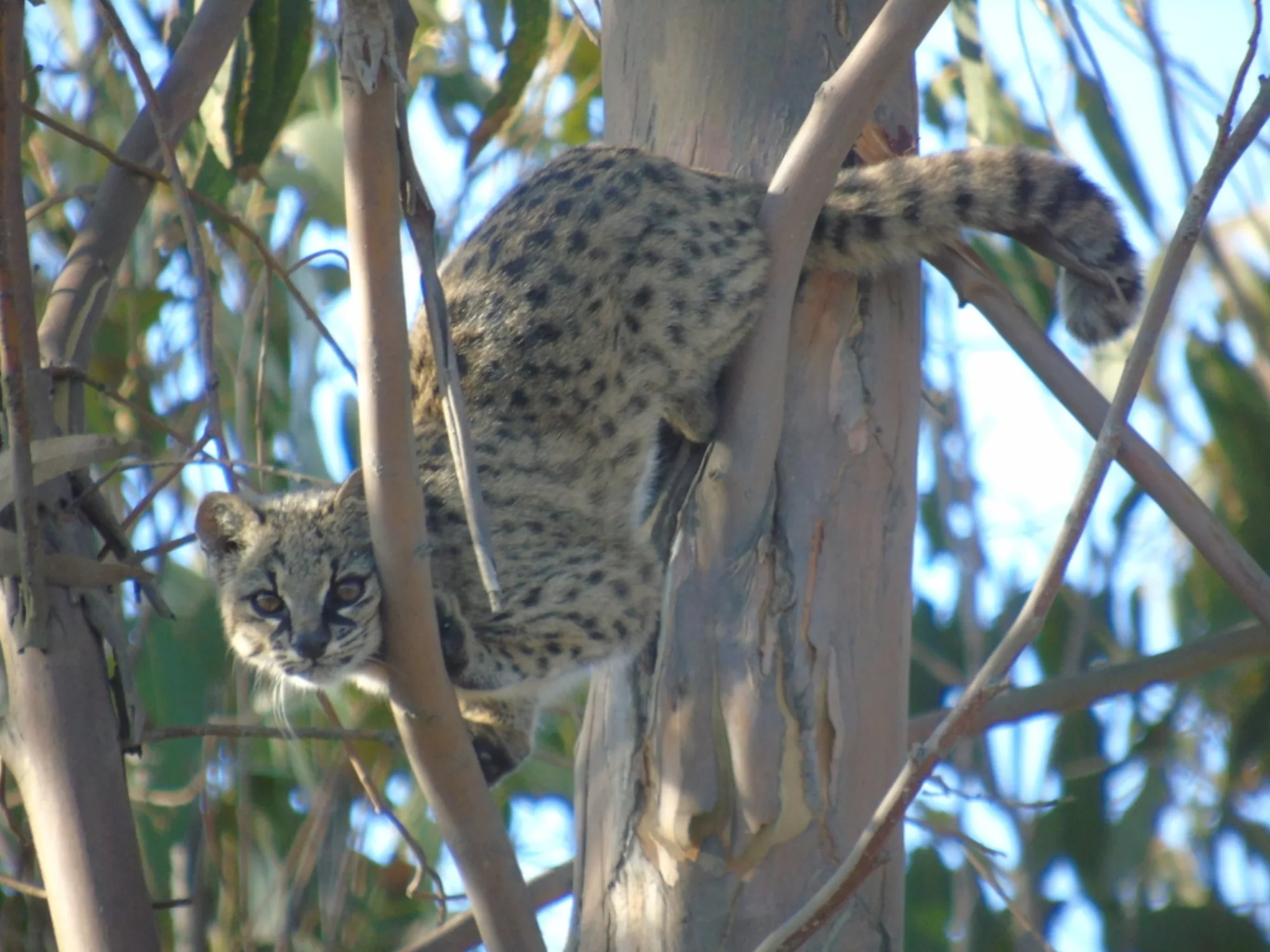
Small enough to be overlooked in the forest, the Kodkod is the smallest wild cat native to the Americas, also known as the güiña or Chilean cat. Its brownish-yellow to grey-brown coat has dark spots, while the belly is pale and the tail bears rings. Black ears carry white spots, while markings on the neck and shoulders form broken streaks; black-coated cats with visible spots are also common. Adults measure 37 to 51 cm from head to body, with a 20 to 25 cm tail, and weigh 2 to 2.5 kg.
The cat lives mainly in central and southern Chile, with a smaller presence across the border in Argentina. It is closely associated with temperate rainforests in the southern Andes and coastal ranges, especially Chile's Valdivian and Araucaria forests, where bamboo grows beneath the trees. It favours evergreen rainforest but also uses secondary forest and shrub, including habitat at the edges of settlements and farmland. Its range reaches the treeline at approximately 1,900 m.
Kodkods are active by day and night, but cross open ground only after dark. By day they rest under dense cover in ravines, beside streams or among piles of dead gorse. They climb well and hunt birds, lizards and rodents on the ground in ravines and forest. After a gestation of about 72 to 78 days, a female has an average litter of one to three kittens. Logging is the foremost threat, accompanied by the spread of pine plantations and agriculture, particularly in central Chile; cats have also been killed after raiding chicken coops.
Written from the English Wikipedia article Kodkod (CC BY-SA 4.0).
- Records
- 38
- Countries
- 2
- Atlas places
- 3
These are open occurrence records, so they show where people looked for and recorded the Kodkod as much as where it lives. Cells are up to 25 km across, and every location is generalised to its cell.
Generalised encounter areas, not exact locations. Each shape is a grid cell coloured by how likely the species is there.
- Very likelyArgentina25 km zone · medium confidence · 21 records · updated 80 days ago
- Very likelyChile25 km zone · medium confidence · 17 records · updated 80 days ago
Conservation status not assessed here yet, so every location is generalised to its grid cell.