Nile Perch
Lates niloticus
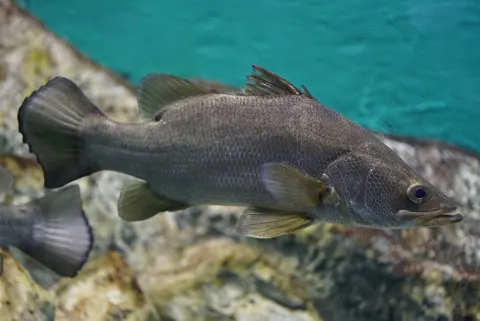
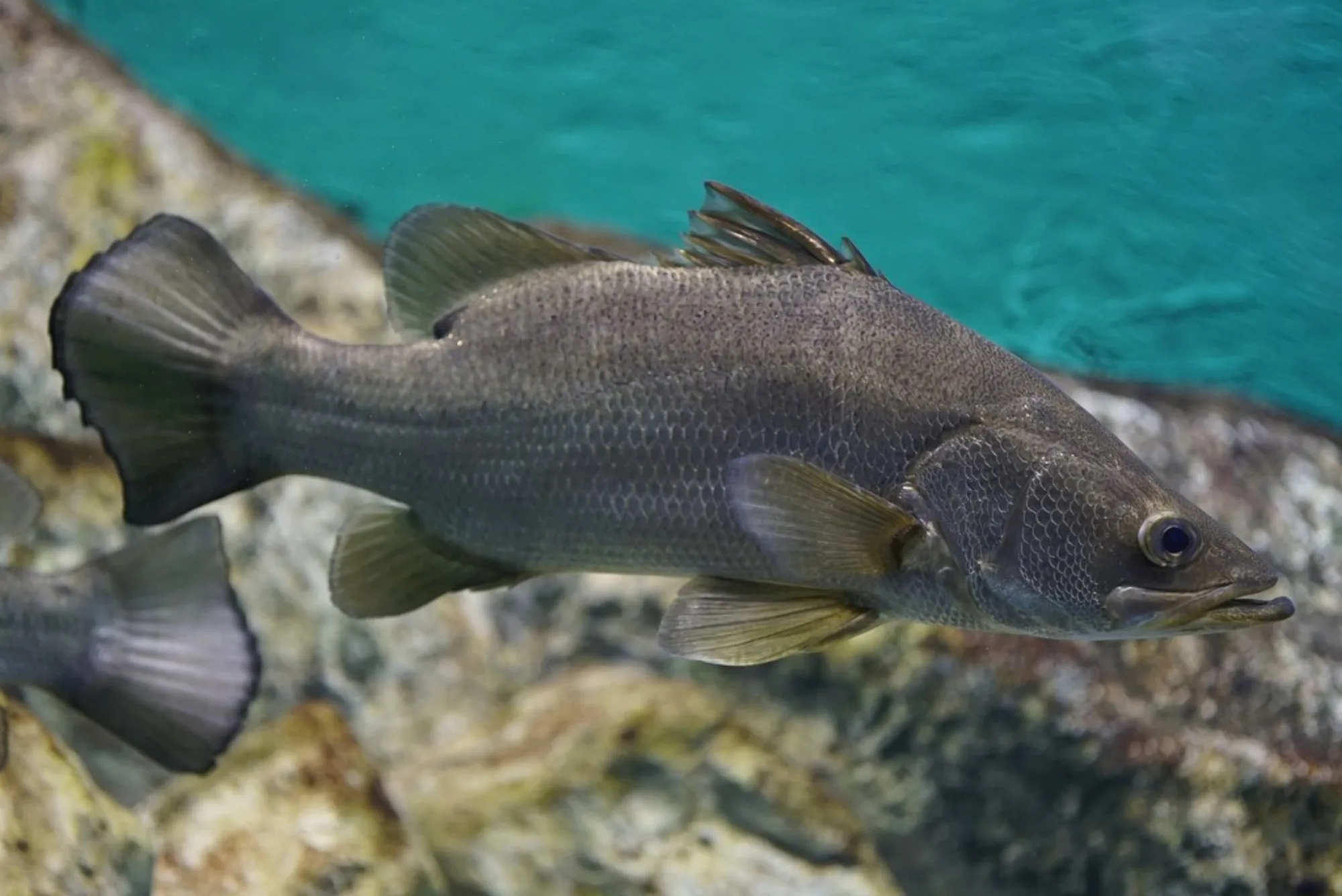
Silver with a blue tinge, the Nile Perch is a large freshwater fish with dark eyes encircled by bright yellow. It can reach nearly 2 m in length and weigh up to 200 kg. Mature fish typically measure 1.21 to 1.37 m, although many are caught before reaching that size.
Its native range includes the Congo, Nile, Senegal and Niger river basins, as well as the basins of Lake Chad, the Volta and Lake Turkana. It also lives in the brackish waters of Egypt's Lake Maryut. Introduced populations live in several other African lakes, among them Lake Victoria and Lake Nasser, an artificial reservoir. In lakes, adults use habitats wherever there is enough oxygen, while young fish stay in shallow water or near the shore. Nile Perch form schools that help protect them from other predators.
A powerful predator, it eats fish, including its own kind, as well as crustaceans, molluscs and insects. Young fish also take zooplankton. In Lake Victoria, it first ate native cichlids, but as these became less available, its diet shifted mainly to small shrimp and minnows. Its introduction there has been blamed for wiping out or nearly wiping out several hundred native species. The fish itself faces pressure from overfishing, illegal fishing gear and invasive water hyacinths. When prey becomes scarce, Nile Perch grow smaller and become more vulnerable to larger predators such as crocodiles. It is commercially important as a food fish and also attracts sport anglers by striking artificial lures.
Written from the English Wikipedia article Nile perch (CC BY-SA 4.0).
- Records
- 583
- Countries
- 11
- Atlas places
- 1
These are open occurrence records, so they show where people looked for and recorded the Nile Perch as much as where it lives. Cells are up to 25 km across, and every location is generalised to its cell.
Generalised encounter areas, not exact locations. Each shape is a grid cell coloured by how likely the species is there.
- Very likelyUganda25 km zone · high confidence · 528 records · updated 80 days ago
- LikelyEgypt25 km zone · medium confidence · 20 records · updated 80 days ago
- LikelySudan25 km zone · medium confidence · 11 records · updated 80 days ago
- LikelyNiger25 km zone · medium confidence · 7 records · updated 80 days ago
- LikelyKenya25 km zone · medium confidence · 5 records · updated 80 days ago
- PossibleBenin25 km zone · medium confidence · 9 records · updated 80 days ago
- PossibleChad25 km zone · medium confidence · 3 records · updated 80 days ago
- UncommonBurkina Faso25 km zone · low confidence · 0 records · updated 80 days ago
- UncommonGuinea-Bissau25 km zone · low confidence · 0 records · updated 80 days ago
- UncommonMali25 km zone · low confidence · 0 records · updated 80 days ago
Conservation status not assessed here yet, so every location is generalised to its grid cell.