Northern Hairy-nosed Wombat
Lasiorhinus krefftii
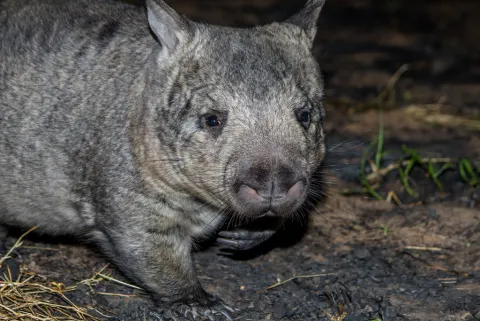
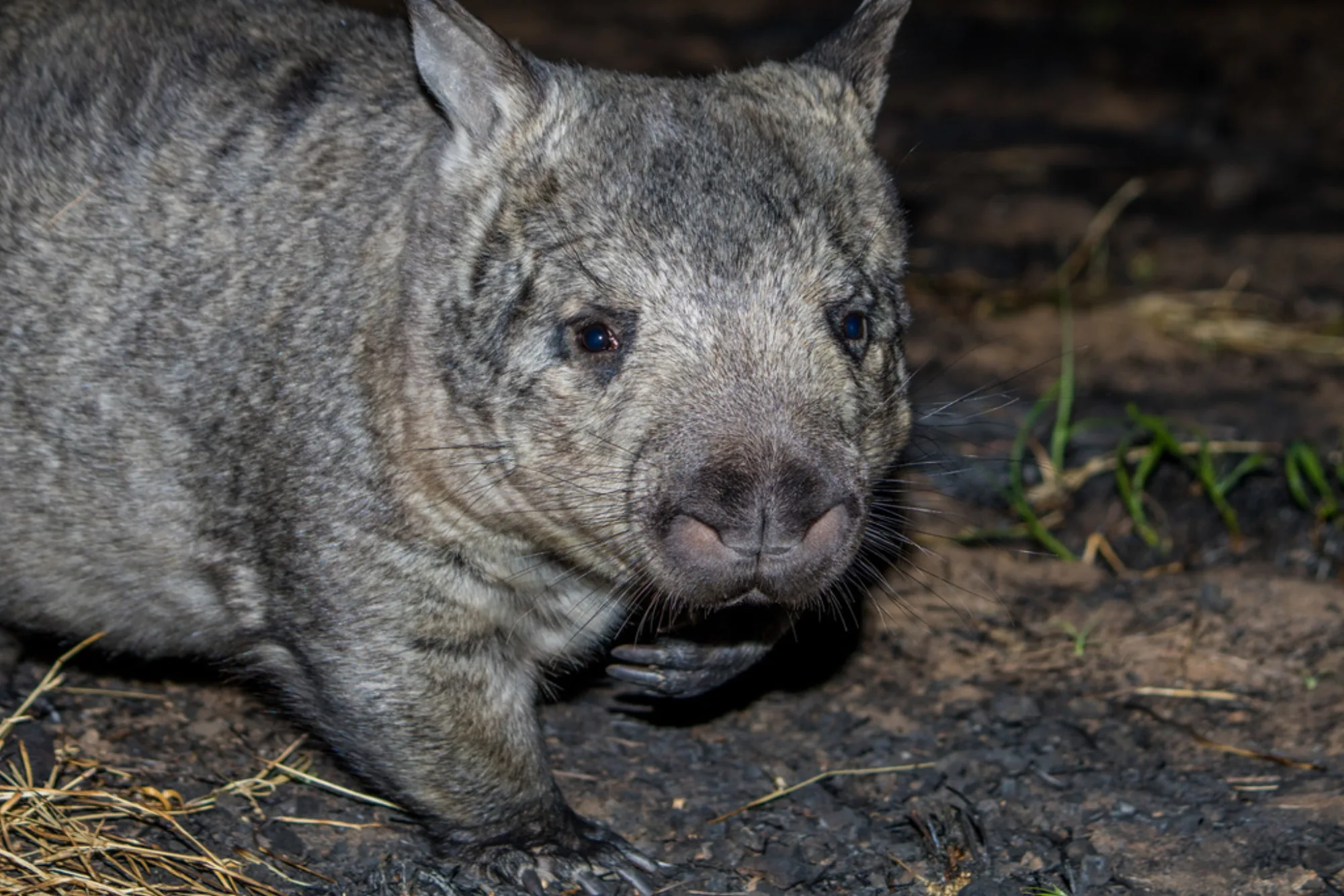
Soft grey fur, a broad hairy muzzle and long, pointed ears help distinguish the Northern Hairy-nosed Wombat from other wombats. This heavily built Australian marsupial has a large head, short, powerful legs and strong claws for digging. It can reach 1 m in length and weigh up to 40 kg. Its eyesight is poor, so it relies on smell to find food in the dark.
The species lives in Queensland, at Epping Forest National Park and at two sites near St George: Richard Underwood Nature Refuge and Powrunna State Forest. It needs deep sandy soil for burrows and a supply of grass throughout the year, conditions usually found in open eucalypt woodland. At Epping Forest, it digs into sandy banks and forages on neighbouring clay soils. Nocturnal and largely underground, it lives in burrow networks and stays below ground during harsh weather. As many as 10 wombats have been known to share a burrow. It eats native grasses and roots, and can go without food for several days when supplies are scarce. Births generally occur in the wetter months, from November to April. A mother gives birth to one offspring at a time; the young wombat stays in her pouch for 8 to 9 months and is weaned at 12 months.
Wild dogs are its main predator, while its small, localised population is exposed to threats including fire, floods, drought, disease and habitat loss. Introduced African buffel grass competes with the more nutritious native grasses the wombat favours, forcing it to travel farther for food. A predator-proof fence protects the Epping Forest habitat, and populations have been established at other sites as insurance against threats.
Written from the English Wikipedia article Northern hairy-nosed wombat (CC BY-SA 4.0).
- Records
- 42
- Countries
- 1
No atlas park has a record of the Northern Hairy-nosed Wombat in or around it yet.
These are open occurrence records, so they show where people looked for and recorded the Northern Hairy-nosed Wombat as much as where it lives. Cells are up to 25 km across, and every location is generalised to its cell.
Generalised encounter areas, not exact locations. Each shape is a grid cell coloured by how likely the species is there.
- Very likelyAustralia25 km zone · medium confidence · 42 records · updated 80 days ago
Conservation status not assessed here yet, so every location is generalised to its grid cell.