Ring-billed Gull
Larus delawarensis
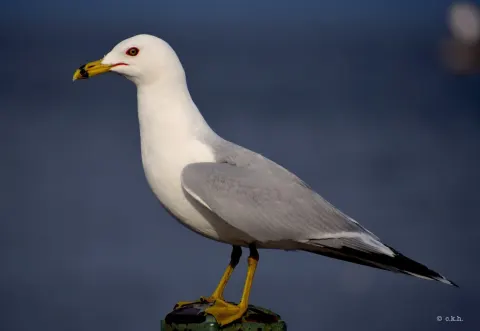
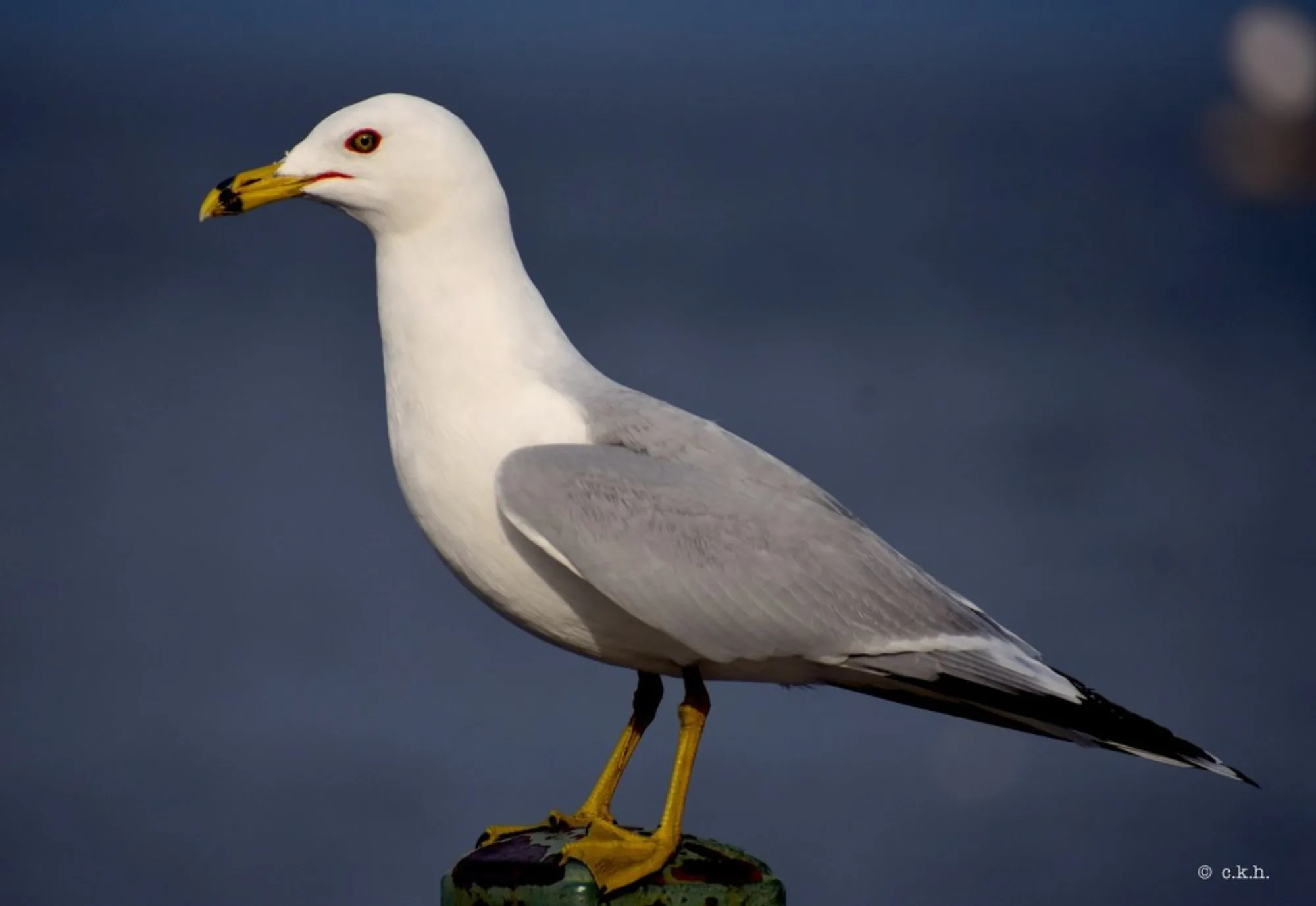
A yellow bill marked by a black ring gives the Ring-billed Gull its name and offers a useful clue to its identity. This medium-sized North American gull has a white head, neck and underparts, a silver-grey back and wings, and black wingtips marked with white. Its legs and eyes are yellow, with red rims around the eyes. Young birds begin largely brown and change appearance with each autumn moult, taking three years to reach breeding plumage.
Look for breeding birds near lakes, rivers and coasts throughout much of Canada, as well as in the northern United States. They nest together on the ground, often on islands, although flat factory roofs are increasingly used too. Many return to the same nesting site year after year. Most migrate south for winter, travelling to the Gulf of Mexico, northern Mexico and the Atlantic and Pacific shores of the United States. Some stay through winter in milder parts of Canada, while others turn up regularly in western Europe.
Ring-billed Gulls search for food in flight and pick it up while swimming, walking or wading. Their varied diet includes insects, fish, grain, eggs, earthworms and rodents, and they readily scavenge or steal food from other birds. They also take food discarded or left unattended by people, and gather where people hand-feed them, including parks, docks, marinas and beaches. Rats, foxes, cats, dogs, raccoons, coyotes, eagles, hawks and owls prey on them. People hunted the gull for its feathers in the late 19th century; numbers later recovered, but the eastern North American population has declined slowly since around 1990, largely because of a deliberate policy limiting its access to food at landfill sites.
Written from the English Wikipedia article Ring-billed gull (CC BY-SA 4.0).
- Records
- 4,812,102
- Countries
- 53
- Atlas places
- 1
These are open occurrence records, so they show where people looked for and recorded the Ring-billed Gull as much as where it lives. Cells are up to 25 km across, and every location is generalised to its cell.
Generalised encounter areas, not exact locations. Each shape is a grid cell coloured by how likely the species is there.
- Very likelyUnited States25 km zone · high confidence · 3303422 records · updated 86 days ago
- Very likelyCanada25 km zone · high confidence · 1485282 records · updated 86 days ago
- Very likelyMexico25 km zone · high confidence · 8539 records · updated today
- Very likelyBermuda25 km zone · high confidence · 3267 records · updated today
- LikelyBahamas25 km zone · high confidence · 1963 records · updated today
- LikelyNorway25 km zone · high confidence · 1103 records · updated today
- LikelySpain25 km zone · high confidence · 1082 records · updated today
- LikelyPortugal25 km zone · high confidence · 981 records · updated today
- LikelyUnited Kingdom25 km zone · high confidence · 882 records · updated today
- LikelySt. Pierre & Miquelon25 km zone · high confidence · 741 records · updated today
Conservation status not assessed here yet, so every location is generalised to its grid cell.