Salmon Shark
Lamna ditropis
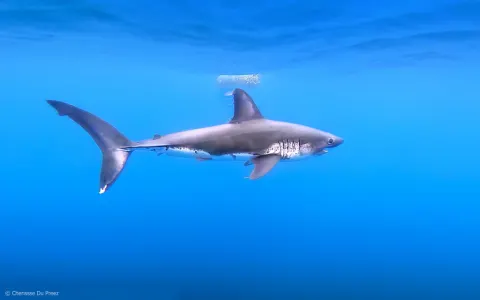
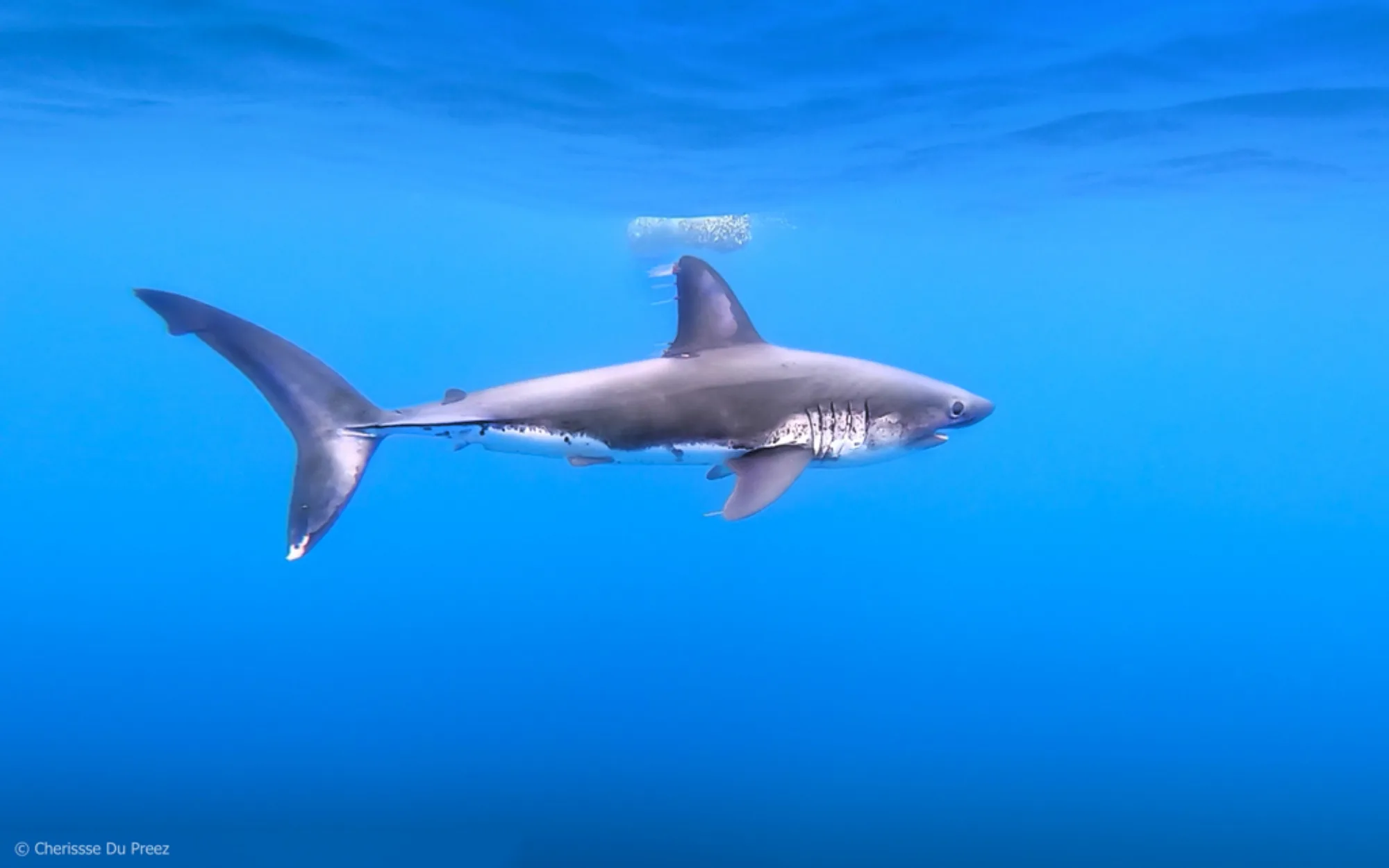
Built much like a small great white, the Salmon Shark is a mackerel shark with a short, conical snout. Adults are grey to black above, with dark blotches on a white underside, while juveniles usually lack the blotches. It generally reaches 200 to 260 cm in length and can weigh up to 220 kg.
In the northern Pacific, salmon sharks range from sub-Arctic to subtropical waters, including the Sea of Japan and waters as far north as Alaska. They occur from inshore waters to offshore areas and are thought to spend most of their time in the sunlit upper ocean, although individuals have dived to 668 m. Juveniles stay closer to the coast along western North America and prefer water between 12 and 16°C. Salmon sharks can regulate their body temperature, helping them thrive in cold water. They usually travel alone or in feeding groups, though they are sometimes seen in schools. Salmon is their main food, but they also eat squid, sablefish, birds, walleye pollock and herring. In Alaska, groups of 30 to 40 have been seen hunting salmon, and many gather in Prince William Sound each year when the salmon run.
Females give birth to two to six pups, which are independent from birth, and pups are born along Baja California. Salmon sharks are sometimes caught unintentionally in commercial salmon gillnets, while sport fishers target them in Alaska. Their slow growth and reproduction make them susceptible to overfishing, and juveniles are particularly sensitive to changes in coastal water temperature. Alaskan fishers have reported declines in salmon shark populations.
Written from the English Wikipedia article Salmon shark (CC BY-SA 4.0).
- Records
- 686
- Countries
- 2
- Atlas places
- 3
These are open occurrence records, so they show where people looked for and recorded the Salmon Shark as much as where it lives. Cells are up to 25 km across, and every location is generalised to its cell.
Generalised encounter areas, not exact locations. Each shape is a grid cell coloured by how likely the species is there.
- Very likelyUnited States25 km zone · medium confidence · 682 records · updated 80 days ago
- UncommonCanada25 km zone · medium confidence · 4 records · updated 80 days ago
Conservation status not assessed here yet, so every location is generalised to its grid cell.