Painted Bat
Kerivoula picta
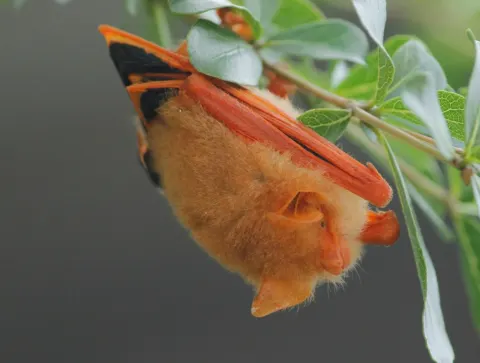
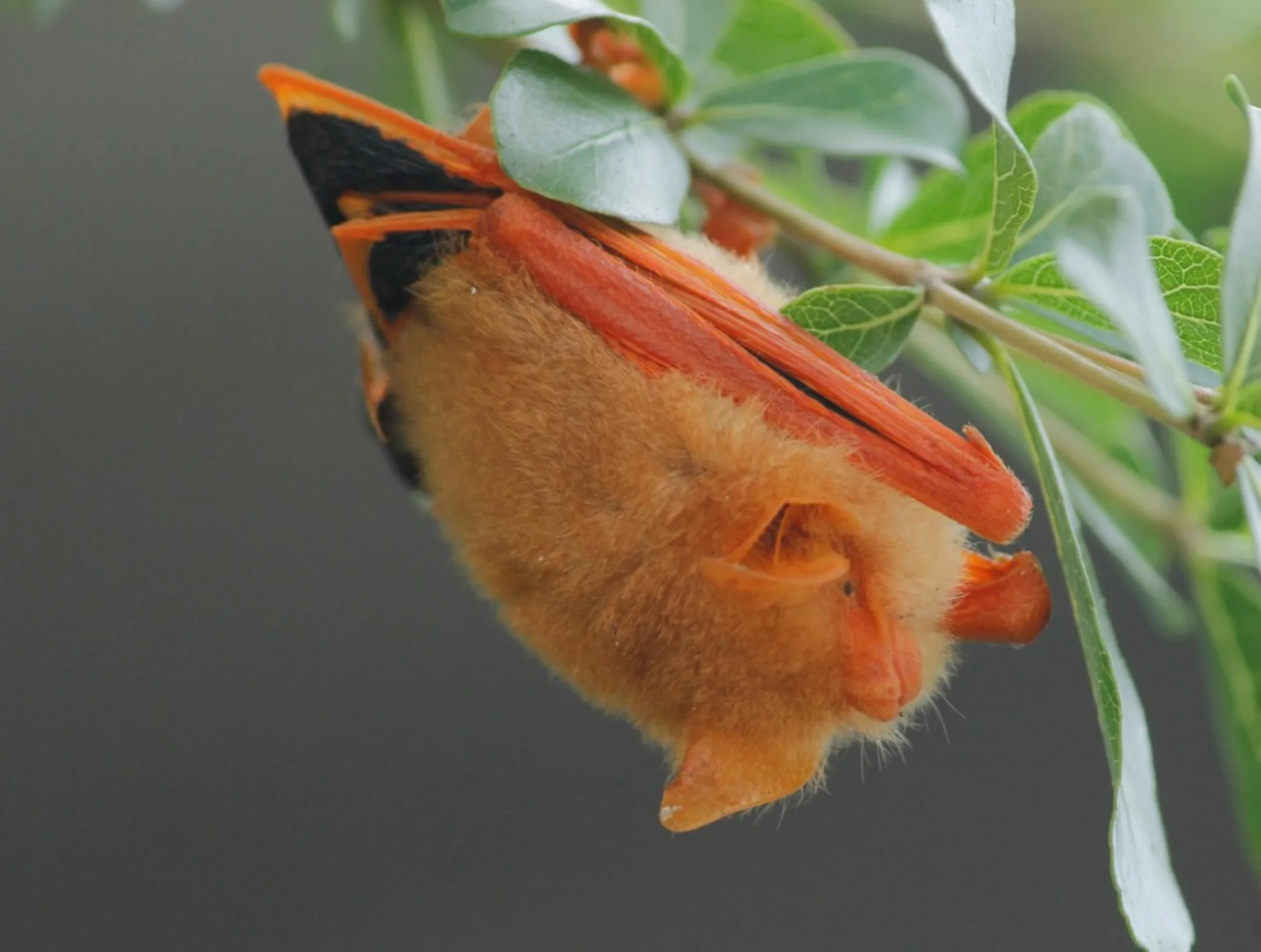
Often likened to a butterfly, the Painted Bat is easily identified by its vivid orange or scarlet fur and contrasting black wings. These small mammals weigh around 5 g and have bodies measuring 3 to 5.5 cm, equal to the length of their tails. Their curly, woolly hair and large ears shaped like funnels help define their delicate appearance. While males tend to be brighter than females, both sexes use their broken patterns as camouflage to mimic dried leaves or flowers while resting.
Travellers may find these bats across South and Southeast Asia, including India, Thailand, and Vietnam, where they inhabit arid woodlands. They are active at night or during twilight hours, roosting in small groups of two to six individuals. Rather than typical caves, they often shelter in banana leaves, under the eaves of huts, or within the hanging nests of sunbirds and weaver finches. During the day, they remain sluggish and may enter a state of aestivation.
These bats hunt small insects during flights that last one to two hours, likely using their tail membrane to net prey while in the air. They live in small family units made up of a mother, a father, and a single pup born between June and August. This low birth rate makes the species particularly sensitive to human impact. They are currently threatened by overharvesting, as they are hunted and taxidermied to be sold as souvenirs to tourists or as commercial products online.
Written from the English Wikipedia article Painted bat (CC BY-SA 4.0).
- Atlas places
- 0
These are open occurrence records, so they show where people looked for and recorded the Painted Bat as much as where it lives. Cells are up to 25 km across, and every location is generalised to its cell.
No encounter zones yet
Where and when you can expect to see Painted Bat is calculated from observation density. No zones have been computed for this species yet.
Conservation status not assessed here yet, so every location is generalised to its grid cell.