Daggernose Shark
Isogomphodon oxyrhynchus
Found in the tropical coastal waters of northeastern South America, the Daggernose Shark is an unusual species that prefers murky, sediment-laden habitats. It thrives in shallow depths between 4 and 40 m, particularly over muddy banks and within mangroves or estuaries. While it avoids fresh water, it moves with the seasons, heading inshore when the weather is dry and shifting offshore during the rainy months. Travelers may spot it from Trinidad to northern Brazil, though it is most common in highly turbid areas where its unique physical traits provide a survival advantage.
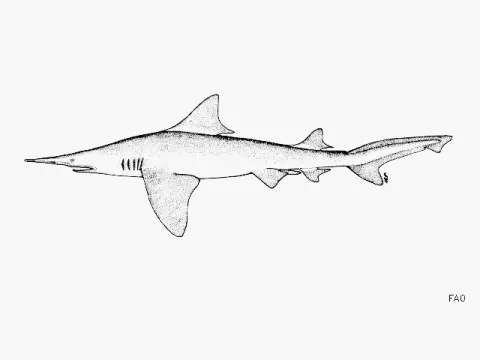
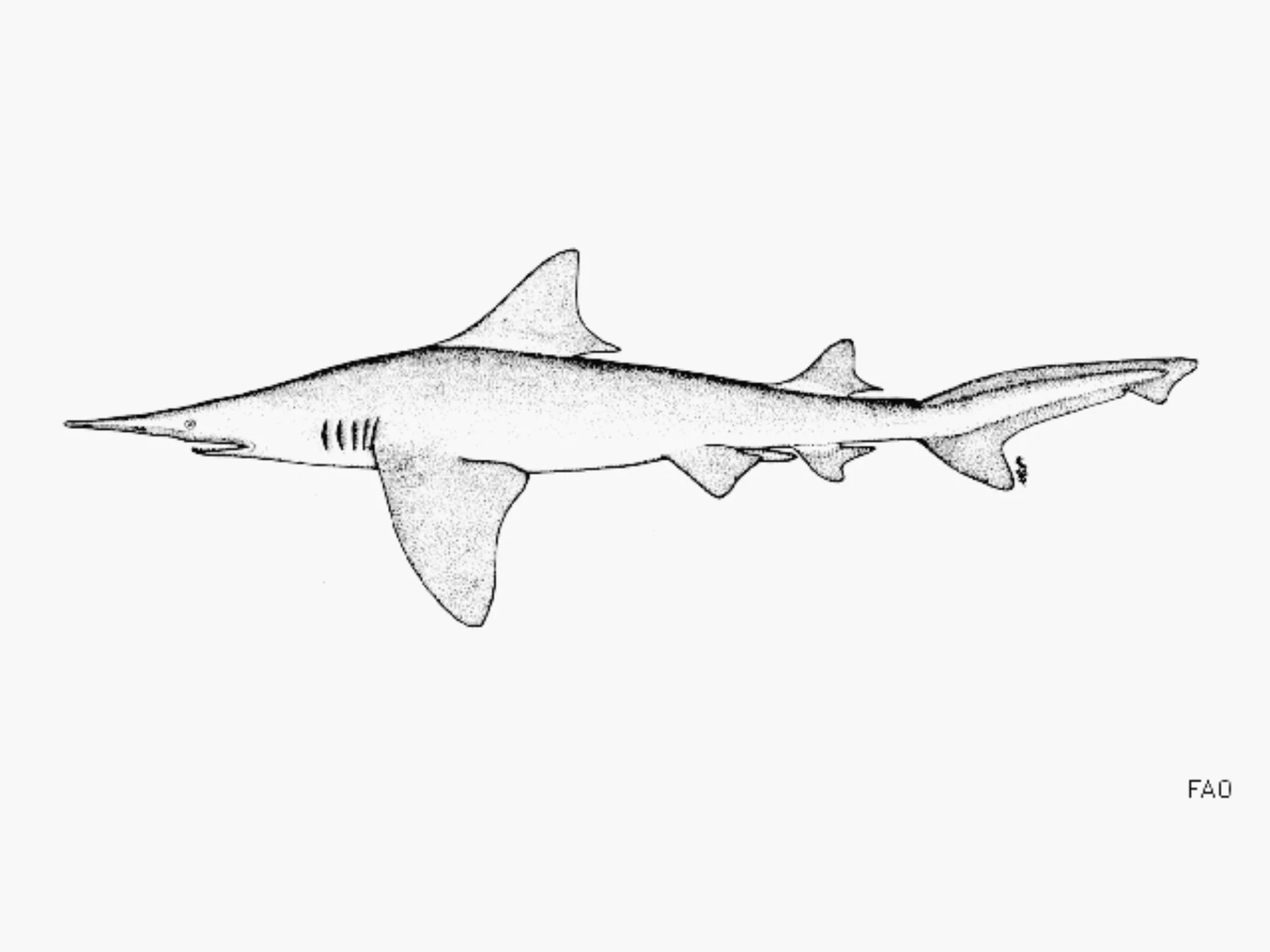
This relatively small shark is instantly recognizable by its extremely long, flattened snout that tapers to a point. It has very small, circular eyes and large pectoral fins shaped like paddles. Reaching typical lengths of 1.5 m, it uses its long jaws and many small teeth to hunt schooling fishes like anchovies, herring, and catfish. Because it lives in clouded water, it relies more on sensory perception in its snout than on its vision.
Reproduction is a slow process for this species. Females give birth to litters of only 2 to 8 pups every other year, following a gestation period that lasts one year. This low reproductive rate makes the population particularly sensitive to pressure. The shark is frequently caught as bycatch in commercial and artisanal gillnet fisheries. Because of intense fishing and its limited range, the population has dropped by over 90 percent off the coast of Brazil. Current estimates suggest as few as 250 individuals remain, leaving the species at risk of total extinction.
Written from the English Wikipedia article Daggernose shark (CC BY-SA 4.0).
- Records
- 3
- Countries
- 1
- Atlas places
- 0
These are open occurrence records, so they show where people looked for and recorded the Daggernose Shark as much as where it lives. Cells are up to 25 km across, and every location is generalised to its cell.
Generalised encounter areas, not exact locations. Each shape is a grid cell coloured by how likely the species is there.
- Very likelyFrench Guiana50 km zone · medium confidence · 3 records · updated 1 day ago