Largetooth Cookiecutter Shark
Isistius plutodus
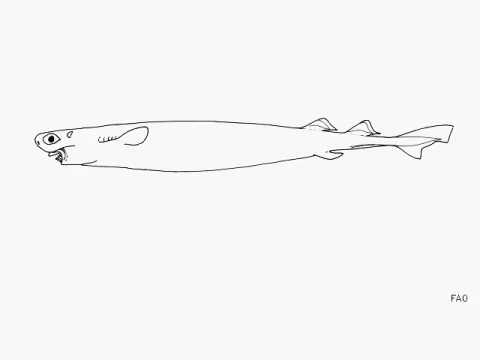
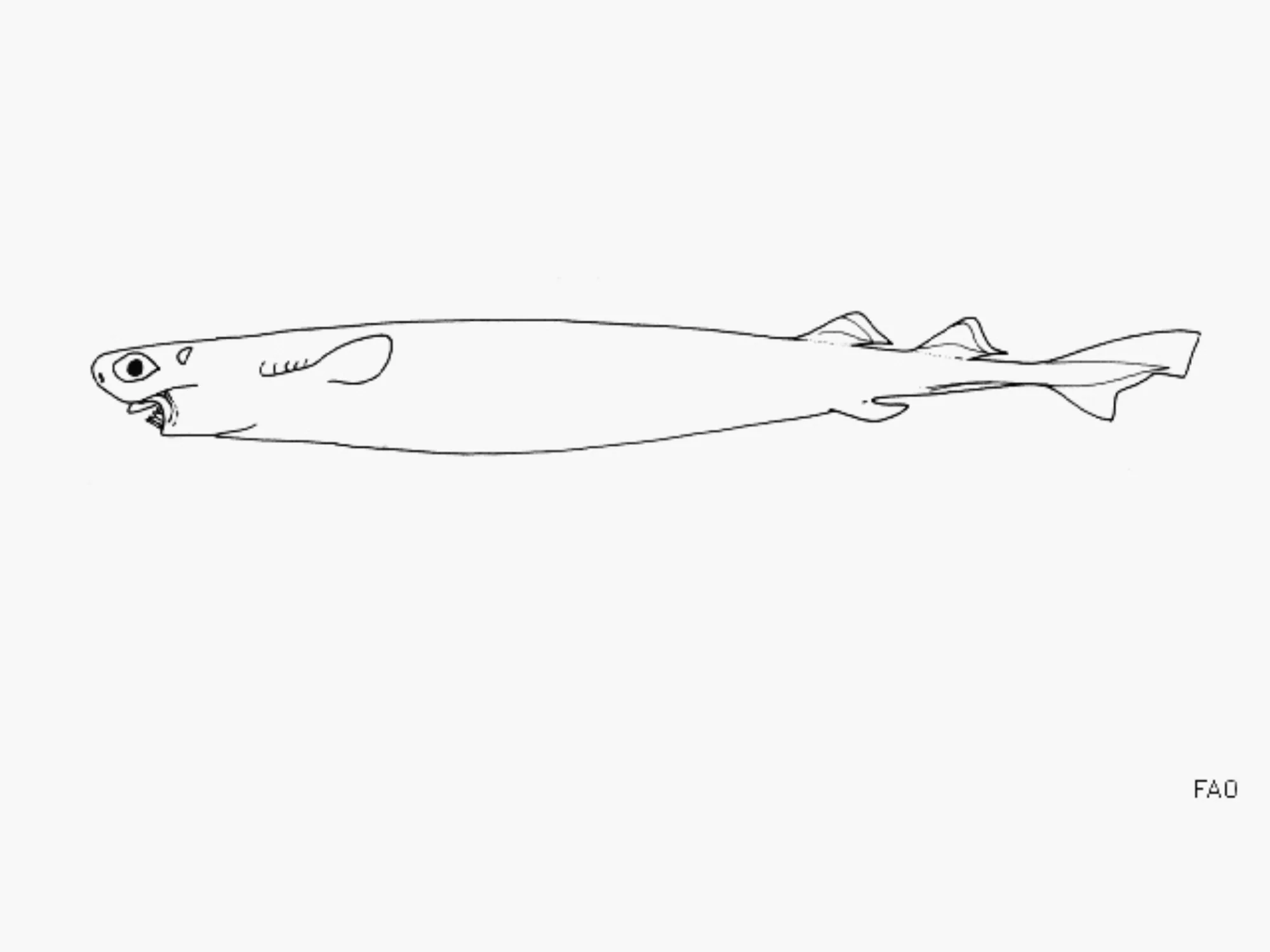
Reaching a maximum length of 42 cm, the Largetooth Cookiecutter Shark is a rare deep-sea inhabitant with a dark brown, cigar-shaped frame. It is distinguished from its relatives by its massive lower teeth, which are the largest of any living shark relative to its body size. These triangular teeth have slightly jagged edges and interlocking bases. The shark has a blunt snout and large, oval eyes positioned to provide binocular vision, likely helping it target prey with precision. Its small fins are set far back on the body, and it lacks the anal fin found on many other species.
This shark is found in widely separated areas of the Atlantic and Pacific Oceans, including the Gulf of Mexico and waters off Brazil, the Azores, Western Sahara, Okinawa, and New South Wales. It typically occupies the epipelagic zone at depths between 60 and 200 m, often near continental shelves or deep oceanic trenches. An enormous liver filled with oil helps it stay buoyant with minimal effort, which is necessary as it is considered a weak swimmer.
As an ectoparasite, this species feeds by gouging out plugs of flesh from larger creatures such as bony fishes, other sharks, and marine mammals like dolphins, seals, and killer whales. It uses a sweeping bite to create large, oval wounds that can be twice as long as the width of its mouth. These attacks can be severe; some dolphins and seals have died after stranding following such bites. While humans occasionally catch them as bycatch in commercial trawl and longline fisheries, these activities are not considered a major threat to the population.
Written from the English Wikipedia article Largetooth cookiecutter shark (CC BY-SA 4.0).
- Atlas places
- 0
These are open occurrence records, so they show where people looked for and recorded the Largetooth Cookiecutter Shark as much as where it lives. Cells are up to 25 km across, and every location is generalised to its cell.
No encounter zones yet
Where and when you can expect to see Largetooth Cookiecutter Shark is calculated from observation density. No zones have been computed for this species yet.
Conservation status not assessed here yet, so every location is generalised to its grid cell.