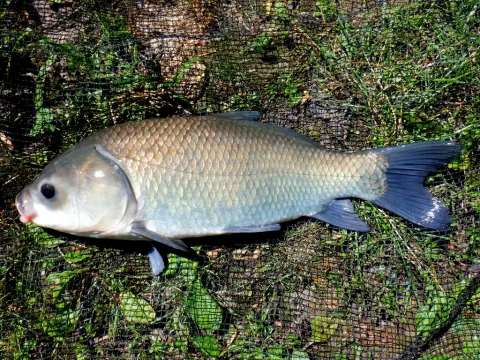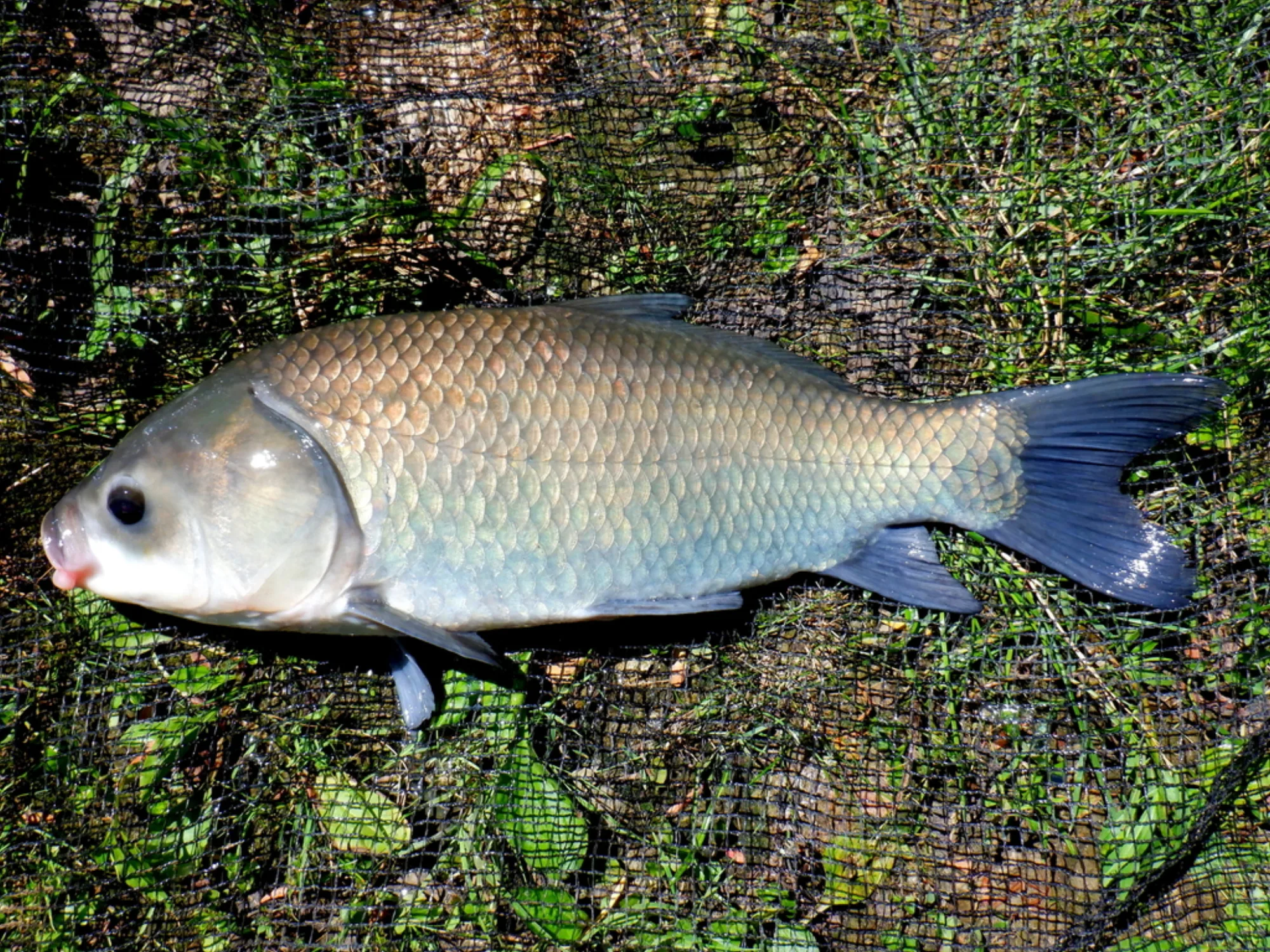
Bigmouth Buffalo
Ictiobus cyprinellus
North America's largest sucker, the Bigmouth Buffalo is a freshwater fish with a forward-facing mouth and a long dorsal fin. Usually brownish olive with dusky fins, it can also be golden or darker, and may develop black or orange markings as it ages. Some individuals grow beyond 1.2 m and weigh up to 36 kg. It can live for 148 years and reproduces infrequently.
Its native range stretches across parts of Canada and the United States, including the Hudson Bay and Mississippi River drainages. Look for it in lakes and slow sections of large rivers, including shallow waters with backwaters and marshes. It tolerates cloudy water and low oxygen. Bigmouth buffalo filter plankton from the water, sometimes feeding near the bottom; juveniles and adults also take algae, insect larvae and other small invertebrates. In spring, groups gather to spawn in vegetated water, with freshly flooded areas offering the best conditions. Spawning generally takes place between April and June, although the fish may skip it when water-level changes are inadequate. Young fish are eaten by predators including walleye, northern pike and catfish.
Populations have declined in the northern part of the range, including Canada, Minnesota and North Dakota. Dams restrict movement and access to spawning habitat, while channelisation can remove backwater spawning areas. Overfishing is another threat, and the rise of bowfishing has coincided with steep declines. Invasive fish also outcompete bigmouth buffalo. Their late maturity and occasional successful recruitment leave populations especially exposed to pressures including overfishing and habitat degradation.
Written from the English Wikipedia article Bigmouth buffalo (CC BY-SA 4.0).
- Records
- 2,170
- Countries
- 2
No atlas park has a record of the Bigmouth Buffalo in or around it yet.
These are open occurrence records, so they show where people looked for and recorded the Bigmouth Buffalo as much as where it lives. Cells are up to 25 km across, and every location is generalised to its cell.
Generalised encounter areas, not exact locations. Each shape is a grid cell coloured by how likely the species is there.
- Very likelyUnited States25 km zone · high confidence · 2153 records · updated 80 days ago
- LikelyCanada25 km zone · medium confidence · 17 records · updated 80 days ago
Conservation status not assessed here yet, so every location is generalised to its grid cell.